Wednesday, March 10, 2021

Why Democrats Can’t Wait on Voting Rights | Washington Monthly

Why Democrats Can’t Wait on Voting Rights | Washington Monthly
by Garrett Epps (professor of law emeritus at the University of Baltimore.)

On June 6, 1960, Bibb County Superior Judge Oscar L. Long greeted a new grand jury in his courtroom in Macon, Georgia. The judge had also invited local reporters, who received a printed copy of the instruction he was about to give to the jurors. Judge Long—and the two other judges of the Macon Circuit—had something important to say, and wanted it heard far and wide.

Black people in Bibb County were voting. Not in proportion to their numbers, mind you—that would have been unthinkable in 1960. Bibb County’s population was about one-third Black, while the Black vote accounted for only about 15 percent of the county’s total. But there were enough Black voters to sway a close election. (In Bibb County, “Negro” and white voters used separate ballot boxes and their votes were totaled in separate columns.)

The three judges had jointly decided that the new grand jury (Georgia grand juries, selected by clerks as “upright and intelligent” citizens, were always overwhelmingly white), was to investigate the “inane and inexplicable pattern of Negro bloc voting.” Like political figures all over the segregated South, Long found it inexplicable that Black voters would band together into political organizations and vote together for candidates they chose.

The investigation, Long explained, was sparked by “persistent rumors and accusations concerning the methods used in the solicitation of the Negro vote and the alleged bartering of the bloc vote.” He asked the jurors to investigate this suspicious activity: “Was the Negro vote delivered in bloc to any candidate or candidates . . .What money was involved, if any?…What promises did the candidate make, if any, in order to obtain the bloc vote?” And Long added that the grand jurors’ job went beyond mere criminal charges; whether they indicted anyone or not, they should, Long said, also “bring to light those practices which, while not technically in violation of any law, are yet so immoral or corrupt as to be destructive of the purposes of our system of elections.”

Even though the Civil Rights Act and the Voting Rights Act still lay in the future, Long was right to be nervous; there were rumblings of change in Bibb County. The state’s venerable “county unit” system (akin to the national electoral college) was under challenge. County voters would, a few years later, elect their first Republican legislators. Sheriff James I. Wood, like Judge Long, was an elected official. The details of Bibb County politics are hazy, but he seems to have come from a different political faction, and indeed may have benefited from the Black vote; at any rate, he felt less unfriendly toward Black voting than the Superior Court judges did. The day after Long delivered his instructions, Wood issued an open letter to the grand jury protesting the instruction. “This is the type of political-legal action which brings down ridicule and demands for civil right legislation against the South,” he warned. “Negro people will find little difference in principle between attempted intimidation of their people by judicial summons and inquiry and attempted intimidation by physical demonstration such as used by the K.K.K.” He added that if the judges wanted an investigation of “bloc voting,” they should investigate “that gigantic ‘bloc vote’ which is controlled by a handful of men known as the Bibb County Democratic Executive Committee.”

The Superior Court (which had issued the instruction) promptly slapped Wood with three counts of contempt and interference with a grand jury, each carrying a sentence of 20 days in jail and a $600 fine. The U.S. Supreme Court overturned the contempt convictions. In his majority opinion, Chief Justice Earl Warren wrote that Sheriff Wood was simply engaging in “the types of activity envisioned by the Founders in presenting the First Amendment for ratification.”

Wood v. Georgia is a very minor First Amendment precedent; but Judge Long’s instruction to the grand jury is worth careful study. It elegantly states a persistent racist Southern belief: When Black people vote, there is probably vote fraud; when Black-supported candidates win, there is definitely corruption. If not an exchange of money, then “influence” on Black voters, who (unlike whites) don’t really think for themselves. Are the “rumors and accusations” true? Maybe and maybe not, but at any rate white people don’t … well, gosh darn it, they just don’t feel good about it. And when white people don’t feel good, that’s a crisis.

Tuesday, March 9, 2021

Joe Biden and U.S. Catholicism - Massimo Faggioli - Three pieces of advice by Catholics in the Public Square

Villanova University historian of theology Massimo Faggioli is not surprised that  the second Catholic President was greeted warmly by Pope Francis - but skeptically by some of the American hierarchy and by conservative Catholics.  Like the country itself the U.S. Catholic Church is in what Michael Sean Winters of National Catholic Reporter has called a "functional schism".

This dilemma is presented insightfully by Faggioli in his newest book the timely Joe Biden and Catholicism in the United States. 

This moment of danger and opportunity was the occasion for a conversation with Faggioli last week at Boston College's BOISI Center.  Hosted by Mark Massa, S.J., each panelist posed three questions for President Biden.  They were E.J. Dionne [Brookings and Washington Post], Amy Uelmen [Georgetown] and Bishop Robert McElroy of San Diego.

While New York's Archbishop allied himself with the former President, McElroy - who had been appointed by Francis - took a broader view in February of last year, writing in NCR:

In the closing remarks of his address to Congress in 2015, Pope Francis said a nation is great when it defends liberty as Abraham Lincoln did, when it seeks equality as Martin Luther King did, and when it strives for justice for the oppressed as Dorothy Day did. Let us pray that our nation moves toward such greatness in this election year, and that faith-filled prudent disciples are leading the way.

- GWC

Proportion of registered voters African American and White - 1878-2010


Are China’s Companies Taking Action on Sexual Harassment? – The Diplomat


A remarkable aspect of China's new civil code [the tort chapter of which we translated] - effective January 1, 2021- is that it embeds in the basic law the right to be free of sexual harassment.  Darius Longarino of Yale's Paul Tsai China Center, with two colleagues - Yixin Ren and Angela Zhang - advise that change is likely to come slowly.  There's little surprise in that since the concept of a hostile workplace has been slow to find embrace here.  In 1993 in Lehmann v. Toys R Us the New Jersey Supreme Court embraced the concept in an opinion by Justice Marie Garibaldi.  But 27 years later, even after the #MeToo movement, we have a new member of the Supreme Court - Amy Coney Barrett - who is difficult to persuade that a workplace can be called "hostile".  Though Mao Tse Teng famously cited the maxim women hold up half the sky, and despite great progress in the education of women, actualizing that egalitarian sentiment has been slow.  - GWC
Are China’s Companies Taking Action on Sexual Harassment? – The Diplomat
By Darius Longarino, Yixin Ren, and Angela Zhang
Are China’s Companies Taking Action on Sexual Harassment?
Credit: Illustration by Catherine Putz

“Are You New on the Job and Have Been Sexually Harassed? The Civil Code’s Got Your Back!” exclaimed a January article by the Beijing Haidian District Court. The court, along with Chinese state media, was joining a wave of online discussion following the depiction of workplace sexual harassment in the hit show “My Best Friend’s Story” (Liu Jin Sui Yue). China’s first-ever Civil Code, which had just gone into effect, the court said, not only provides for civil lawsuits against harassers, but also obliges companies to adopt policies for preventing and responding to sexual harassment in the workplace.

Since 2005, a series of laws and regulations in China have called on employers to address sexual harassment, but few companies have put anti-sexual harassment policies on the books. The Civil Code is the first national law to clearly state that employers have a duty to adopt concrete policies, giving it a stronger combination of authority and specificity than its predecessors. Will it deliver the protections promised?

A previous article in The Diplomat looked at the ongoing legal debate in China about when employees can sue their companies for failing to adopt anti-sexual harassment policies. This time, we asked employees, lawyers, and gender justice advocates whether the Civil Code’s debut has sparked changes on the ground.

Overall, our interviewees said they have not yet observed much, if any, change. “I did not connect the new Civil Code to sexual harassment until now,” said one employee at a large Shenzhen-based technology company. “I have no clue who I would turn to if an issue arose.”

“I hadn’t even heard about it,” responded a manager in Shanghai. Other interviewees echoed a similar sentiment — the Civil Code has not yet catalyzed changes in company policies.

Enjoying this article? Click here to subscribe for full access. Just $5 a month.

Although the Civil Code has only been in effect for a short time, lawmakers passed it in May 2020 and the anticipated provisions on sexual harassment were announced more than two years ago. Companies have had notice to get the ball rolling on compliance but have mostly neglected to do so.

Shen Haiyan, a consultant with the Shanghai-based law firm Laboroot, is not surprised by the inaction. “Although the Civil Code provides that companies ‘have a duty,’ [to adopt anti-sexual harassment policies]” she explained, “the forcefulness of ‘have a duty’ and ‘if I don’t do this, then there will be some kind of punishment’ is not the same.”

Professor Shen Yifei, a scholar in Fudan University’s prestigious School of Social Development and Public Policy, agreed: “If a regulation has neither mechanisms for punishment nor incentives, how can it be implemented?” Shen suspects the Civil Code’s lack of clarity on employer liability is the result of “balancing the interests of different groups.” The implication is that lawmakers thought it would be too heavy a burden on businesses to expose them to civil litigation for failing to adopt anti-sexual harassment policies – though other explanations, like drafter oversight, are also plausible.

Some legal scholars have argued that it is more appropriate for enforcement to be left to state agencies rather than employee lawsuits. However, administrative enforcement has a poor track record in protecting labor and employment rights. In “Authoritarian Legality in China,” Professor Mary Gallagher observed that “labor inspectorates are woefully understaffed and lack capacity,” can only give companies “slaps on the wrist,” and are “incentivized to look the other way as much as possible.”

Civil litigation has its limitations as well. Successful cases against harassers or employers who discriminate against women are rare and damage awards are low. But opening the courthouse door creates opportunities for individual agency — not only to protect one’s own rights, but also to start public discussions that educate and inspire others. It also shows companies that they can be named and shamed. More broadly, bottom-up pressure, inside and outside the courtroom, can disrupt the status quo. For example, China’s #MeToo movement — even though a target of state censorship and repression — spurred a string of policy responses to sexual harassment.

The lack of incentives for employers to adopt policies is problematic because sexual harassment is not just an individual problem but an institutional one. “Some companies have cultivated bad workplace cultures that let sexual harassment happen,” said a workplace consultant who has facilitated anti-sexual harassment trainings. “Some human resources managers have even encouraged sexual relations between the boss and employees,” she added. One woman told Xinhua’s Ban Yue Tan in an article about the Civil Code that her manager would often bring her to business dinners to sit next to male clients. “Some clients, once they start drinking, they start telling dirty jokes. After that, they start making sexual advances. The manager knows exactly what’s going on, but never says anything.”

KEEP READING

Monday, March 8, 2021

'Dogged Fighter': Legal Services Founder and Advocate Melville 'De' Miller Has Died | New Jersey Law Journal


The national Legal Services Corporation grew out of the Office of Economic Opportunity - the 1965 `War on Poverty' program before the Vietnam war consumed the Presidency of Lyndon Johnson.  Led by Kennedy brother-in-law Sargent Shriver the `Neighborhood Legal Services' offices sprang up around the country.  New York's Mobilization for Youth sponsored MFY Legal Services.  MFY brought the landmark Goldberg v. Kelly case which entitled people who were cut off from government benefits to a hearing to challenge the action.
My first job as a licensed lawyer was as a staff attorney in the Landlord Tenant unit of Essex-Newark Legal Services.  My former partner Mark Goldman was in the consumer bankruptcy unit before Congress barred such work because it cut into the income of the private bar.  That's how Mark went into business with me.  Forty years later he is still representing consumers afflicted with debt.
But staying afloat was a struggle for the independent neighborhood offices.  Melville D. Mill, - known only as `De' - saw that the offices needed a statewide structure.  Consolidated through Legal Services of New Jersey which he founded and led for almost fifty years.  Though Legal Services has long been a target of federal budget cutters, the program has survived through bar, court, and federal support. - gwc

'Dogged Fighter': Legal Services Founder and Advocate Melville 'De' Miller Has Died | New Jersey Law Journal

Melville Miller, a founder of Legal Services of New Jersey and its longtime president, died Monday at age 76.

Miller helped to start Legal Services of New Jersey, kept it running amid ever-present fiscal pressures, and was an advocate for New Jersey residents living in poverty.

Miller, who was known to friends as De, became director of a regional affiliate, Middlesex County Legal Services, in 1972, then became the first president and executive director of Legal Services of New Jersey in 1975. He continued in that capacity until the summer of 2020, when he assumed the role of president emeritus and Dawn Miller became the group’s president. He remained active in Legal Services business even after he retired.

“He had an absolutely passionate commitment to equal justice and access to justice. He was a visionary and a leader who did more to construct the legal services and legal aid landscape than anybody else I know. It was his passionate commitment to access to justice that kept him going over the years,” said Douglas Eakeley, a professor at Rutgers Law School in Newark who was on the Legal Services of New Jersey board during Miller’s tenure.

After attending Amherst College and Harvard Law School, Miller worked in a large New York law firm for a time before opting to pursue a public service career, Eakeley said.

“I think very early on, he felt a sense of calling and was drawn to this work. This was right when the movement [to provide legal services to poor people] was getting going, and I think he wanted to be part of that movement,” Eakeley said.

Legal Services of New Jersey has 420 employees, including 180 attorneys, and provides legal representation in civil matters to low-income residents in all of the state’s 21 countries.

Legal services organizations in New Jersey and nationwide have faced existential challenges in the form of funding cuts by elected officials Washington, the first during the Nixon administration and the second from Congress during the Clinton administration.

But Miller was able to find new funding sources for Legal Services, including an increase in state funding and the program directing interest on lawyers’ trust accounts to the group’s coffers.

Under Miller’s leadership, the Legal Services of New Jersey Poverty Research Institute was created in 1997 and has developed a series of data-based reports designed to spotlight how poverty has steadily increased in one of the wealthiest states of the nation, reaching the point that there are some 3 million New Jerseyans in what Miller defined as “true poverty” or those essentially living daily lives of “deprivation.”

Cynthia Jacob, the chairwoman of the Legal Services of New Jersey board of directors and an attorney at Fisher Phillips in Murray Hill, said in a statement that MIller “made New Jerseyans far better understand the depth and consequences to the poor of our state. And he was a dogged fighter to that end. In short, he cared. His passion for Legal Services and its clients was all consuming, second only for his love for family.”

Jacob noted that through all the funding challenges for Legal Services, “De Miller stood fast as a stalwart in keeping Legal Services afloat in hard times and maintaining the most crucial services the impoverished and others need.”

She said, “He never gave up—even in the hardest of times.”

Sunday, March 7, 2021

Priscilla Read Chenoweth - lawyer, editor, crusader, dies at 90 - NY Times

Priscilla Read Chenoweth was the most widely read lawyer in New Jersey for many years.  Her weekly precis of new decisions made the New Jersey Law Journal essential reading.  But she was also an impassioned advocate.  A passion she passed onto her daughter Lesley who, with her husband Michael Risinger leads Seton Hall's Last Resort exoneration project. - gwc

Priscilla Read Chenoweth - lawyer, editor, crusader, dies at 90


Chenoweth with the exonerated Luis Rojas and his attorney
Jethro Eisenstein 


She spent seven years and much of her retirement savings to prove that a teenager had been wrongly convicted of murder.


Priscilla Read Chenoweth, a civil rights activist and lawyer who spent seven years and tens of thousands of dollars of her own money to exonerate a stranger wrongly convicted of second-degree murder, died on Feb. 16 at her home in Silver Spring, Md. She was 90.

Her son, Eric Chenoweth, confirmed the death. He said that while the cause was not known, she had recently suffered a series of strokes.

Ms. Chenoweth was an editor for a legal journal in 1991 when her daughter Lesley, a stay-at-home mother, showed her an article in a local newspaper about an 18-year-old son of Colombian immigrants named Luis Kevin Rojas.

The article detailed how, late one night in Manhattan in November 1990, two groups of teenagers had gotten into a fight in Greenwich Village. A youth wearing an orange jacket pulled out a gun and gave it to another, who opened fire on the other group, killing one person.
Shortly thereafter the police arrested Mr. Rojas, who had come into the city for dinner. He was wearing an orange jacket and, like the accomplice carrying the gun, he was Hispanic. He was convicted and sentenced to 15 years to life in prison.

The case shocked the Colombian community in Union City, N.J., where Mr. Rojas and his family lived. He was widely known there as a studious, generally strait-laced young man.

Ms. Chenoweth and her daughter, who now goes by Lesley Risinger, immediately had doubts, and as they began to dig into the facts — meeting with his teachers and family and then Mr. Rojas himself, on Rikers Island — those doubts hardened into a conviction that Mr. Rojas was innocent.

Ms. Chenoweth had not planned to make his case a personal crusade; at first, she just wanted to find him a lawyer who would take it on a pro bono basis. But none came forward at first, and she and her daughter found themselves doing the bulk of the work. Ms. Chenoweth handled the court filings and other legal maneuvers, while Lesley reinvestigated the case with the help of three private detectives.

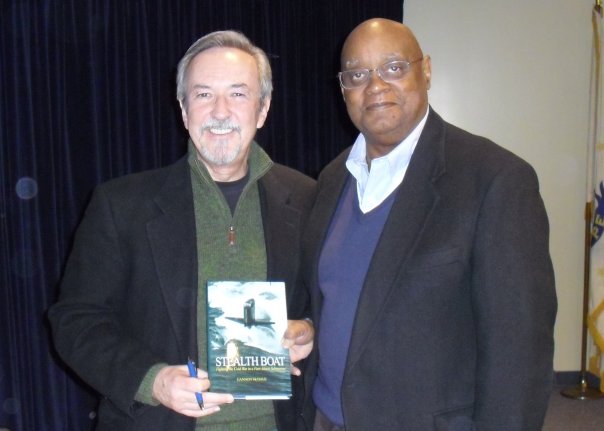
FROM SEAMAN TO SAGE - Naval History magazine - Gannon McHale

At Le Cheile, the local pub, a neighborhood buddy, the actor, author, and former submariner Gannon McHale tipped me off to his new piece - a tribute to his shipmate Commander William F. Bundy. - gwc

Commander William F. Bundy

FROM SEAMAN TO SAGE:  U.S. Naval Institute - Naval History Magazine - February 2021

FROM SEAMAN TO SAGE

The singular life of William F. Bundy, CDR USN (Ret.)

ECONOMY HALL The Hidden History of a Free Black Brotherhood By Fatima Shaik


Puncturing the Allure of Robert E. Lee, and Other Civil War-Era Histories - The New York Times

ECONOMY HALL
The Hidden History of a Free Black Brotherhood
By Fatima Shaik
Illustrated. 525 pp. The Historic New Orleans Collection.$34.95.


"Economy Hall” is so inviting that the true depth of its scholarship is revealed only in its bibliography, which lists dozens of archival and other sources. Shaik’s monumental book is anchored in 24 handwritten ledgers rescued from the trash by her father years ago. Her painstaking translation of the ledgers, and re-creation of the world that produced them, transports you to the orbit of the Société d’Economie et d’Assistance Mutuelle, a benevolent association and social club begun in 1836 by 15 French-speaking freemen of African descent in New Orleans. The book is simultaneously a history of the men’s iconic meeting place, Economy Hall, and of the city they called home.


Alexis de Tocqueville, commenting on Americans’ propensity to form associations, called this “art of joining” the “fundamental science” of democracy. Shaik emphasizes the political activism of the New Orleans group. Whether refuting the claims of scientific racism, risking their lives for the right to vote or nurturing jazz and other forms of African-American culture, members of the Economie fought to participate in democratic life. Not all of their ventures achieved the desired outcome, as a coalition of New Orleans Black men that included a president of the Economie discovered in 1896, when the Supreme Court upheld Louisiana’s separate train car law in Plessy v. Ferguson.

After 1900, the Economie “evolved from an elite to an inclusive society,” Shaik writes. As segregation tightened across the South, the society was led by the son of a Black mother and a Jewish father and began to focus less on politics and more on culture, particularly jazz. Economie musicians shaped the new musical form, and Economy Hall became famous for its dance parties.

The book is organized around the life of Ludger Boguille, the group’s long-serving secretary and a local leader of New Orleans’s prosperous Creole community. A fierce advocate of Black suffrage, Boguille was nearly killed in 1866 when an armed mob led by police burst into a reconvened Louisiana constitutional convention. Boguille was also a teacher, who prescribed “radical kindness” for students and parents alike. The city of New Orleans is Boguille’s co-star, and Shaik’s rendition of her hometown is lyrical and mysterious and always captivating.
Jane Dailey is a professor of history at the University of Chicago and the author of “White Fright: The Sexual Panic at the Heart of America’s Racist History.”

Puncturing the Allure of Robert E. Lee, and Other Civil War-Era Histories - The New York Times

Puncturing the Allure of Robert E. Lee, and Other Civil War-Era Histories - The New York Times

Saturday, March 6, 2021

Mosul prepares to welcome Pope Francis | Rudaw.net

Mosul prepares to welcome Pope Francis | Rudaw.net
good photos

Advance core socialist values! - Chinese Supreme Court


The Chinese Supreme People's Court is urging judges - when confronted with uncertainty - to apply 
Socialist Core Values

Update: The Times dual language edition reports on the mass campaign - including encouraging "square dancers" to sing about them.  That's not American square dancing - it's the groups of (mostly middle-aged or retiree) women who dance in public squares every morning and evening.


Here they are:

社会主义核心价值观

Socialist Core Values

富强 prosperity and strength

民主 democracy

文明 culture

和谐 harmony

自由 freedom

平等 equality

公正 impartiality

法治 rule of law

爱国 patriotism

敬业 dedication to work

诚信 honesty

友善 friendship


Friday, March 5, 2021

Capitol invasion - GOP Congress Members Social Media Posts - Zoe Lofgren

Capitol invasion - GOP Congress Members Social Media Posts - Zoe Lofgren

 This review lists public social media posts from Members of the U.S. House of Representatives who were sworn-in to office in January 2021 and who voted to overturn the 2020 presidential election.

Mobile users are advised to use linked PDFs (full or state-by-state).

Foreword by Rep. Lofgren

Drawing a reasonable inference from circumstantial evidence


Pope Francis arrives in Iraq as 'penitent pilgrim' begging for peace | National Catholic Reporter


Pope Francis arrives in Iraq as 'penitent pilgrim' begging for peace | National Catholic Reporter
by Joshua McElwee // NCR

BAGHDAD — Pope Francis arrived in Iraq March 5 for a three-day visit aimed at encouraging the nation's historic but diminishing Christian community amid tight security measures and worries about how the trip may facilitate the spread of the coronavirus.

Descending from his plane at Baghdad's airport wearing a face mask, Francis was met by a low-key, relatively distanced greeting ceremony of a few dozen soldiers in red uniforms and white helmets.

But despite the Iraqi government's recent imposition of new lockdown measures because of a spike in coronavirus cases, non-distanced and non-masked crowds lined the pope's route towards the presidential palace at various points.

In a speech to the country's political authorities at the palace, Francis said he had come to Iraq as a "penitent" to beg heavenly forgiveness for the "destruction and cruelty" the country had experienced in the years since the 2003 U.S.-led invasion and the rise and fall of the brutal ISIS regime.

Speaking to Iraqi President Barham Salih, Prime Minister Mustafa al-Kadhimi and about 150 other politicians, diplomats and civil servants, the pontiff made impassioned and repeated pleas that the country might avert further conflict.

"May the clash of arms be silenced!" exhorted Francis. "May their spread be curbed, here and everywhere!

"May the voice of builders and peacemakers find a hearing!" said the pope. "The voice of the humble, the poor, the ordinary men and women who want to live, work and pray in peace."

Thursday, March 4, 2021

The Remains of Vatican II | Commonweal Magazine - Massimo Faggioli

The Remains of Vatican II | Commonweal Magazine
By Massimo Faggioli

Pope Francis has said some interesting things about Vatican II in the last several weeks. On January 11, in a letter to the cardinal prefect of the Congregation for the Doctrine of the Faith accompanying his motu proprio allowing women to become lectors and acolytes, the pope described his decision in terms of the “horizon of renewal traced by the Second Vatican Council” and “in line with the Second Vatican Council.” Then came these remarks in his January 29 speech to the national catechetical office of the Italian bishops’ conference:

This is the magisterium: the Council is the magisterium of the Church. Either you are with the Church and therefore you follow the Council, and if you do not follow the Council or you interpret it in your own way, as you wish, you are not with the Church. We must be demanding and strict on this point. The Council should not be negotiated in order to have more of these.... No, the Council is as it is. And this problem that we are experiencing, of selectivity with respect to the Council, has been repeated throughout history with other Councils.

As with all other teachings by Francis, these statements speak in a particularly direct way to U.S. Catholicism. In recent months, some bishops and clerics have tried to advance a theologically defensible conservative interpretation of Vatican II, something to counter the extremist views of Archbishop Carlo Maria Viganò and a group of like-minded quasi-schismatics, who in addition to rejecting the “Bergolian” magisterium have taken a position that’s hard to distinguish from pure and simple rejection of the council’s teachings. Bishop Robert Barron, for example, has spoken of attacks on Vatican II as a “disturbing trend,” and Thomas Weinandy, former executive director of the Secretariat for Doctrine and Pastoral Practices of the USCCB, has chastised Viganò for challenging the council’s authenticity.

But there’s more than theological interpretation to consider. The alliance of conservative American Catholicism with Trumpism also says something about the reception of Vatican II; the fascination some have for a quasi-Caesarean political leadership is a symptom of the council’s failure in this country. Yet even if this is most evident among the extreme voices on the conservative side of the spectrum, it’s not a uniquely conservative problem. There are broader systemic phenomena in play, which in the last few years have exposed fault lines on the liberal-progressive side as well. 

The first is an “interruption” in the scholarly tradition of examining Vatican II. Studying the council requires fluency in Latin and other languages, and an intellectual ecosystem in which theology is grounded in conversation with Church history and the history of theology, not just social sciences. There is still no consensus on the English translation, the last one of which is now more than twenty-five years old (Austin Flannery, 1996; this was preceded by the one edited by Norman Tanner, SJ, in 1990, and that by Walter Abbott, SJ, in 1966). There are important studies on America and Vatican II (like the one forthcoming by Joseph Chinnici), but the last American history of Vatican II is John O’Malley’s What Happened at Vatican II, published in 2008 during the pontificate of Benedict XVI.

Wednesday, March 3, 2021

Joint Analysis of the Measures on the Administration of Law Firms and Administrative Measures for the Practice of Law by Lawyers of the People’s Republic of China | Chinese Human Rights Defenders

Joint Analysis of the Measures on the Administration of Law Firms and Administrative Measures for the Practice of Law by Lawyers of the People’s Republic of China | Chinese Human Rights Defenders

Eric Segall: Institutional Racism, Affirmative Action, and Judicial Hubris: Part I Dorf on Law

Dorf on Law: Institutional Racism, Affirmative Action, and Judicial Hubris: Part I
By Eric Segall
The pernicious and negative consequences of centuries of slavery, segregation, and formalized legal racial discrimination are still all around us. As I detailed here, institutional racism pervades our schools, police forces, governmental institutions, neighborhoods, and even our private markets. In my lifetime, just a few blocks from the law school where I teach, a hotel went to the Supreme Court arguing for the right to discriminate against people of color despite a federal statute prohibiting the same. Today, GOP legislatures in well over half the states are trying to deter people of color from voting. Just yesterday, the Court heard oral arguments in such a case. 

Against this backdrop of racism, educational institutions across the country now take account of race when selecting their incoming classes in order to achieve greater educational diversity that benefits people of all races. At the same time, a group called Students for Fair Admissions (SFAA) has been filing lawsuits attempting to prohibit public and private universities from taking race into account at all in their admissions decisions. These suits have challenged the use of affirmative action under the 14th Amendment's Equal Protection Clause as well as a federal statute (Title VI) that bars institutions receiving federal funds (virtually all colleges and universities) from  discriminating on the basis of race.

The Supreme Court will soon have to decide whether it will hear a lawsuit brought by SFAA against Harvard University seeking to end all use of race in university admissions. SFAA lost in the courts below, and last week filed a petition for certiorari seeking to have the Supreme Court reverse those decisions. This case is different from any the Court has heard before because SFAA is alleging racial discrimination against Asians, a traditionally disadvantaged group. But make no mistake, the effects of a ruling that racial considerations are off limits to admissions committees would seriously hurt Blacks and Hispanics and set back the efforts being made by universities nationwide to redress centuries of discrimination against all people of color. SFAA is surely thinking it will find a receptive audience among the six conservative Justices.

KEEP READING

Tuesday, March 2, 2021

Meet The Voting Rights Heavy-Hitters That Biden Has Picked To Lead DOJ | Talking Points Memo


Meet The Voting Rights Heavy-Hitters That Biden Has Picked To Lead DOJ | Talking Points Memo

By Tierney Sneed - February 25, 2021

President Biden has chosen for top positions at the Justice Department three advocates who have spent their lifetimes in the civil rights arena and the last four years in particular combatting the Trump-era’s most egregious assaults on democracy.

When then-President Trump put forward judicial nominees who had shown hostility to voting rights, Vanita Gupta organized the civil rights community pushback that helped sink the confirmations of at least two of them. 

When the administration stood up a sketchy “election integrity” commission to validate Trump’s false voter fraud claims, Kristen Clarke spearheaded one of the early legal challenges that contributed to the panel’s eventual demise. 

And when Trump hijacked the U.S. foreign policy apparatus to smear his 2020 presidential opponent, Pamela Karlan testified in House impeachment proceedings about the implications that gambit had for democracy.

Now all three have been selected for key DOJ positions from which they can revitalize the department’s role in the voting rights space — at a time when the threats to democratic participation are historically daunting.

Not only do they bring a complementary set of skills and experience that Judge Merrick Garland himself hailed in his attorney general confirmation hearing last week. All three did previous stints at the Department of Justice that will allow them to hit the ground running. And in this environment, the Biden administration will have no time to spare: the department will be facing an onslaught of restrictive voting laws, a historically challenging redistricting cycle, and a legal minefield with the Trump-ification of the federal judiciary.

“These are hard positions to be in,” said Allison Riggs, who leads the voting rights program at the Southern Coalition for Social Justice. “They will be aggressive advocates, and I think they will use their enforcement authority more than they have in the past.”

Already at the Justice Department because she was selected for a top civil rights division position that doesn’t require Senate confirmation, Karlan has signaled the beginning of a new era by rescinding the department’s bogus Trump-era request for census citizenship data. The move put the final nail in the coffin of that administration’s plan to weaponize the data against immigrant political power. Clarke will supervise the division if she is confirmed its assistant attorney general. Gupta, who occupied Karlan’s role during the final years of the Obama presidency, has been nominated for associate attorney general, the number three leadership position where she is expected to oversee not just DOJ civil rights work but several other department divisions.