Tuesday, September 22, 2020

A dozen Former Federal Judges Urge Senate Not To Rush SCOTUS Nominee

Project On Government Oversight - Wikipedia
Twelve former federal judges have appealed to Majority Leader Mitch McConnell to withhold the confirmation of a new Associate Justice until after the inauguration of the newly elected President.
Remarkably on of the is William Webster who has served not only as a judge but as Director of the FBI and of the CIA. - GWC
Former Federal Judges Urge Senate Not To Rush SCOTUS Nominee
***the public’s acceptance of the rule of the law doesn’t just derive from the fairness and impartiality of the Court’s decision-making: it is drawn, in large measure, from the decisions made by the Senate in the judicial confirmation process. The confirmation power exerts an extraordinary influence over the public’s perception and understanding of the role of courts and judges in our society.
This is why we implore Senators to exercise restraint. Our nation is on the precipice of a national election and is in the grip of a global pandemic. Our citizenry is sharply polarized--a foreboding sign for the health of any democracy. The judicial confirmation process has increasingly become dangerously politicized. Injecting a Supreme Court confirmation fight into this noxious mix will unalterably change and diminish the public’s faith in this vital institution.
For the sake of the Court, we respectfully ask that you withhold consideration of any Supreme Court nominee until after the inauguration of the president chosen by the American public. The legitimacy of the Supreme Court is not something that can be recovered if it is lost. It is up to you to demonstrate the same restraint demanded of our judiciary.

Time for Palestinians to Make Their Own Peace Plan - Hussein ibish - Bloomberg

Time for some fresh thinking.
Time for Palestinians to Make Their Own Peace Plan - Bloomberg
by Hussein Ibish
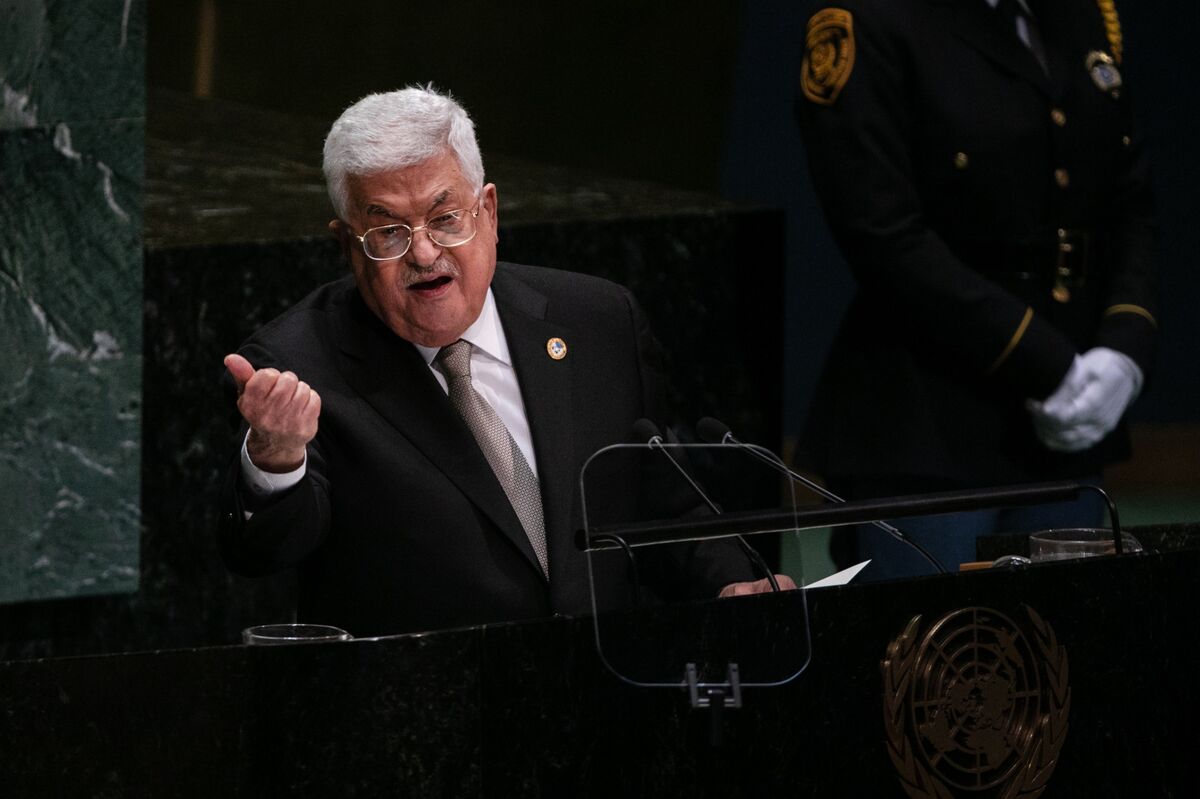
Palestinians are understandably furious at the United Arab Emirates and Bahrain for agreeing to normalize diplomatic relations with Israel, but it leaves them with no choice but to formulate their own strategy for ending the occupation.
The Palestinian leadership has been remarkably passive in recent years, especially since the announcement of the Trump administration’s so-called peace plan last January. Instead of replying with a constructive and compelling counterproposal, the Palestine Liberation Organization simply rejected the plan out of hand. President Mahmoud Abbas didn’t have to persuade the 22-member Arab League and the 57-member Organization of Islamic Cooperation to fully endorse his rejection. Most European governments also dismissed the Trump proposal.
This surge of international support may have given the Palestinians a false sense of security. Instead of coming up with their own plan, they have been relying mostly on the 2002 Arab Peace Initiative, which promised Arab recognition of Israel in return for the creation of a Palestinian state.
This was a huge mistake, because the Palestinians didn’t control the API’s implementation, or even its interpretation. When first promulgated, the API was generally understood to make normalization contingent on an agreement. However, some Arab countries began contemplating mutually reciprocal steps, with Israel easing (or promising to ease) the occupation in return for Arab diplomatic overtures. The idea was to create a virtuous cycle that would eventually lead to ending the occupation and normalization of relations around the same time.

Monday, September 21, 2020

Amy Coney Barrett and Ruth Bader Ginsburg: Trump's favored SCOTUS pick has a cruel vision of the law.

Amy Coney Barrett and Ruth Bader Ginsburg: Trump's favored SCOTUS pick has a cruel vision of the law.
by Mark Joseph Stern // Slate
Justice Ruth Bader Ginsburg’s death presents Donald Trump with an opportunity to transform the United States far beyond most Americans’ comprehension. Replacing the justice with a conservative would mark the single most consequential act of his presidency. It would doom policies and precedents that have come to form a cornerstone of American law. It’s not hard to foresee what the court could accomplish if Justice Brett Kavanaugh becomes the swing vote.
The consensus among legal and political analysts is that Judge Amy Coney Barrett, whom Trump placed on a federal appeals court in 2017, is the leading candidate to fill Ginsburg’s seat. Barrett gained fame during her confirmation hearing after Democratic Sen. Dianne Feinstein made inappropriate comments about the judge’s devout Catholic faith. She is a hardcore conservative, but that description doesn’t quite capture how radically her jurisprudence differs from Ginsburg’s. The justice viewed the Bill of Rights and civil rights acts as generous guarantees of human dignity that must be read expansively to achieve their purpose. By contrast, Barrett’s view of the law is fundamentally cruel. During her three years on the 7th Circuit Court of Appeals, Barrett has either written or joined a remarkable number of opinions that harm unpopular and powerless individuals who rely on the judiciary to safeguard their rights.

Saturday, September 19, 2020

Can you own the proof of a theorem?

WHO OWNS THE THEOREM? MELVYN B. NATHANSON Abstract. Epistemological and sociological questions about ownership of mathematical and scientific discoveries.
2009.08323.pdf
For me, the answer is clear. Here is an analogy. Legally, you cannot sequence a plant or animal DNA strand and patent the sequence because you did not create the sequence. God created it, and you only discovered it. Similarly, mathematical truths exist, and mathematicians only discover them. If you discover a theorem, you have the power, the privilege, and, perhaps, the right not to reveal it to anyone, but if, somehow, someone learns of your result, knows that a certain mathematical statement is true, then that person has the right to tell the world and to apply it to obtain new results, with or without your consent. Can you own a scientific truth? Can you hide a scientific truth? These are ethical questions, and, in the covid era, not only in mathematics.

Why have Chinese people mourned the death of Ruth Ginsburg?

Ruth Ginsburg
How she changed the highest court


The Paradigm of Billing Time: How Lawyers Are Not Like Investors


The Paradigm of Billing Time: How Lawyers Are Not Like Investors
by Roy Strom
Earlier this week, I wrote about a $185 million fee request that Quinn Emanuel filed in a class-action for insurers slated to receive $3.7 billion from the federal government over scrapped Obamacare “risk corridor” payments. The Big Law firm’s big ask raised a question about whether lawyers in such cases should get paid based on the time they work or the value they provide.
In the context of Quinn Emanuel’s case, that question has a long and interesting backstory. But there is obviously a lot more to analyze about the question of how lawyers should be compensated.
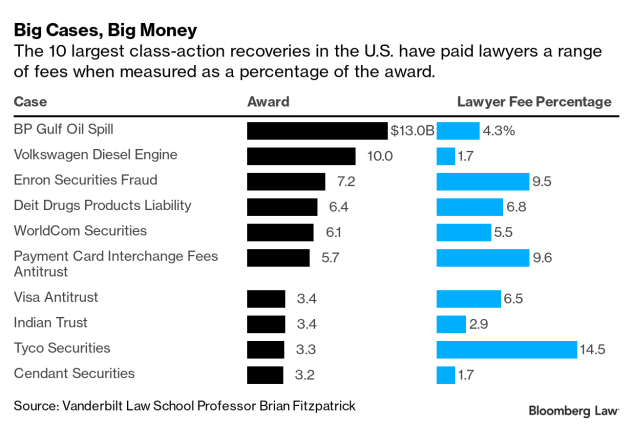
One of Quinn Emanuel’s experts, Vanderbilt Law School professor Brian Fitzpatrick, has a lot to say about the “time vs. value” question. He advocates for lawyers to be paid based on the value they bring to a case.
Fitzpatrick makes that case in Quinn Emanuel’s fee request by comparing class action lawyers to investors and entrepreneurs. He also points out one key difference between the two groups: the public’s backlash to “windfall” attorneys’ fees.
“When other entrepreneurs and investors succeed in their ventures, no one asks them: How many hours did you spend on this venture? What effective hourly rate did you earn? Should we take some of it away from you because it is ‘too high’?” Fitzpatrick writes.
He continues: “Class action lawyers are investors just like any others; they just invest their time and resources for others (the class members) with no hope of payment unless they achieve some form of success for those others. In my opinion, courts should not bow to the pressure and ask these questions of class counsel, either. Rather, courts should only ask what is best for class counsel’s incentives vis-à-vis class members.”
Fitzpatrick’s lawyers-as-investors analogy is certain to get some attention. It’s easy to laugh at the idea of hedge fund managers being scolded for not spending enough time in the office. But it also is worth asking why we don’t have the same reaction to clients wanting their lawyers holed up in an office. The legal profession, it seems, remains stuck in the paradigm of selling time.
One problem is that it’s difficult to figure out the contours of a truly value-based approach to the work attorneys do.
For instance, how do you measure the value of one individual lawyer over their competitors in a specific case? It’s difficult to do in the real world. There aren’t multiple lawyers litigating the same case in different ways, with differing results to compare.
Class-action lawyers often use theirs or their firm’s credentials as a way to assign value to their work. They point to the cases they have previously won. That’s tricky, too. Aren’t lawyers—and investors— always reminding us that past performance isn’t indicative of future success?

Friday, September 18, 2020

Remembering Ruth Ginsburg


I started law school fifty years ago at Rutgers-Newark which we called, light-heartedly, the People's Electric Law School.   Ruth was the first woman to teach a course on women and the law.  There were no women's rights journals, no law review articles, no books to assign.  So she started from scratch.  My law partner Eileen recalls that the first book she assigned was Simone de Beauvoir's The Second Sex.

She quickly began to fill the gaps.  We soon had the Women's Rights Law Reporter, and the women's rights litigation clinic led by the extraordinarily powerful professor Nadine Taub, only the third woman to join the faculty of the famously progressive law school.

I remember being in Ruth's civil procedure class, where she stood at the desk with her purse and her papers.  She had not yet argued a case in court.  Neal Katyal just called her the Thurgood Marshall of women's rights.  Truer words...Though she was a novice Ruth laid out her strategy - to make gender distinctions in the law a "suspect classification" which, like race, was to be viewed skeptically by reviewing courts.   Then she proceeded to accomplish that - by casting her vote on the Supreme Court and writing the majority opinion in the VMI case to admit the first woman to the state military college.

She embedded her views in her 1996 opinion in United States v. Virginia. Ginsburg wrote "generalizations about 'the way women are,' estimates of what is appropriate for most women, no longer justify denying opportunity to women whose talent and capacity place them outside the average description."

We were learning at the feet of an emerging giant.  I count that among the luckiest moments of my life.  - GWC


ON CONTRADICTION

Xi Jinping sends shock waves with his 2035 manifesto - Nikkei Asian Review
The Chinese Communist Party's leaders warn about western political thinking and emphasize Chinese characteristics.  But Marxism is western and in this short book Mao  emphasizes that nothing last forever.  The CPC should consider this regarding its determination to be the sole Party permanently in power. - gwc
ON CONTRADICTION Mao Tse-Tung
The metaphysical or vulgar evolutionist world outlook sees things as isolated, static and one-sided. It regards all things in the universe, their forms and their species, as eternally isolated from one another and immutable. Such change as there is can only be an increase or decrease in quantity or a change of place. Moreover, the cause of such an increase or decrease or change of place is not inside things but outside them, that is, the motive force is external. Metaphysicians hold that all the different kinds of things in the universe and all their characteristics have been the same ever since they first came into being. All subsequent changes have simply been increases or decreases in quantity. They contend that a thing can only keep on repeating itself as the same kind of thing and cannot change into anything different. In their opinion, capitalist exploitation, capitalist competition, the individualist ideology of capitalist society, and so on, can all be found in ancient slave society, or even in primitive society, and will exist for ever unchanged. 
They ascribe the causes of social development to factors external to society, such as geography and climate. They search in an over-simplified way outside a thing for the causes of its development, and they deny the theory of materialist dialectics which holds that development arises from the contradictions inside a thing. Consequently they can explain neither the qualitative diversity of things, nor the phenomenon of one quality changing into another. In Europe, this mode of thinking existed as mechanical materialism in the 17th and 18th centuries and as vulgar evolutionism at the end of the 19th and the beginning of the 20th centuries. 
In China, there was the metaphysical thinking exemplified in the saying "Heaven changeth not, likewise the Tao changeth not", [4] and it was supported by the decadent feudal ruling classes for a long time. Mechanical materialism and vulgar evolutionism, which were imported from Europe in the last hundred years, are supported by the bourgeoisie.

The United States is backsliding into autocracy under Trump, scholars warn - The Washington Post

The United States is backsliding into autocracy under Trump, scholars warn - The Washington Post
“Democracy depends on both sides accepting the results of free and fair elections and willingly turning over power to the other side if they lose,” Nyhan said. “We’ve never had a president attack our electoral system in this way.”
Lindberg refers to presidential attacks on the pillars of democracy as “dictator drift,” and says it’s a common feature of authoritarian leaders around the world.

Wednesday, September 16, 2020

University of Georgia: Football YES, Voting NO!

 University of Georgia  September 16, 2020


Frontline's "Policing the Police 2020" shows Newark's troubled police force slouching towards reform | Salon.com

Frontline's "Policing the Police 2020" shows Newark's troubled police force slouching towards reform | Salon.com

In 2016, New Yorker writer, professor and historian Jelani Cobb produced an episode for "Frontline" titled "Policing the Police" in which he journeyed to Newark, New Jersey in the wake of two pivotal events. The first was the recent election of Ras J. Baraka to the office of mayor in 2014. The second, which happened that same year, was the release of a Department of Justice report that determined the Newark Police Department had engaged in a pattern of unconstitutional conduct that disproportionately targeted minorities. For one, it found that nearly 75 percent of documented pedestrian stops by the police were not justified.
And this explains, but does not excuse, why Cobb came up empty when he sought out paperwork on a questionably executed and highly disturbing stop he witnessed firsthand during a 2016 ride-along with Newark police. In the scene, the officers Cobb accompanies surround a Black man who was simply walking home, wrestle him to the ground, cuff him and rough him up as they go through his pockets, only to release him when they didn't find any weapons or drugs. Their justification for such force was what he said to officers as they approached him: "Don't touch me, man. Please don't touch me."

Professional Responsibility Blog: Third Circuit issues opinion on whether a prosecutor can be sued for conduct that resulted in wrongful conviction

Professional Responsibility Blog: Third Circuit issues opinion on whether a prosecutor can be sued for conduct that resulted in wrongful conviction
by Professor Alberto Bernabe (UIC
Prosecutors are usually protected from possible civil liability because they can claim immunity.  However, immunity only applies to their conduct as litigators, not as investigators and defining the line between one and the other is a matter of much debate.  
There are many cases out there that discuss the issue and now the Court of Appeals for the Third Circuit has added a new one.  In a case Weimer v. County of Fayette, Pennsylvania, the court examines the claim of plaintiff Crystal Dawn Weimer who spent more than eleven years in prison, and then, after her convictions were vacated, filed suit under 42 U.S.C. § 1983, alleging that the County of Fayette, Pennsylvania; its former District Attorney, Nancy Vernon; the City of Connellsville; and several city and state police officers violated her rights under the U.S. Constitution and Pennsylvania law. 
The Court found that certain aspects of the prosecutors conduct were protected by immunity, but many others were not and remanded the case for further  proceedings.
You can read more about the case here, where you can also find an embedded copy of the opinion. 

Tuesday, September 15, 2020

Coronavirus, Civil Liberties, and the Courts: The Case Against “Suspending” Judicial Review - Harvard Law Review

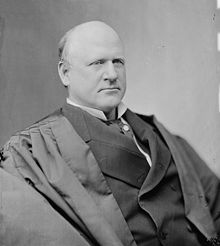
JudgeJMHarlan.jpg
John Marshall Harlan, Associate Justice
1877-1911
In the truly landmark case of Jacobson v. Massachusetts 197 U.S. 11 (1905) Justice John Marshall Harlan, reviewing a $5 fine for failure to consent to vaccination against smallpox, explained for the Supreme Court that it is within the police power of a State to enact a compulsory vaccination law, and it is for the legislature, and not for the courts, to determine in the first instance whether vaccination is or is not the best mode for the prevention of smallpox and the protection of the public health.
That plain statement of judicial deference to elected officials was followed by another that has become the part best remembered, and cited most often in this the moment of the corona virus pandemic:

[W]hen faced with a society-threatening epidemic, a state may implement emergency measures that curtail constitutional rights so long as the measures have at least some “real or substantial relation” to the public health crisis and are not “beyond all question, a plain, palpable invasion of rights secured by the fundamental law.

Texas law professors Lindsay Wiley and Stephen Vladeck in a new essay warn against the common view that 
invocation of "emergency" means the "suspension" of judicial review.  
Wiley and Vladeck argue that it means neither: that ordinary judicial review standards are 
adequate - that attention to the facts and an independent eye are the norm that judges should 
be following lest this "emergency" - like others, morph into the new normal, with rights 
casually restricted and courts keeping hands off. - GWC 
Coronavirus, Civil Liberties, and the Courts: The Case Against “Suspending” Judicial Review - Harvard Law Review
by   & 

In this Essay, we argue that the suspension approach to judicial review is wrong — not just as applied to governmental actions taken in response to novel coronavirus, but in general. As we explain, the current crisis helps to underscore at least three independent objections to the “suspension” model some courts have derived from decisions like Jacobson and Avino. These critiques likewise apply to instances in which courts purport to adopt the appropriate standard of review but do not actually apply it with appropriate rigor.26×26. See, e.g., Korematsu v. United States, 323 U.S. 214, 216–18 (1944) (holding that internment of Japanese Americans passed “the most rigid scrutiny,” id. at 216, because of the compelling interests presented by national security concerns). Korematsu has been roundly rejected as part of the constitutional anticanon. Jamal Greene, The Anticanon, 125 HARV. L. REV. 379, 380, 387–90 (2011). In the absence of such a clear repudiation, soft applications of constitutional standards of review in times of crisis may create dangerous precedent for future applications of those standards once the crisis has passed. Justice Jackson articulated this concern in his Korematsu dissent: “[O]nce a judicial opinion . . . rationalizes the Constitution to show that the Constitution sanctions such an order, the Court for all time has validated the principle of racial discrimination.” 323 U.S. at 246 (Jackson, J., dissenting).
First, the suspension principle is inextricably linked with the idea that a crisis is of finite — and brief — duration. To that end, the principle is ill-suited for long-term and open-ended emergencies like the one in which we currently find ourselves.
Second, and relatedly, the suspension model is based upon the oft-unsubstantiated assertion that “ordinary” judicial review will be too harsh on government actions in a crisis — and could therefore undermine the efficacy of the government’s response. In contrast, as some of the coronavirus cases have already demonstrated, most of these measures would have met with the same fate under “ordinary” scrutiny, too.27×27. Cf., e.g., Legacy Church, Inc. v. Kunkel, No. CIV 20-0327, 2020 WL 1905586, at *36 n.12 (D.N.M. Apr. 17, 2020) (rejecting First Amendment challenges by a church to an order prohibiting gatherings without social distancing on the alternative ground that the order survives strict scrutiny). The principles of proportionality and balancing driving most modern constitutional standards permit greater incursions into civil liberties in times of greater communal need. That is the essence of the “liberty regulated by law” described by the Court in Jacobson.28×28. Jacobson, 197 U.S. at 27 (quoting Crowley v. Christensen, 137 U.S. 86, 90 (1890)).
Finally, the most critical failure of the suspension model is that it does not account for the importance of an independent judiciary in a crisis — “as perhaps the only institution that is in any structural position to push back against potential overreaching by the local, state, or federal political branches.”29×29. Wiley & Vladeck, supra note 3. Indeed, as Professor Ilya Somin has put it, “imposing normal judicial review on emergency measures can help reduce the risk that the emergency will be used as a pretext to undermine constitutional rights and weaken constraints on government power even in ways that are not really necessary to address the crisis.”30×30. Ilya Somin, The Case for “Regular” Judicial Review of Coronavirus Emergency Policies, VOLOKH CONSPIRACY (Apr. 15, 2020, 4:16 PM), https://reason.com/2020/04/15/the-case-for-normal-judicial-review-of-coronavirus-emergency-policies [https://perma.cc/W82D-NKRN]. Otherwise, we risk ending up with decisions like Korematsu v. United States31×31. 323 U.S. 214. — in which courts sustain gross violations of civil rights because they are either unwilling or unable to meaningfully look behind the government’s purported claims of exigency...

Sunstein and Vermeule: | The Very Structure of Modern Government Is Under Legal Assault - The New York Times

Torts Today: Opinion | The Very Structure of Modern Government Is Under Legal Assault - The New York Times
by Adrian Vermeule and Cass Sunstein
Both are professors at Harvard Law School.  Sunstein was Director of the Executive Office of Information and Regulatory Review in the Obama White House.

Torts Today: 9th Circuit OK's termination of Salvadoreans' Temporary Protect Status - ImmigrationProf Blog

Torts Today: 9th Circuit OK's termination of Salvadoreans' Temporary Protect Status - ImmigrationProf Blog

Lochner rides again: Penn judge: limits on church attendance are unconstitutional

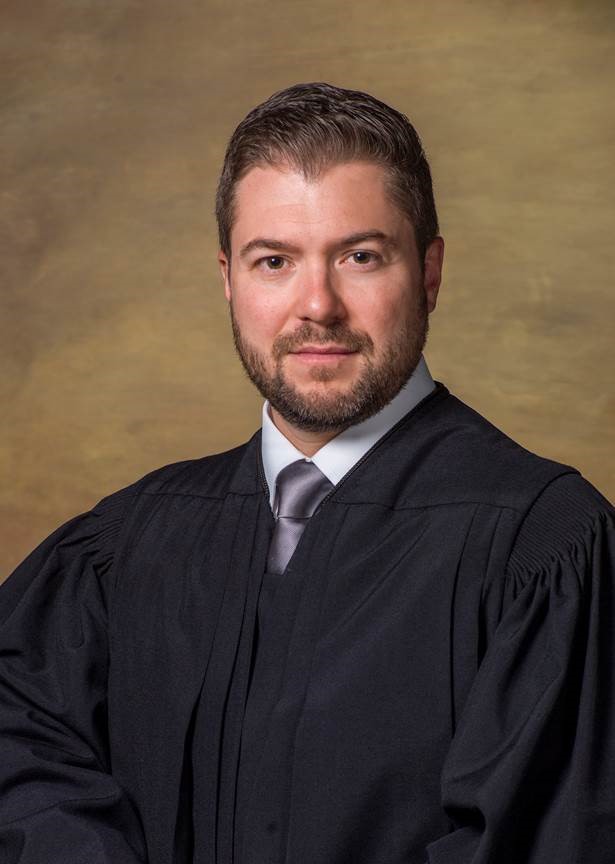
William S. Stickman IV, District Judge | Western District of Pennsylvania |  United States District Court

Saying the quiet part out loud, William S. Stickman IV, a conservative 2019 appointee to the bench of the Western District of Pennsylvania, citing substantive due process, declares unconstitutional Pennsylvania Governor Thomas Wolf's pandemic-related restrictions on indoor church gatherings.  Judge Stickman, a conservative Catholic, says that he has been "guided" by Constitutional principles to declare

(1) that the congregate  gathering  limits imposed  by Defendants'  mitigation  orders violate the right  of assembly  enshrined  in the First Amendment; (2)  that  the  stay-at-home  and  business  closure components  of Defendants'  orders   violate  the Due Process Clause of the Fourteenth Amendment;  and (3) that the business closure components of Defendants' orders violate the Equal Protection Clause of the Fourteenth Amendment.

Although he affirmed strongly during his 2019 confirmation hearings that he would be bound by the precedential decisions of higher courts,  Stickman  disparages the authorities and principles on which  John Roberts, casting the deciding vote, relied in South Bay United Pentecostal Church, explaining last May that 
Our Constitution principally entrusts “[t]he safety and the health of the people” to the politically ac-countable officials of the States “to guard and protect.” Jacobson v. Massachusetts, 197 U. S. 11  (1905). When those officials “undertake[ ] to act in areas fraught with medical and scientific uncertainties,” their latitude “must be especially broad.” Marshall v. United States, 414 U. S. 417  (1974). Where those broad limits are not exceeded, they should not be subject to second-guessing by an “unelected federal judiciary,” which lacks the background, competence, and expertise to assess public health and is not accountable to the people.
Judge Stickman rejects Jacobson while reaching  back to the font of conservative libertarian freedoms - freedom of contract:
Lochner v. New York, 198 U.S. 45 (1905), was considerably recalibrated and de-emphasized by the New Deal Supreme Court and later jurisprudence. Nevertheless, our Supreme Court has never repudiated the recognition that a citizen has the right to work for a living and pursue his or her chosen occupation. The Third Circuit has recognized "[t]he right to hold specific private employment and to follow a chosen profession free from umeasonable governmental interference comes within both the 'liberty' and the 'property' concepts of the Fifth and Fourteenth Amendments." Piecknick v. Comm. of Pa., 36 F.3d 1250, 1259 (3d. Cir. 1994) (citing Green v. McElroy, 360 U.S. 474, 492 (1959); Truax, 239 U.S. at 41). However, [t]he Constitution only protects this liberty from state actions that threaten to deprive persons of the right to pursue their chosen occupation. State actions that exclude a person from one particular job are not actionable in suits ... brought directly under the due process clause. It is the liberty to pursue a calling or occupation, and not the right to a specific job, that is secured by the  fourteenth Amendment.

Despite the fact that as he swore before Congress that he is not a member of the Federalist Society Judge Stickman has doubtless vaulted into stardom.  His emergency powers hobbled, the Governor is sure to appeal to the Third Circuit.  There judges more likely to heed the 5-4 South Bay United majority will presumably stay the young judge's order. 

 - GWC


Monday, September 14, 2020

Commentary: White Christians - the Relationship with White Supremacy Stands // Commonweal Editorial

 by the Editors of Commonweal - independent Catholic magazine

The Commonweal Podcast


It's not just the "Evangelicals"  Church-going white Catholics too are solidly in Trump's camp.

Sunday, September 13, 2020

11th Circuit en banc upholds financial restrictions on voting by former felons

DeSantis should let convicted felons vote in Florida. - South Florida  Sun-Sentinel 

Law and Justice: Felons and Voting Rights in Florida

Felonies in Florida

Purchase of over 20 grams of cannabis is a third degree felony, as is writing a worthless check for over $150. Three times with a suspended license and you’re a felon.  As many as 750,000 people in Florida were barred from voting for having been convicted of a felony. 

Florida long barred those convicted of a felony from voting.  Civil rights groups see the loss of franchise of those with criminal records as a legacy of the Jim Crow era of pervasive legal discrimination by race. Part of that heritage of poverty and oppression is that Black Floridians of voting age are disproportionately affected by the lifetime ban on voting by persons convicted of felonies.

One of the mechanism of oppression of African Americans was the imposition of a poll tax, which Florida imposed from 1877 - 1937 - the year the Supreme Court upheld poll taxes as constitutional.  In 1964 the poll tax was abolished for federal elections by the Twenty Fourth Amendment to the Constitution of the United States. It provides

The right of citizens of the United States to vote in any primary or other election for President or Vice President for electors for President or Vice President, or for Senator or Representative in Congress, shall not be denied or abridged by the United States or any State by reason of failure to pay any poll tax or other tax.


Though the Twenty Fourth Amendment applied only to federal elections, the U.S. Supreme Court ruled 6–3 in Harper v. Virginia Board of Elections, 383 U.S. 663 (1966), that poll taxes for any level of elections - state or federal -are unconstitutional. In Harper in an opinion by William O. Douglas the court applied “heightened scrutiny” to laws that limit access to the franchise on the basis of wealth.  It said these violated the Equal Protection Clause of the Fourteenth Amendment. Subsequent litigation related to potential discriminatory effects of voter registration requirements has generally been based on application of this clause.

Florida - “Amendment 4"

In 2018 Florida voters adopted “Amendment 4" actually Amendment VI, Section 4 of the state’s Constitution, it  provides 

Article VI, Section 4. Disqualifications.—

(a) No person convicted of a felony, or adjudicated in this or any other state to be mentally incompetent, shall be qualified to vote or hold office until restoration of civil rights or removal of disability. Except as provided in subsection (b) of this section, any disqualification from voting arising from a felony conviction shall terminate and voting rights shall be restored upon completion of all terms of sentence including parole or probation.

The Republican-controlled Legislature then adopted §98.0751 a clarification? or amendment? new restriction? On the restoration of voting rights.  It provides that felons must settle “all terms” including the fines, costs, restitutionary and other financial obligations imposed at sentencing in order to regain eligibility to vote restored. Gov. Ron DeSantis, a Republican, signed it into law in 2019  The state’s lawyers argued that voters knew when they supported Amendment 4, the measure restoring voting rights, that felons would have to pay their outstanding debts before becoming eligible to vote.

In Jones v. DeSantis , 401 F. Supp 3d 1284 District Judge Robert L. Hinkle construed “all terms of sentence including parole or probation” as what a “reasonable voter” would have understood was meant.  Applying the canon of construction expressio unius est exclusio alterius [to state one is to exclude the others] he interpreted the voting bar to have been lifted for all who had completed their terms of incarceration, parole, and probation. Hinkle explained:

As the Secretary [of State] emphatically notes, "all" means "all." But the question is not whether "all" means "all"; it obviously does.  The question is all of what. This order divides the discussion of this issue into four parts: (a) fines and restitution; (b) other financial obligations imposed at the time of sentencing;   (c) amounts converted to civil liens; and (d) the bottom-line treatment of these issues for purposes of this order.  

As to the statute passed by the Legislature, Hinkle ruled that it violated the equal protection clause of the Constitution's  14th Amendment because it conditioned the right to vote on ability to pay.  The conversion of a judgment of conviction’s terms to a civil obligation implicates the 24th Amendment “poll...or any other tax”, the judge of the Northern District of Florida in Tallahassee, the state capitol, explained.   The 24th Amendment provision had, by virtue of the precedent of Harper v. Virginia, been extended to the states.

A panel of the 11th affirmed Hinkle’s ruling in Jones v. Governor of Florida, 950 F. 3d 795 .  The court ruled that heightened scrutiny as in Harper is warranted - and that the Equal Protection clause of the 14th Amendment bars discrimination on the basis of inability to pay fines.

But last week the full 11th Circuit Court of Appeals, en banc, voted 6-4 to reverse in a series of opinions totaling 200 pages.  The majority found that because disenfranchisement is a long established practice felons have no fundamental right to vote. The Fourteenth Amendment therefore does not apply to them.  The majority of the federal Court of Appeals Court judges explained:

As Judge [Henry] Friendly explained, early American States may have based the practice on the Lockean understanding that those who break the social contract by committing a crime “have abandoned the right to participate in further administering the compact.” Green v. Bd. of Elections, 380 F.2d 445, 451 (2d Cir. 1967). And as a practical matter, “it can scarcely be deemed unreasonable for a state to decide that perpetrators of serious crimes shall not take part in electing the legislators who make the laws, the executives who enforce these the prosecutors who must try them for further violations, or the judges who are to consider their cases.” 


The majority - five of whom were nominated by President Donald Trump - elaborated:

When the States ratified the Fourteenth Amendment in 1868, 29 of their constitutions permitted or required felon disenfranchisement. Richardson v. Ramirez, 418 U.S. 24, 48 & n.14 (1974). Section 2 of the Fourteenth Amendment expressly allows States to disenfranchise criminals without having their representation reduced in Congress. U.S. Const. amend. XIV, § 2. Today, almost all States disenfranchise felons in some way, although the recent trend is toward expanding access to the franchise. 


 (One of the majority, a former justice of the Florida Supreme Court, Judge Barbara Lagoa, was named by Mr. Trump last week as among those he would consider nominating to a potential future seat on the Supreme Court.)

Restoring felons’ voting rights could vastly grow the electorate in the nation’s biggest presidential battleground state. An expert for the American Civil Liberties Union and other civil rights groups testified at trial that more than 774,000 felons in Florida owe legal financial obligations (LFOs).  [Is that a value judges are called upon to aid?] 

The dissent of Judge Jordan, joined by three colleagues, was scathing:

Incredibly, and sadly, the majority says that Florida has complied with the Constitution. So much is profoundly wrong with the majority opinion that it is difficult to know where to begin. But one must start somewhere, so I will first turn to the facts, those “stubborn things,” Campbell v. Fasken, 267 F.2d 792, 796 (5th Cir. 1959), which though proven at trial and unchallenged on appeal, are generally relegated to the dustbin in the majority opinion. 

The [en banc] majority proceeds as though the reality on the ground does not matter, but the record tells a different story. After an eight-day bench trial, the district court issued a 125-page opinion containing the following findings of fact—none of which Florida challenges on appeal. 

1. “[T]he overwhelming majority of felons who have not paid their LFOs in full, but who are otherwise eligible to vote, are genuinely unable to pay the required amount, and thus, under Florida’s pay-to-vote system, will be barred from voting solely because they lack sufficient funds.” Jones II, 2020 WL 2618062, at *16. [emphasis original]

It is worth noting that although the post Civil War Fifteenth Amendment (1870) bars discrimination based on “race, color or previous condition of servitude”, the Nineteenth Amendment extends the franchise to women, and the Twenty Sixth sets the voting age at 18 years, the federal Constitution does not establish a right to vote.  It  remains in the hands of the states to set the terms.  In 2019 the Supreme Court dismissed Rucho v. Common Cause, asserting it lacked jurisdiction to intervene in cases asserting that states legislative and Congressional district lines discriminated against voters on the basis of their political party.  The Supreme Court in 2013 in Shelby County v. Holder freed southern states from the Voting Rights  Act requirement to obtain federal approval of changes in voting procedures.  Unless there are dramatic changes in the composition of the Congress - or its Rules - The struggle ahead to expand the franchise will be on a state by state basis, with neither federal courts nor Congress playing a substantial role.

- GWC 

updated February 4, 2021