Thursday, May 9, 2019

Why Judges Need Good law Clerks - Legal Skills Prof Blog

Legal Skills Prof Blog
by E. Scott Fruehwald

Here is a question I've never thought about before: Are lawyers citing the best cases to courts?  In other words, do the courts use the cases cited in the briefs, and how often do the courts use cases not mentioned in any brief?  The answer may surprise you!
Kevin Bennardo & Alexa Chew (UNC), Citation Stickiness.
"This Article is an empirical study of what we call citation stickiness. A citation is sticky if it appears in one of the parties’ briefs and then again in the court’s opinion. Imagine that the parties use their briefs to toss citations in the court’s direction. Some of those citations stick and appear in the opinion — these are the sticky citations. Some of those citations don’t stick and are unmentioned by the court — these are the unsticky ones. Finally, some sources were never mentioned by the parties yet appear in the court’s opinion. These authorities are endogenous — they spring from the internal workings of the court itself.
In a perfect adversarial world, the percentage of sticky citations in courts’ opinions would be something approaching 100%. The parties would discuss the relevant authorities in their briefs, and the court would rely on the same authorities in its decision-making. Spoiler alert: our adversarial world is imperfect. Endogenous citations abound in judicial opinions and parties’ briefs are brimming with unsticky citations.
So we crunched the numbers. We analyzed 325 cases in the federal courts of appeals. Of the 7552 cases cited in those opinions, more than half were never mentioned in the parties’ briefs. But there’s more — in the Article, you’ll learn how many of the 23,479 cases cited in the parties’ briefs were sticky and how many were unsticky. You’ll see the stickiness data sliced and diced in numerous ways: by circuit, by case topic, by an assortment of characteristics of the authoring judge. Read on!"
Let me repeat the key point in the abstract: "We analyzed 325 cases in the federal courts of appeals. Of the 7552 cases cited in those opinions, more than half were never mentioned in the parties’ briefs."  This is astounding.  It raises the question of why lawyers aren't doing a better job of citing the essential cases to the court.  And there's more: "In our 325-case data set, the parties cited 23,479 cases. Of those, only 16% were later cited by the courts in their opinions—or to use our nomenclature, only 16% of the cases cited in the briefs were sticky."

Monday, May 6, 2019

Over 400 former federal prosecutors say Trump committed indictable offenses

400 former federal prosecutors say Trump committed indictable offenses
“STATEMENT BY FORMER FEDERAL PROSECUTORS” by DOJ Alumni

We are former federal prosecutors. We served under both Republican and Democratic administrations at different levels of the federal system: as line attorneys, supervisors, special prosecutors, United States Attorneys, and senior officials at the Department of Justice. The offices in which we served were small, medium, and large; urban, suburban, and rural; and located in all parts of our country.
Each of us believes that the conduct of President Trump described in Special Counsel Robert Mueller’s report would, in the case of any other person not covered by the Office of Legal Counsel policy against indicting a sitting President, result in multiple felony charges for obstruction of justice.
The Mueller report describes several acts that satisfy all of the elements for an obstruction charge: conduct that obstructed or attempted to obstruct the truth-finding process, as to which the evidence of corrupt intent and connection to pending proceedings is overwhelming. These include:
· The President’s efforts to fire Mueller and to falsify evidence about that effort;
· The President’s efforts to limit the scope of Mueller’s investigation to exclude his conduct; and
· The President’s efforts to prevent witnesses from cooperating with investigators probing him and his campaign

Zogby : KushnerlTrump plan is no way out. - Lobelog

Even if there is a “deal of the century” (and I’m still an agnostic on that question), we can be certain that it won’t: end the occupation of the lands seized in the 1967 War; create true Palestinian sovereignty and control over their land and resources; give Palestinians the opportunity to freely and independently conduct commerce with the outside world; recognize the rights of Palestinian refugees; or do anything to reunite the areas now called “East Jerusalem” to Palestinian control.?Finally, the “hint” that the deal will throw money at the Palestinians to “make their lives better” is as insulting as it is pointless. But then, I’m not even sure that’s real.
https://lobelog.com/playing-20-questions-to-figure-out-the-deal-of-the-century/

Sunday, May 5, 2019

Protests of Harvard professor's defense in rape trial of Hollywod producer persist - Boston Globe

by Stephanie Gilbert // Boston 

In the tumultuous few months since students began objecting to Harvard Law professor Ronald S. Sullivan Jr.’s decision to defend Hollywood producer Harvey Weinstein at his rape trial, the college has been reviewing the living climate at Winthrop House, the residential community he leads as faculty dean.

But, suffice it to say, the climate is anything but copacetic.
On Friday, students dressed in red occupied the Winthrop House dining hall to “reclaim it as a safe space” for survivors of sexual assault. In recent weeks, the house was spray-painted with #MeToo graffiti and papered with illustrated fliers that Sullivan called “racially offensive.” It was also the site of a tense dining hall interaction between a student who started the protests against Sullivan and an adult tutor perceived to be loyal to him. (Each called police, alleging harassment by the other.)And now — as may have been inevitable all along — a dispute rooted in the campus controversy over Weinstein’s high-powered legal representation is headed to court. Two tutors who live in Winthrop House are suing another faculty member for defamation connected to the Sullivan controversy, and their lawyer — Sullivan’s sometime legal partner — has subpoenaed the student newspaper for all communications concerning Sullivan.
“I’ve never seen anything like this,” said Amelia Y. Goldberg, a Harvard senior and an activist with a group called Our Harvard Can Do Better, which has pushed for Sullivan’s removal as faculty dean. She called the steps taken against student activists and their supporters “intimidation and retaliation tactics.”  KEEP READING

The forgotten history of how Abraham Lincoln helped rig the Senate for Republicans – ThinkProgress

The forgotten history of how Abraham Lincoln helped rig the Senate for Republicans – ThinkProgress
by Ian Millhiser

Ian Millhiser: DeVos ignorance reveals our basic divide about role of government

Ian Mllhiser explains that the central divide in our history is between the "govern least" approach and the government most effectively approach. Millhiser takes aim at a typical bit of DeVos nonsense to introduce a clarifying view of American legal history" https://thinkprogress.org/betsy-devos-has-no-idea-who-alexander-hamilton-was-9fdb117d2a7e/


Thursday, May 2, 2019

Kamala Harris presses Attorney General Barr on conflicts of interest

Senator Kamala Harris (D-California) was the last - and perhaps most effective - questioner of Attorney General William Barr.
Of particular note to me was her pressing the A.G. on the fact that Deputy A.G. Rod Rosenstein participated in the decision not to charge Trump with obstruction of justice. This despite the fact that Rosenstein at Trump's request drafted a memo stating grounds to fire the FBI Director.  Rosenstein was thus a principal  witness in the decision to fire James Comey which Trump later said was in order to terminate the investigation of his campaign's connection to Russian hacking into the Democratic Party's computers during the 2016 presidential campaign. The lawyer-witness rule RPC 3.7 bars such participation- gwc


WeChat spreads misinformation re SHSAT

https://www.cjr.org/tow_center/shsat-chinese-language-misinformation-new-york-schools.php

How Palestinians Should React To Trump’s Peace Plan – The Forward

How Palestinians Should React To Trump’s Peace Plan – The Forward: Palestinians should say yes to the opportunity of making peace with Israel, but must fight for the principals of the 1993 DOP agreement.
by Hussein Ibish

***They need to be very clear that what they are saying “yes” to is any opportunity to talk with Israel and the US, but not to the substance of any such proposal. When the plan is presented, it will surely be floated with the outline of the series of talks designed to implement it. Palestinians should show up at every opportunity but make it crystal-clear that they are participating specifically to remind Israel, the United States and the whole world that both countries are already signatories to the 1993 DOP. Its framework logically leads only to a Palestinian state, and doesn’t permit several of the most pernicious recent actions, specifically the American recognition of all of Jerusalem as Israel’s capital.

Tuesday, April 30, 2019

Guidance on Securities Group Actions: Beijing Higher Peoples Court

The Beijing City Higher Peoples Court, Susan Finder reports, following the Shanghai court, has issued a guidance on fair and efficient disposition of group securities disputes.  This is a step forward.  Ten years ago when in Beijing I was beseeched by a group of young lawyers who had been stymied by the courts in their efforts to bring product liability actions for victims of contaminated infant formula.  
In 2010 a Conoco run offshore oil rig spilled in the Bohai Bay.  Fishermen and aquaculturists excluded from the compensation scheme negotiated by the Ministry of Agriculture filed lawsuits.  As in the infant formula cases courts simply refused to accept the filings.  Non-plussed by how to handle multiple venue claims and unsure if maritime or general environmental law governed the courts were paralyzed.  Some filed suit in Texas where Conoco Philips is headquartered.  Others protested publicly and through Party channels.  In 2014 the CP Central Committee plenum mandated that courts accept filings of cases, and allowed appeals of refusals to accept cases.  The fishermen and aquaculturists claims eventually resolved.

But it remains the case that no mechanism such as our Multi-District Litigation (MDL) consolidated case system, or Fed R CvPro Rule 23 class actions exists in China.  So these new guidances are a step forward.  Nico Howson - responding on the Chinalaw listserv has these observations:

- gwc

[O]n a very quick read, [this] does represent movement on the idea of (real-er) class actions in the sphere of securities law claims (claims against issuers, underwriters, directors and management, control parties, etc. for false and misleading disclosure upon initial issuance or in periodic reporting), or at least movement beyond outright ban or the cannibalization of class claims under the SPC's 2003 regulations.
I raise it on this list-serve because I think it has some implications for how the PRC party state might handle so-called group cases in other spheres (mass environmental torts to poisonous milk powder...) 
As you will see, the notice allows the Beijing Higher People's Court system courts to designate (upon application by plaintiffs) a set of securities claims (note presently only those, insider trading and manipulation cases are to look at the notice "for reference") as a model or exemplary (shifan) adjudication, take evidence on, adjudicate the legal claims regarding, and determine damages for, such cases, and notify courts handling so-called "parallel" (pingxing) cases of the judgment.  The courts and the parties in the parallel cases sphere can use the evidence, and apply the law, cooked up in the exemplary case adjudication without any re-pleading or evidentiary work, and must then proceed to mediation (tiaojie) with respect to those claims -- the implication I think being that the courts in the parallel cases will apply the law and facts established in the model case adjudication in that court-led mediation.  Sort of mediation under the color of exemplary adjudication...  If the parties don't agree to a mediated result within a time certain, the those cases are re-consolidated into an ongoing litigation.  Please note that there is nothing in this notice that eliminates the 2003 SPC regulations requirement that no case can be established until there is a civil sanction or criminal determination in the case first.
I am not naive in that I see this as anything close to class action litigation (opt in or opt out) or something that solves the financing block in such cases, nor do I want to ignore all sorts of bad due process effects (for the defendants in the parallel cases if they have lost the argument in the model case, or for the plaintiffs in the parallel cases if they have lost in the model case, etc.) apparently serving "efficiency" and the goal of mediation, etc.  However, it does seem a more than rhetorical attempt to address this specific genus of "mass claims" in the PRC, without as I say above falling back on outright bans, group carve ups sent to litigation purgatory, or Taiwan's SFIPC (which the PRC seems committed to copying, with all of its problems, in the new Securities Law...)

-- Nicholas Calcina HowsonProfessor of LawUniversity of Michigan Law School
SSRN Author page: http://ssrn.com/author=583541  

The zombie style in legal analysis

A challenge for law teachers is Do we dare say that judges of the Supreme Court are not honest legal analysts?
The Zombie Style in American Politics https://www.nytimes.com/2019/04/29/opinion/republican-party-ideas.html

Monday, April 29, 2019

Congress's Contempt Power and the Enforcement of Congressional Subpoenas: Law, History, Practice, and Procedure

Congress's Contempt Power and the Enforcement of Congressional Subpoenas: Law, History, Practice, and Procedure
by Todd Garvey
Congressional Research Service

Should retired judges be beyond the reach of the courts?

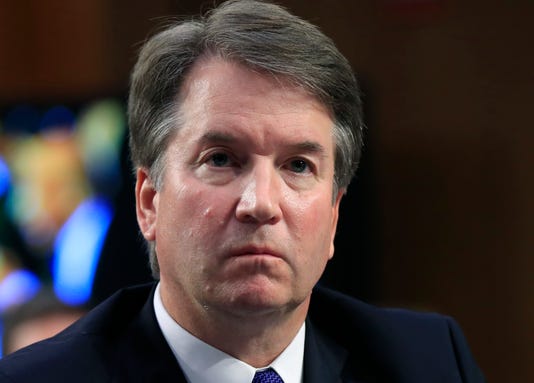
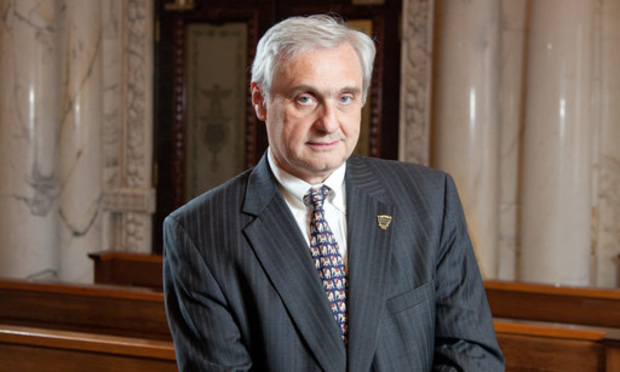
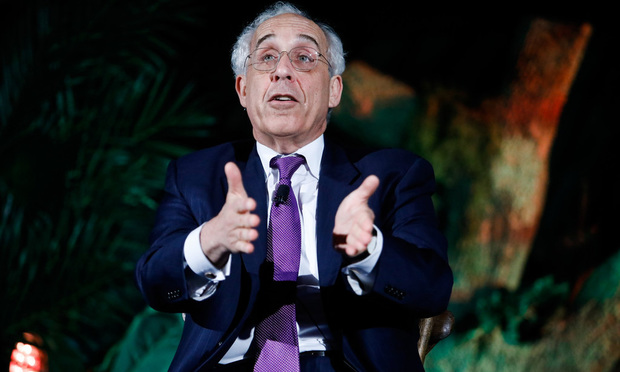
Image result for maryanne trump barryImage result for brett kavanaughImage result for alex kozinski


Should retired judges be beyond the reach of the courts?

Alex Kozinski, Brett Kavanaugh, and Maryanne Trump Barry have all been relieved of the burden of inquiries into their conduct under the Judicial Conduct and Disability Act, 28 U.S.C. §§ 351–364, which empowers the federal judiciary “to determine whether a covered judge has engaged in conduct prejudicial to the effective and expeditious administration of the business of the courts or is unable to discharge the duties of office because of mental or physical disability.”  

The three have in common that their resignations from the bench assertedly deprived the courts of jurisdiction because a judge is no longer a judge when he or she retires (Kozinski and Trump Barry) or steps up to the United States Supreme Court (Kavanaugh).  In each circumstance, according to the Second Circuit Judicial Council (in the Kozinski case) the “Act is concerned with individuals who currently exercise the powers of the office of federal judge”.  Because he or she “can no longer perform any judicial duties, he does not fall within the scope of persons who can be investigated under the Act” making the proceedings “unnecessary”.  Yet the two Circuit Judges collect pensions at full salary for life [28 U.S.C. 371(a)] and, if willing, may be “assigned judicial duties”. [28 U.S.C. 294] The now Associate Justice draws a salary as a member of the highest court and very much “performs judicial duties”.
The Tenth Circuit Judicial Council declared it lacked disciplinary authority over now Justice Kavanaugh, as did the Second Circuit over the retired Kozinski – a precedent on which Trump Barry now relies. 

But the Act provides simply that the term “judge” means a circuit judge, district judge, bankruptcy judge, or magistrate judge.  It does not state that jurisdiction over misconduct during active service expires upon retirement.  That is a gloss that the Second Circuit Judicial Council has placed on the statute in whose steps the Tenth followed.  But it is equally plausible that the courts – concerned with the confidence of the public – retain jurisdiction over misconduct alleged to have occurred during active service. 

Yet the Second Circuit Council, in its order dismissing the sexual misconduct charges against Judge Kozinski asserted that he is no longer “within the Act’s reach” because its “emphasis” is not on punishment but on “correction of conditions that interfere with the effective and expeditious administration of the business of the courts.  The purpose of lawyer discipline is not simply to protect the public from the offender but to maintain confidence in the bar and legal system.  That is no less true of the judiciary.

Each of these jurists was faced with allegations that they violated the rules of conduct of United States Judges – particularly “Canon 2: A Judge Should Avoid Impropriety and the Appearance of Impropriety in all Activities.”  It commands “(A) Respect for Law. A judge should respect and comply with the law and should act at all times in a manner that promotes public confidence in the integrity and impartiality of the judiciary.”

 The allegations against the three are of a grave nature. Alex Kozinski faced widely publicized reports of sexual misconduct toward his female law clerks – some of it admitted – such as his display of pornography on his office computer.  Brett Kavanaugh faced not only the testimony of Professor Christine Blasey Ford alleging misconduct in high school, but eighty-three complaints filed regarding his conduct as a judge.  Trump Barry – who served since her appointment in 1983 – was accused in the New York Times of having been an officer of a shell corporation which distributed millions of dollars in fraudulently obtained profits to herself and her siblings. None of these allegations will be investigated, no facts determined, and no judgment rendered.

The asserted lack of jurisdiction cannot be cured by legislation; no one could imagine Donald Trump signing a bill which revived disciplinary proceedings against his sister involving allegations that she, like he, was enriched by a prolonged fraudulent scheme.  Nor is it realistic to expect that local or state disciplinary authorities will be in position to carry out the investigations that the federal courts, aided by the FBI, could have carried out.  Nor would such state investigations accomplish what is needed: to preserve public confidence in the United States courts.  We are left with the likely vain hope that the Chief Justice of the United States will re-examine the Judicial Conduct and Disability Act and declare that retired judges remain subject to its strictures.

- -        George W. Conk

Torts Today: Big Money Enters Debate Over Race and Admissions at Stuyvesant - The New York Times

Torts Today: Big Money Enters Debate Over Race and Admissions at Stuyvesant - The New York Times: Big Money Enters Debate Over Race and Admissions at Stuyvesant - The New York Times : Ronald Lauder and Richard Parsons want to keep the the test for the specialized high schools and find other ways to increase Black and Latin enrollment...

Sunday, April 28, 2019

China amends Trademark Law against Bad Faith Applications without Intent to Use

China amends Trademark Law against Bad Faith Applications without Intent to Use: Over the last six months China has built a new national level Patent Appeal Court. On 23 April 2019, the Standing Committee of the National People's Congress 
by By Christine YiuAlison WongYang Li Bird & Bird

They say it is the Spring of IP in China.  We say it is hot as summer with the speed at which laws and guidelines are being passed. Over the last six months China has built a new national level Patent Appeal Court, passed the Foreign Investment Law, amended the Technology Import and Export Regulations, and on 23 April 2019, the Standing Committee of the National People's Congress ("NPC") passed a decision[1] to amend the Trademark Law and the Anti-Unfair Competition Law.  
The amendments to the Trademark Law will become effective from 1 November 2019. We have included reference translation of the new provisions at the end of this article.
1. Bad faith application without intent to use
A new provision is added to Article 4 which provides that "Any bad faith trademark applications without intent to use shall be dismissed." Articles 33 and 44 are amended correspondingly such as Article 4 can be invoked in an opposition action before the CTMO or an invalidation action before the TRAB. Closely connected to that, bad faith trademark applicants could face administrative penalty by the authority including warnings or fines. Courts could also impose punishments if a trademark litigation is initiated in bad faith (Article 68).
Article 19 is also amended to impose an obligation on trademark agencies to censor bad faith applications. A trade mark agency should not accept instructions if it knew or ought to know that the applicant's trademark filings are in bad faith as provided under Article 4. Violation of Article 4 by trademark agencies could be subject to a warning, a fine or even criminal liability if the case reaches the criminal threshold (Article 68).
Foreign as well as domestic brand owners have long suffered from the problem of trademark squatting which flooded the register. As of the end of 2018, there are in total 180.49 million valid trademark registrations in China, and just in the year of 2018, China received 7.371 million new trademark filings. Contributing to the millions of applications are those filed by squatters and those filed by legitimate brand owner in a defensive registration plan to fend off the endless applications in nearby classes which get too close for their comfort. For example, Alibaba (baba reads as papa in Chinese) has famously filed a whole family including Ali-mama, Ali-brother, Ali-sister, or Ali-granpa. When the draft amendments were submitted to the NPC for review, the first draft of Article 4 originally read as "any trademark application without intent to use shall be dismissed." which would cut both ways of squatting activities as well as defensive filings.  In fact, it might be easier for an infringer to get through the requirement than for a legitimate brand owner to submit evidence of use in related business that they do not operate in. The bad faith requirement is added later on to address this. [2]  The real challenge now is to define what bad faith means in order to sieve the grain from the kernel correctly.  Otherwise, inconsistent application of the rules would cause more harm than good.
The Beijing High Court Guideline made an attempt to characterise "bad faith". Commenting on Article 4, the Beijing High Court said an applicant with no real intent to use could be found breach of the provision if the application also falls within one of the following:
  1. a mark which is identical or similar to trademarks belonging to multiple entities which enjoy certain level of reputation or a relatively strong distinctive features, and such circumstance is serious;
  2. a mark which is identical or similar to trademark(s) belonging to another person which enjoys a certain level of reputation or a relatively strong distinctive feature, and such circumstance is serious;
  3. a mark which is identical or similar to another person's commercial logo(s) other than trademark, and such circumstance is serious;
  4. a mark which is identical or similar to the name of a well-known place, tourist attractions, architectures, and such circumstance is serious;
  5. a mark which is one of a large number of trademark filings without justifiable reasons.
Trademark owners must note that the above grounds (1) to (2) hinge on the existence of a prior mark already registered in China. There are no standalone grounds based on overseas reputation with no prior use.
2. Statutory damages increased to RMB 5 million***

Obstruction case against judge proves William Barr’s DOJ is an arm of Trump.

Obstruction case against judge proves William Barr’s DOJ is an arm of Trump.: The charges have nothing to do with the special counsel’s investigation into Russian interference in the election.
by Leah Litman (UC Irvine School of Law)
It took Attorney General William Barr only one week from the release of the Mueller report to bring obstruction of justice charges against two governmental officials for interfering in a federal investigation. But the charges have nothing to do with the special counsel’s investigation into Russian interference in the election or the possible obstruction of that investigation.
Although the obstruction charges DOJ filed are not related to the Mueller report, they underscore just how far the attorney general bent over backward to spin the report in the president’s favor and how partisan the Department of Justice has become. The disparities between the two cases highlight how the Department of Justice, under Barr’s leadership, has become nothing more than a political arm of the Trump administration, particularly in its handling of possible obstruction charges stemming from the Mueller report.
The indictment against Judge Shelley Richmond Joseph, a Massachusetts district court judge, and Officer Wesley MacGregor, a Massachusetts trial court officer, alleges that the officers interfered with an Immigration and Customs Enforcement proceeding by preventing ICE from arresting an individual who was arrested on state charges and attended an arraignment hearing in state court. During the state court proceeding, Joseph asked an ICE officer to wait outside the courtroom while the court conducted the arraignment hearing. Earlier in the day, the judge had requested more information about one of the state charges in the case (a fugitive charge) after the prosecutor said the state would not seek to detain the defendant on the other charge (a drug charge).
After recalling the case, the judge observed that ICE was in the courthouse. The prosecutor then informed the court that the state did not believe the defendant was the fugitive from Pennsylvania for whom there was an arrest warrant and therefore believed that the fugitive charge was an error, which would mean that the defendant would be free to leave. The defense attorney, however, noted that ICE was convinced otherwise and suggested they would likely take the client into custody. The defense attorney then suggested that “the best thing for us to do is to … release him … and hope that he can avoid ICE.”
At that point, the judge noted the other alternative was to recall the proceedings again the next day and asked “ICE is gonna get him?” before directing the clerk to go off the record. The recording was turned off for 52 seconds, and when it resumed, the prosecutor renewed the claim that the defendant was not the person with a Pennsylvania warrant out for his arrest and moved to dismiss the fugitive charge against him. Because the state had already stated it would not seek to detain the defendant on the drug charges, the defendant was released, and the trial court officer escorted him through the back door.
This evidence provided the basis for Barr’s Department of Justice to indict the state judge and state officer for obstruction of justice and conspiracy to obstruct justice. Yet all of the reasons Barr has previously cited for opposing an obstruction investigation against the president suggest the Department of Justice should not have brought obstruction charges against Joseph and MacGregor either.
For example, in June, Barr wrote a memo as a private citizen arguing that obstruction laws should not “reach facially-lawful actions taken by the President in exercising the discretion vested in him by the Constitution.” Yet that is exactly what the obstruction-of-justice charges against Joseph and MacGregor cover. State judges do not persist with criminal charges that the district attorney has dropped, and state law does not require judges to detain individuals on the drug charges that remained. It was therefore “facially legitimate” and within the “discretion” of the judge not to detain the individual based on the drug charge. The judge also has total control of her courtroom and can decide through which doors to instruct people to come and go. And the state judge’s motive shouldn’t matter to the analysis because under Barr’s theory of obstruction, government officials can’t be charged with obstruction “based solely on his subjective state of mind” for “simply exercising his discretion in a facially lawful way.”
Or take Barr’s statement—given at a bizarre press conference just prior to the release of the Mueller report last week—that the president did not corruptly intend to obstruct the investigation because the president “was frustrated and angered by a sincere belief that the investigation was undermining his presidency.” A similar exculpatory argument could be made on behalf of Joseph and MacGregor. They, too, may have been “frustrated and angered by a sincere belief that” ICE’s investigations and presence in state courthouses undermined the integrity of state court proceedings. Or perhaps they were frustrated and angered by a sincere belief that ICE’s enforcement efforts were the result of the president’s apparent bias and animosity toward the Latino community.
Ultimately, the Justice Department’s indictment of Joseph and MacGregor is a reminder about how aggressively the federal government often reads the federal obstruction statute. For example, the indictment confirms that obstruction does not have to be particularly sophisticated or successful in order to constitute a crime—the trial court officer merely let the defendant out the back door, and the defendant was subsequently apprehended and now faces deportation.
It also demonstrates a contrast in the kind of evidence that often suffices to establish an obstruction-of-justice charge. In the case of Joseph and MacGregor, DOJ has some snippets of a courtroom conversation that indicated the judge wanted to do something she did not want publicly recorded and less than a minute without a recording. In the case of President Donald Trump and his associates, special counsel Robert Mueller compiled dozens of witnesses, contemporaneous notes, 10 separate incidents, 182 pages of a report, multiple instances of officials lying to investigators or not being forthcoming with them, and several damning instances of the president lying in an apparent effort to cover his tracks. All of this led Barr to his four-page summary conclusion that Trump had not committed a crime—a conclusion that flew in the face of Mueller’s findings.
The stark difference between the attorney general’s treatment of the obstruction case against Joseph and MacGregor and the obstruction cases at the heart of the Mueller report serves as a pointed reminder that Barr’s response to the obstruction issues raised by the Mueller report was partisan and unprincipled. 

The Roberts court is considering the legal reasoning of Jim Crow in the census case.

The Roberts court is considering the legal reasoning of Jim Crow in the census case.: How could a late-stage Jim Crow decision be wreaking such havoc in the 21st century?
by Eric L. Muller (University of North Carolina Law School)

Xiao Yang dies at 80, was China's Chief Judge

https://sg.news.yahoo.com/life-death-xiao-yang-former-093153327.html

Saturday, April 27, 2019

Napolitano to Trump to Dershowitz to Trump

Every day is a new low.  Andrew Napolitano was a very popular lecturer as a Superior Court Judge in New Jersey and law teacher at Seton Hall before he went to Fox.  He'd probably like to go back. - gwc


Friday, April 26, 2019

Roberts Delivers Latest Pro-Arbitration Ruling for Divided Court | New Jersey Law Journal

The consumer consent  fiction continues its sway at the U.S. Supreme Court. - gwc
Roberts Delivers Latest Pro-Arbitration Ruling for Divided Court | New Jersey Law Journal: Ginsburg said in dissent: “I write separately to emphasize once again how treacherously the court has strayed from the principle that ‘arbitration is a matter of consent not coercion.’”

The U.S. Supreme Court on Wednesday wrapped up its arbitration docket for the current term with a 5-4 decision that is a win for business and favors individual over class arbitrations.
The ruling in Lamps Plus v. Varela was the second pro-arbitration ruling this term, joining Schein v. Archer and White Sales in the Supreme Court’s longstanding trend of strengthening the Federal Arbitration Act against attack by consumer groups that view arbitration as a one-sided process working against employees. Both cases were argued on Oct. 29. Schein was decided in January.
New Prime v. Oliveira, the third arbitration case decided this term by the court, was a rare win for consumers, giving judges more power to decide whether arbitration can proceed in certain circumstances.
Chief Justice John Roberts Jr. wrote for the majority in the Lamps Plus case, overturning a decision by the U.S. Court of Appeals for the Ninth Circuit that allowed a class arbitration to proceed because the arbitration agreement at issue was ambiguous. Roberts wrote that, under the arbitration statute, an ambiguous agreement cannot be interpreted as allowing class arbitrations.
The lighting company was hacked in 2016, exposing tax information about 1,300 employees. Frank Varela, one of the employees, filed suit on behalf of a putative class, but the company pushed back, seeking individual rather than class arbitration.
The company, Roberts wrote, “sought an order compelling individual arbitration. What it got was an order rejecting that relief and instead compelling arbitration on a class-wide basis.” That shift, he continued, “sacrifices the principal advantage of arbitration” and “greatly increases risks to defendants.”
Andy PincusAndrew Pincus of Mayer Brown. (Photo: Diego M. Radzinschi/ ALM)
Lauren Novak, a partner at Schiff Hardin, said the ruling is “a clear win for employers. The decision is important, because it means that employers will maintain the benefits of individual arbitration and avoid the risks of class arbitration unless they agree to it.
Rusty Perdew of Locke Lord said Wednesday: “This decision will make it easier for parties who have an arbitration agreement to stop class actions filed in court and compel individual arbitration. Only agreements that clearly permit arbitration on a class basis will allow either party to force the other party into a class-action arbitration procedure.”
The court’s four liberals—Justices Ruth Bader Ginsburg, Stephen Breyer, Sonia Sotomayor and Elena Kagan—wrote separate dissents.
Using unusually strong language, Ginsburg said, “I write separately to emphasize once again how treacherously the court has strayed from the principle that ‘arbitration is a matter of consent, not coercion.’”