Friday, March 4, 2022

Dorf on Law: The Distinction Between Failure to Extend a Precedent and Cutting Back on it -- A Comment on Egbert v. Boule

Dorf on Law: The Distinction Between Failure to Extend a Precedent and Cutting Back on it -- A Comment on Egbert v. Boule
By Michael Dorf

The Distinction Between Failure to Extend a Precedent and Cutting Back on it -- A Comment on Egbert v. Boule

 by Michael C. Dorf

Wednesday's SCOTUS oral argument in Egbert v. Boule presented the question whether a Bivens action is available to challenge alleged excessive force in violation of the Fourth Amendment and alleged retaliation in violation of the First Amendment by a Customs and Border Patrol agent who came onto the plaintiff's property--a bed-and-breakfast unfortunately named "Smuggler's Inn that sits on the border between Washington State and British Columbia--to investigate the immigration status of a Turkish guest.

Readers may recall that Bivens was a 1971 Supreme Court opinion that allowed a cause of action for damages due to Fourth Amendment violations by federal drug enforcement officers. It provides a judge-made analogue to the statutory cause of action against state and local officers that Congress enacted during Reconstruction and is currently codified at 42 U.S.C. §1983. For some years, it appeared that Bivens might function as the equivalent of §1983 for federal defendants, but after a time, and especially in recent years, the Supreme Court has signaled that a Bivens action is often unavailable where a §1983 action against state or local officers would be available. The cutback--reflected most dramatically in cases like Ziglar v. Abbasi in 2017 and Hernandez v. Mesa in 2020--suggests pretty clearly that the current Court is not prepared to overrule Bivens but also will not allow its substantial extension.

But what's an extension versus an application? Under the current precedents, courts are supposed to first determine whether the plaintiff's claims arise in a "new context" or involve a "new category of defendants." If not, then Bivens applies. If so, then Bivens can still apply unless there are "special factors that counsel hesitation." In Egbert, the Ninth Circuit found that both the Fourth and First Amendment claims arose in a new context but that there were not special factors, and so allowed the case to go forward. I doubt that the Supreme Court granted certiorari to give the Ninth Circuit a medal, so it seems likely that the Court will agree that the case arises in a new context but disagree about special factors, and thus disallow the Bivens action.

Bivens itself was a Fourth Amendment case, so one might wonder how Egbert arises in a new context. That objection itself is problematic, however, because Hernandez was also a Fourth Amendment case. The particular civil rights violation at issue isn't key, the Court said. Rather, because Hernandez was a case that arose at the southern border, it implicated immigration and foreign policy in a way that both created a new context and counseled hesitation. This case too arises at the border (albeit with Canada rather than with Mexico), so the defendant and the U.S. government argue that it's more like Hernandez than like Bivens.

Much of the oral argument in Egbert focused on whether the facts only adventitiously implicate border control. Yes, Smuggler's Inn sits right at the border, but the facts aren't as dramatic as in Hernandez, which involved a cross-border shooting. Officer Egbert or one of the thousands of other law enforcement officers employed by any of the 83 federal agencies that carry out law enforcement duties could have investigated a foreign national's immigration status on property anywhere in the United States. Moreover, the First Amendment retaliation claim bears no necessary connection to border security; respondent Boule complained to Egbert's supervisor about his rough handling and then, Boule alleges, Egbert retaliated by asking the IRS to investigate Boule's tax status. So even acknowledging (as the Ninth Circuit did) that First Amendment claims are a new context because the Supreme Court hasn't previously recognized a Bivens action for them, there do not appear to be any immigration/foreign-policy-related special factors applicable to those.

There are ambiguities in the law governing what counts as a "special factor" and whether special factors get defined categorically or as-applied. And the Court has not offered an exhaustive list of what counts as a special factor. National security counts. So do foreign relations. The underlying concern, as articulated in Hernandez and other cases, seems rooted in separation of powers. Is there reason to worry that the courts lack competence to weigh the costs and benefits of a cause of action so that the issue should be left for Congress?

To my mind, that's question begging. Recognizing or not recognizing a Bivens action leaves the issue for Congress in the sense that Bivens is federal common law that Congress can supersede one way or the other. By saying that the presence of special factors entails no Bivens action, the Court's cases assume that Congress would prefer whatever countervailing considerations are present over the robust protection of civil rights. Maybe that's right, but it seems as much a normative judgment by the Court as it is a gauge of congressional sentiment. Given the difficulty of overcoming congressional inertia, it's likely that whatever the courts do in any of these cases will be a very sticky default principle. Congress is highly unlikely to reverse a decision either allowing or rejecting a Bivens action in any particular setting.

KEEP READING


United States v. HUSAYN, AKA ZUBAYDAH, - Supreme Court


Hussayn Zubaydah has been a prisoner of the United States.  An al Qaeda militant he has never been charged with a crime.  In 2018 In 2010, Zubaydah filed a criminal complaint in Poland, seeking to hold accountable any Polish nationals involved in his alleged mistreatment at the CIA site ostensibly located in that country.  The United States denied multiple requests by Polish prosecutors for information related to Zubaydah’s claim on the ground that providing such information would threaten national security.  Zubaydah filed a discovery application pursuant to 28 U. S. C. §1782, which permits district courts to order production of testimony or documents “for use in a proceeding in a foreign . . . tribunal.” 

The United States no longer claims him to have been a planner of the 9/11/2002 assault.
20-827_United States v. Husayn, AKA ZUBAYDAH -SCOTUS

Iby Karen Greenberg
Fordham Law - Center for National Security Studies
Supreme Court Rules CIA Black Sites Are State Secrets 

The Supreme Court on Thursday rejected a request by a detainee at Guantánamo Bay to obtain information from two former CIA contractors involved in torturing him. In a 6-3 ruling, the court found that the government could assert the state-secrets privilege to prevent two contractors from being questioned in a Polish criminal investigation about their role in interrogating and torturing Abu Zubaydah because it would jeopardize U.S. national security. Zubaydah, who was initially thought be a high-level member of al-Qaeda, was captured in 2002 in Pakistan and has been held by the United States since then without charges. He has spent more than 15 years detained at Guantanamo.

Zubaydah sought to subpoena the contractors, James E. Mitchell and Bruce Jessen, to find out more about his treatment, including where he was held and what was done to him before he arrived in Cuba. The Polish investigation was prompted by a determination by the European Court of Human Rights that Zubaydah had been tortured in 2002 and 2003 at secret sites operated by the CIA, including one in Poland. David Klein, a lawyer for Zubaydah, said the information was necessary to better understand the conditions in his client’s cell and how he was tortured. “We are not talking about a secret anymore,” Klein said. “We are talking about a governmental wish not to assist this Polish investigation.”

Justice Stephen Breyer, writing for the majority, said the main question was whether the information sought by the detainee would confirm the location of a CIA black site, which is widely known to have been in Poland. The contractors’ testimony “would be tantamount to a disclosure from the CIA itself,” Breyer wrote in the ruling. “For these reasons, we conclude that in this case the state secrets privilege applies to the existence (or nonexistence) of a CIA facility in Poland.” The court's opinion could restrict access to materials, discovery, or testimony in future cases that the government claims should be protected by the state secrets privilege.
 
In a dissent, Justice Neil Gorsuch wrote that much of what the government claims to be a state secret is already widely known. “There comes a point where we should not be ignorant as judges of what we know to be true as citizens,” Gorsuch wrote. He added, “As embarrassing as these facts may be, there is no state secret here. This Court’s duty is to the rule of law and the search for truth. We should not let shame obscure our vision.” Justice Sonia Sotomayor concurred. Justice Breyer, on the other hand, insisted that the question at issue was a limited one. “Obviously, the court condones neither terrorism nor torture,” he wrote, “but in this case we are required to decide only a narrow evidentiary dispute.” Reuters, New York Times, CNN, NBC News, The Hill, ABC News, CBS News, Al Jazeera

With Sotomayor dissenting Scotus lets convictions stand despite defense lawyer's glaring conflicts of interest

 
During the Trump era every day presented the opportunity for a new low.  He rarely disappointed.  But now that he is out of office and barred from Twitter the Supreme Court of the United States is vying for pole position.  They too rarely disappoint. - GWC


 JUSTICE SOTOMAYOR, dissenting from the denial of certiorari. 
An attorney jointly represented four codefendants in a criminal case. As trial neared, two of the defendants accepted plea deals and agreed to testify against the other two: James Dale Holcombe, the petitioner here, and his father, Dale Chester Holcombe. This created a conflict of interest that even the prosecutor deemed nonwaivable. Nevertheless, the trial court refused defense counsel’s offer to withdraw from representing the cooperating codefendants and neglected to conduct a detailed inquiry into the nature and extent of the conflict. 
The case went to trial, and Holcombe’s attorney cross-examined his two cooperating clients, whose sentences depended on the quality of the testimony they provided against Holcombe. Holcombe was convicted, and the Florida Court of Appeal affirmed. Because this Court’s precedents require vacating Holcombe’s conviction, I would summarily reverse. ***
[T]his case concerns an actual conflict created by a simultaneous joint representation that was timely brought to the trial court’s attention. That it happened to be the prosecutor who first raised the conflict does not affect whether Holloway’s automatic reversal rule applies. This Court’s precedents hold that the duty to inquire is a duty of the trial court—not of any particular party.
***Decades ago, this Court explained that “[t]he mere physical presence of an attorney does not fulfill the Sixth Amendment guarantee when the advocate’s conflicting obligations have effectively sealed his lips on crucial matters.” Holloway, 435 U. S., at 490. The proceedings below failed to protect that core constitutional guarantee. For these reasons, I would summarily reverse the judgment of the Florida Court of Appeal.

Supreme Court reinstates Boston Marathon bomber's death penalty -20-443 United States v. Tsarnaev (03/04/2022)


When cruelty is the point Clarence Thomas is your go-to, so John Roberts, as Chief Justice, assigned to Thomas the task of explaining why Dzhokar Tsarnaev, the younger of the two Boston Marathon bombers, should return to death row. Thomas - unnecessarily - begins with a recitation of the the details of the crime - which the defendant did not contest. He had sought mercy on the grounds that he had fallen under the influence of his domineering elder brother.

The jury rejected that argument and voted for death.

But the Court of Appeals for the First Circuit found that the District Court had failed to follow the law of the Circuit which demanded special attention to possible juror bias in high-profile cases:

Thomas rejects that proposition, yielding a familiar 6-3 vote with five Catholics and one convert to Episcopalian embracing the death penalty - demonstrating again their independence from Church anti-capital punishment doctrine.

- GWC
20-443 United States v. Tsarnaev (03/04/2022)
In an attempt to show Tamerlan’s domineering nature, Dzhokhar sought to introduce the statements of Ibragim Todashev, who had alleged during an FBI interview that, years earlier, Tamerlan had participated in a triple homicide in Waltham, Massachusetts. 

[The District Judge barred the evidence.  The Court of Appeals reversed.]

The dissent recognizes that the District Court enjoyed significant discretion over its evidentiary decisions. But because this is a death penalty case, the dissent scrutinizes those decisions with particular care to find that the District Court abused its discretion. In doing so, the dissent ignores the traditional abuse-of-discretion standard, which calls for a reviewing court to defer to the sound judgment of a district court unless the decision was “manifestly erroneous.” General Elec. Co. v. Joiner, 522 U. S. 136, 142. More specifically, the dissent suggests that a district court presiding over death-penalty proceedings should be more hesitant to find that evidence risked confusing the jury. But nothing in §3593(c) suggests that Congress intended for any such hesitancy. Ultimately, the District Court reasonably decided to exclude the evidence under §3593(c)’s balancing test. 

Supeme Court: The fate of US elections is in Amy Coney Barrett’s hands - Vox


Supeme Court: The fate of US elections is in Amy Coney Barrett’s hands - Vox
By Ian Millhiser

A pair of cases are currently pending before the Supreme Court that could fundamentally rewrite the rules of US elections.

Both cases are redistricting cases. In Moore v. Harper, the North Carolina Supreme Court struck down gerrymandered congressional maps drawn by the state’s Republican legislature. In Toth v. Chapman, the Pennsylvania Supreme Court selected a congressional map for the state after its Republican legislature and Democratic governor deadlocked on what that map should look like.

In both cases, Republicans claim that state courts are not allowed to intervene in redistricting cases because something called the “independent state legislature doctrine” forbids them from doing so.

In the worst-case scenario for democracy, should the Court embrace this doctrine, state constitutions would cease to provide any constraint on state lawmakers who wish to skew federal elections in their party’s favor. State courts would also lose their power to strike down anti-democratic state laws. And state governors, who ordinarily have the power to veto new state election laws, would lose this veto power.

As Justice Neil Gorsuch described this approach in a 2020 concurring opinion, “the Constitution provides that state legislatures — not federal judges, not state judges, not state governors, not other state officials — bear primary responsibility for setting election rules.”

This worst-case scenario isn’t a foregone conclusion, but it’s decidedly within the realm of possibility. The Court might also implement the doctrine selectively, holding, for example, that state supreme courts typically cannot toss out gerrymandered maps, but that state governors can veto these maps.

Four members of the Court have already endorsed this doctrine, despite the fact that the Supreme Court has repeatedly rejected it over the course of more than a century. Along with Gorsuch, Justices Clarence Thomas, Samuel Alito, and Brett Kavanaugh all embraced it in lawsuits seeking to alter which rules would govern the 2020 election.

KEEP READING

The CIA tortured him after 9/11. Then they lied. Will the truth ever come out? | CIA | The Guardian

The CIA tortured him after 9/11. Then they lied. Will the truth ever come out? | CIA | The Guardian

Calls mount for release of full Senate report on the torture of Abu Zubaydah, to counter a narrative too many Americans still believe – that torture works

On the morning of 6 October the nine justices of the US supreme court filed into their wood-paneled courtroom in Washington to hear arguments in a dispute between the US government and Abu Zubaydah, a Guantánamo prisoner who has been held incommunicado and without charge for the past 20 years.

A government lawyer addressed the panel, arguing on grounds of “state secrets” that Zubaydah should be blocked from calling two CIA contractors to testify about the brutal interrogations they put him through at a hidden black site in Poland. Within minutes of his opening remarks, the lawyer was interrupted by Amy Coney Barrett, one of the rightwing justices appointed to the court by Donald Trump.

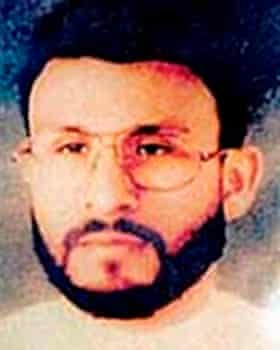
Abu Zubaydah.
Abu Zubaydah. Photograph: US Central Command/AP

Barrett wanted to know what the government would do were the contractors to give evidence before a domestic US court about how they had “waterboarded” Zubaydah at least 83 times, beat him against a wall, hung him by his hands from cell bars and entombed him naked in a coffin-sized box for 266 hours. “You know,” she said, “the evidence of how he was treated and his torture.”

“Torture.”

Barrett said the word almost nonchalantly, but its significance ricocheted around the courtroom and far beyond. By using the word she had effectively acknowledged that what was done by the CIA to Zubaydah, and to at least 39 other “war on terror” detainees in the wake of 9/11, was a crime under US law.

After Barrett uttered the word the floodgates were opened. “Torture” echoed around the nation’s highest court 20 times that day, pronounced by Barrett six times and once by another of Trump’s conservative nominees, Neil Gorsuch, with liberal justices Sonia Sotomayor and Elena Kagan also piling in.

Supreme Court hearing, 6 October 2021

Justices Amy Coney Barrett and Neil Gorsuch use the word "torture" in the Abu Zubaydah hearing

00:00:00
00:00:41

The flurry of plain speaking by justices on both ideological wings of the court amazed observers of America’s long history of duplicity and evasion on this subject. “The way the supreme court justices used the word ‘torture’ was remarkable,” Andrea Prasow, a lawyer and advocate working to hold the US accountable for its counterterrorism abuses, told the Guardian. “You could feel the possibility that the ground is shifting.”

Prasow was astonished a second time three weeks later when Majid Khan, a former al-Qaida courier also held in Guantánamo, became the first person to speak openly in court about the torture he suffered at a CIA black site.

Majid Khan.
Majid Khan. Photograph: Center for Constitutional Rights/AP

Khan’s description of being waterboarded, held in the nude and chained to the ceiling to the point that he began to hallucinate was so overpowering that seven of the eight members of his military jury wrote a letter pleading for clemency for him, saying his treatment was a “stain on the moral fiber of America”.

The ground does appear to be shifting, and as it does attention is once again falling on one of the great unfinished businesses of the 21st century: the US torture program. In the panicky aftermath of 9/11, when the world seemed to be imploding, the CIA took the view that the ends – the search for actionable intelligence to thwart further terrorist attacks – justified any means.

With the enthusiastic blessing of the justice department and George W Bush’s White House, the CIA abandoned American values and violated international and US laws by adopting callous cruelties that they consciously copied from the enemy.

They took one prisoner, Abu Zubaydah, and made him their experimental guinea pig. On Zubaydah’s back they built an entire edifice of torture – “enhanced interrogation techniques” as the bloodless euphemism went – that in turn was founded upon a mountain of lies. When the worst of the torture was completed, to spare themselves from possible prosecution the CIA insisted that Zubaydah remain “in isolation and incommunicado for the remainder of his life”.

“The torture program was designed for only one person – they gave him a name and that name was Abu Zubaydah,” Mark Denbeaux, Zubaydah’s lead habeas lawyer, told the Guardian. “After they tortured him, they demanded that he be held incommunicado forever so that his story could never be told. Since that moment the only people he has ever spoken to are his torturers, his jailers, and his lawyers, including me.”

Twenty years after Zubaydah was waterboarded, slammed repeatedly against a wall, sleep-deprived, face slapped, chained in painful stress positions, hosed with freezing water, stripped naked, and blasted with deafening noise, his story still has not fully been told. In 2014 the Senate intelligence committee released a heavily redacted, 500-page executive summary of its seven-year investigation into the torture program, generating headlines around the world and leading Barack Obama to conclude that “these harsh methods were not only inconsistent with our values, they did not serve our national security”.

Yet at the insistence of the CIA the full report from which the summary was drawn remains under lock and key to this day. All three volumes of it. All more than 6,700 pages. All 38,000 footnotes. All the detail distilled from 6.2m pages of classified CIA documents.

The persistent refusal to release the full Senate torture report has left a black hole at the centre of one of the most shameful episodes in US history. Now, with the T-word being heard even in the hallowed halls of the US supreme court, renewed calls are being made for the report to be published so that this sorry chapter can finally be closed.

Thursday, March 3, 2022

What we have already lost in Ukraine | TheHill

What we have already lost in Ukraine | TheHill
By  PAUL W. KAHN

There were two pillars to this new world order. The first was a prohibition on the use of force by one state against another. This was the very meaning of the United Nations. Borders were to be respected. No state could send its armies into another with the ambition of territorial or regime change. When disagreements between states arose, they were to be worked out without the threat of violence. 

The second was a requirement that every government treat its own citizens with dignity and respect. The terms of this commitment were set forth in a series of Declarations and Treaties on human rights, including an absolute prohibition on genocide. The first pillar guaranteed a space for national development; the second set limits on domestic politics. States had a right to be self-determining, but they had no right to abuse their own citizens.

This was the fundamental vision of international law for the last two generations. It was always more vision than reality. No one thought we lived in a world in which the principles were always followed. Difficult cases arose when the principles were in conflict. Should nations intervene against others when they engaged in genocide? 


Wednesday, March 2, 2022

Justices hesitant to expand civil liability for federal officials | Courthouse News Service

Justices hesitant to expand civil liability for federal officials | Courthouse News Service

Justices hesitant to expand civil liability for federal officials

Federal officials have for years enjoyed broad immunity on constitutional claims thanks to narrow interpretations of precedent. 

Opinion | The meaning of Ketanji Brown Jackson's nomination to the Supreme Court - The New York Times


Opinion | The meaning of Ketanji Brown Jackson's nomination to the Supreme Court - The New York Times
Sherilyn  Ifill is a lawyer and author. She is the president and director-counsel of the NAACP Legal Defense and Educational Fund Inc.


The nomination of the first Black woman to serve on the Supreme Court is a long overdue moment of historic consequence. Another glass ceiling has been shattered — and at the most powerful judicial institution in our country. In its 232-year history, only seven of the 115 justices who have served have not been white men. When she is confirmed, Judge Ketanji Brown Jackson will be the eighth.

For Black women in particular, the powerful symbolism of her nomination runs deep. We felt it as we watched a spectacularly accomplished Black woman with natural hair speak eloquently about her parents — both former public schoolteachers who attended historically Black colleges and universities — and about the strength of her faith and ambition that she needed to overcome the inadequate expectations of many around her.

Judge Jackson comes with unassailable traditional credentials that rival those of the chief justice with whom she will serve. But she also comes with unique perspectives and experiences — as a former public defender, as a member of the United States Sentencing Commission, as a Southerner and as a Black woman — that have shaped her vision of the law in ways that are underrepresented, to put it mildly, on the current court.

Predictably, Judge Jackson’s nomination to the court has not been met with universal praise. Even before she was announced as the nominee, the pledge by President Biden to appoint a Black woman to the court was attacked by many on the right. The familiar weapons of the trade were unsheathed in an effort to discredit the legitimacy of the nominee — whoever she might be.

KEEP READING

Dorf on Law: Ten Observations About Adrian Vermeule's Book "Common Good Constitutionalism"

Dorf on Law: Ten Observations About Adrian Vermeule's Book "Common Good Constitutionalism"

Ten Observations About Adrian Vermeule's Book "Common Good Constitutionalism"

By Eric Segall

Professor Adrian Vermeule of Harvard Law School is somewhat of a polarizing figure whose opposition to gay rights and same-sex marriage are, to this writer, unpersuasive and troubling. But those subjects make up only a tiny portion of his new book "Common Good Constitutionalism." On many matters of public policy and constitutional law, Vermeule's suggestions are, and he will hate this word, progressive. More importantly, his book contains a devastating critique of the never-ending debates between originalists and living constitutionalists--debates that have not furthered constitutional discourse in a helpful manner. We must stop dismissing people because we disagree with some of their ideas.