Saturday, February 15, 2020

The President is an office-holder, not a sovereign - Bernadette Meyler //Harvard L Rev

Image result for shugerman kent leib
The President's oath of office is to the laws and constitution.  He/she is not the sole receptacle of the power of the executive branch of the United States government.  Attorney General Barr has embraced the opposite view.  But Bernadette Meyler (Stanford Law) has amplifed the argument tellingly stated by Fordham law profs Andrew Kent, Jed Shugerman, and Ethan Leib.  
Writing in the Harvard Law Review (where the Kent/Shugerman/Leib study appeared) Meyler emphasizes that sovereignty and government must be separated.  The sovereignty of the people is not embodied in the President.  Meyler explains that such a monarchical theory is deeply wrong.  Citing the Fordham professors study she explains:


Fundamentally, Faithful Execution and Article II supports a vision of the presidency that emphasizes its status as an office and rejects the residues of sovereignty. In doing so, the piece speaks to two recently developing literatures on offices. While the first tends to emphasize the constraints on the British king himself derived from thinking of the Crown as an office to be held, the second unearths the significance of officeholding in structuring the English and American polities, including at the time of the Founding, as well as the importance of officeholding within the Framers’ political consciousness.7××× Taking these two literatures together suggests that the Founders were deeply enmeshed within a social framework of officeholding and that they saw the presidency as one office among others.
The essence of office-holding is that power is not personal.  It is a trust - under-girded by accountability and limitation of power.   The insight has gained importance because not only Donald "I can do anything" Trump, but his lawyers and Attorney General have embraced that view.  And recently appointed Circuit Judge Neomi Rao argued in House Committee v. Mazars that Congressional oversight power - to determine whether a President has breached his/her duty of trust - is an impermissible exercise of Executive authority by the legislature.  Only within formal impeachment proceedings is such inquiry permissible in Rao's view.  Oddly she fails to recognize that the authority to institute removal proceedings necessarily encompasses the investigatory power to examine any breach of the executive officer's duty - whether by neglect, incompetence, or malfeasance.

- GWC

Friday, February 14, 2020

Supreme Court: Scalia paved the way for Trump’s assault on rule of law - Vox

Image result for unitary executive theoryImage result for unitary executive theory
Ian Millhiser attacks the Antonin Scalia/Federalist Society `unitary executive' theory which Attorney General Barr embraces strongly.  Barr argues bluntly (in his Federalist Society speech in November) that he necessarily works under the "supervision" of the President.
Millhiser cites my Fordham colleauge Jed Shugerman's recent article Professionals, Politicos, and Crony Attorneys General: A Historical Sketch of the U.S. Attorney General as a Case for Structural
Independence, 87 Fordham L. Rev. 1965 (2019). Shugerman points out that prosecution was historically a private function.  The Department of Justice was a post civil war creation.  Even today federal judges exercise executive functions such as appointing interim U.S. attorneys.

Judges like the recently appointed D.C. Circuit Court of Appeals member Neomi Rao would strip  Congress power to oversee executive branch law breaking.  Only explicit invocation of the impeachment power would provide Congress with such authority she argued in the Trump v. Mazars case to be argued March 31 in the Supreme Court. Trump has embraced that view which leaves him with untrammeled power.  A Senate majority has refused to remove or even criticize him, and Trump's Attorney General embraces the most full-throated version of the "unitary executive" theory.

Separation of powers - the high school civics phrase - is a misleading bit of common parlance.  Overlapping powers is more apt.  The legislative power is shared by a President who proposes legislation and has veto power; the Commander in Chief of the Army is without authority to make war unless directed to do so by the Congress.  Determination of the funds needed to carry out the functions of government is in Congress hands - and must be initiated in the lower chamber.  These are executive functions by any measure.
Finally the executive is bound to "faithfully execute" the laws - the duty of an agent, not a principal. - GWC
Supreme Court: Scalia paved the way for Trump’s assault on rule of law - Vox
by Ian Millhiser
***The Justice Department’s swift compliance with Trump’s wishes was widely condemned by DOJ alumni, who spoke of why it is important that the nation’s prosecutorial arm retain a degree of independence from its political leader. As Joyce White Vance, a former United States attorney, wrote in Time, if Trump “can corrupt the criminal justice system for the benefit of his friends, there is no reason he cannot also use it to retaliate against those he views as enemies.”
In this sense, the Justice Department is fundamentally different from other federal agencies. While those agencies can wield tremendous power over federal policy, DOJ is tasked with the awesome power to prosecute crimes — and with it, the power to ruin the lives of a president’s political enemies.
For Barr, however, the idea that the Justice Department would be subservient to the president isn’t simply acceptable; it is a constitutional necessity. (Although Barr has also claimed he would not bring a criminal investigation solely because the president wished to investigate a “political opponent.”)
Last November, Barr spoke to the conservative Federalist Society’s annual lawyers convention. His speech focused on the proper role of the presidency, and on the theory of the “unitary executive.” As Barr described that theory, which he enthusiastically supports, every power exercised by the executive branch “must be exercised under the President’s supervision.”***

Judge Jack Weinstein, retiring, urges judges to seek justice

Image result for Jack B weinstein
Judges have a duty, given their unique vantage point,
intimate knowledge of the system and––in the federal realm––the
invaluable protection of life tenure, to expose injustice where they can.
Moderation in this, as in other matters, is desirable. Respectful
disagreement when the judge deems it appropriate.
Judge Jack Weinstein (2014)
Everyday is a good day for a judge to lay down his professional life for justice
32  Fordham Urban Law Journal 101 (2014)

Jack B. Weinstein, 98,  has retired as a judge of the United States District Court for the Eastern District of Brooklyn.  The legendary judge is famous for stepping beyond the bounds of the law as it appeared to him: in order to identify the demands of justice.  A recipient of Fordham's Louis Stein Prize he is one of the legendary judges of our time.

- George Conk
February 14, 2020


Thursday, February 13, 2020

If Trump will not back off A.G. Barr must resign

Image result for independent advice of counsel
Today's news highlight was William Barr complaining that Presidential tweets made it "impossible" for him to do his job as Attorney General.  But whatever may be the grounds for prosecutorial independent discretion they are undercut by the words of the A.G. himself in his speech to the Federalist Society on November 15, 2019:
" the idea of the unitary executive does not go so much to the breadth of Presidential power.  Rather, the idea is that, whatever the Executive powers may be, they must be exercised under the President’s supervision."

If we are to speak on this I think we should emphasize first the principle of independent advice of counsel - RPC 2.1.
That of course means candor in speaking to the president as the ultimate decision-maker.
Here - in the Roger Stone case - the President is himself deeply entangled in the case which reflects on him as the recipient of Stone's advice and the benefits of Stone's efforts to obtain information from WikiLeaks.
The correct path for Barr here is to make clear that his client is not the President but the laws and the people of the United States.   He should declare unequivocally - as did the New York City Bar Association in a letter to the House and Senate Judiciary Committees that
"In our criminal justice system, a single standard must apply to all who are accused or convicted of violating the law—unequal treatment based on political influence is to be deplored in all cases but is especially dangerous if it emanates from the presidency."

If he will not do so and if the President will not stand down from such deeply conflicted actions, Mr. Barr should himself resign.

- GWC
ABA Model RPC 3.1 Advisor  [In representing a client, a lawyer shall exercise independent professional judgment and render candid advice. In rendering advice, a lawyer may refer not only to law but to other considerations such as moral, economic, social and political factors, that may be relevant to the client's situation.]

Wielding Antidiscrimination Law to Suppress the Movement for Palestinian Rights - Harvard Law Review

Image result for UN resoluton 242Image result for trump peace plan map
This looks worth a look.  I am not a student of the Israel-Palestinian conflict.  I'm not even sure there is an Arab-Israeli conflict because it seems to me that there is no real commitment by the Arab countries to deal with it, except in a sort of ritualistic way. 
The dilemma for me is that I strongly sympathize with the Jewish need to have a sanctuary after the horror of the Holocaust.  But the Europeans were perfectly happy to shift the burden of reparations to the Palestinians, without recompense to them.  Sixty years later the Palestinians are unreconciled and the Israelis unwilling to cede the vote if it would cost them their majority.  After waging futile war the West Bank Palestinians turned to mass protests - with no effect.  The Gazans - trapped in a mini-state - periodically wage attacks on their Israeli tormentors who retaliate with greater force, sometimes making significant but indecisive concessions.
For fifty years I expected that retreat to the pre-1967 lines would be the inevitable solution.  But Israeli land seizures continue - with absurd tribal rationales - and the U.S. has abandoned any pretense of support for UN Resolution 242, etc.  So BDS makes sense to me as it did for the struggle against Apartheid in South Africa.  What I don't know is whether those who lead it accept the necessity - either practical or moral of security for the Jewish homeland.   - gwc
Wielding Antidiscrimination Law to Suppress the Movement for Palestinian Rights - Harvard Law Review

The United States is seeing a cultural shift toward increased concern over Israel’s human rights record. Over the past decade, groups from the Bill & Melinda Gates Foundation to the United Methodist Church to dozens of university student governments have taken steps that challenge the status quo of abuses of Palestinian rights.1× Meanwhile, opponents have long argued that Palestinian rights work is anti-Semitic or anti-Israeli.2× In recent years, these accusations have escalated from a merely political or rhetorical argument to a claim of legally cognizable discrimination. Since 2014, twenty-seven states have adopted laws penalizing businesses’ participation in the Palestinian-led Boycott, Divestment, Sanctions (BDS) movement, and such laws are pending in another fourteen states.3× Facing First Amendment challenges, states have justified anti-BDS measures as standard antidiscrimination laws, combatting religious discrimination against Jewish people and national-origin discrimination against Israelis. Similar discrimination claims have been raised in other contexts, including: lawsuits against Airbnb under the Fair Housing Act4× (FHA) for withdrawing from West Bank settlements; Title VI5× complaints against universities for pro-Palestine student activism; and a new legal definition of anti-Semitism that includes criticism of Israel that is deemed disproportionate.6× Across these contexts, civil rights law has been leveraged to defend Israel against the movement for Palestinian rights. This Note focuses on anti-BDS laws as the most significant manifestation of the claim that anti-Zionist movement work unlawfully discriminates.
Much has been written arguing that anti-BDS laws violate the First Amendment.7× However, there has been far less focus on the discrimination claim itself. This Note debunks the claim that BDS constitutes legally cognizable discrimination. It argues that antidiscrimination doctrines do not support this claim. While BDS has grown into a diffuse, multistakeholder movement, this analysis focuses on BDS as led by the Palestinian BDS National Committee (BNC).8× Part I explains the background of BDS and anti-BDS laws. Part II explores how the discrimination claim has gained legal force through anti-BDS laws and other legal tools. Part III summarizes the implications of the anti-discrimination argument for First Amendment challenges to anti-BDS bills. A strong antidiscrimination justification for these laws would constitute a compelling state interest that could trump countervailing First Amendment interests. However, as Part IV explains, anti-BDS laws are not backed by a valid antidiscrimination interest.

I. THE BDS MOVEMENT AND ANTI-BDS LAWS

Tuesday, February 11, 2020

Ruth Bader Ginsburg may have just killed the Equal Rights Amendment - Vox

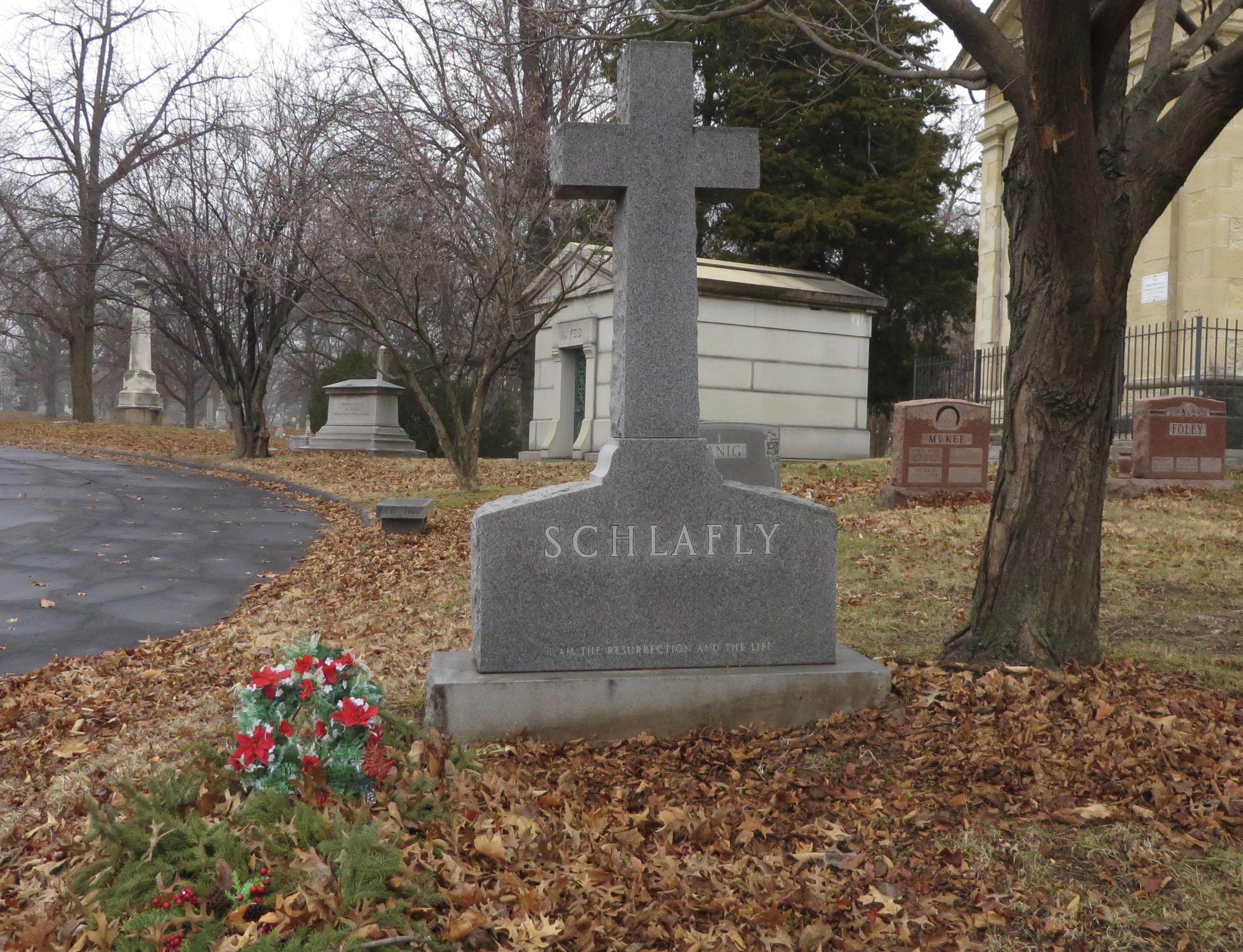
Image result for phyllis schlafly grave
I had the good fortune to be a student in Ruth Ginsburg's Civil Procedure class in 1970.  In what turned out to be her last semester at Rutgers-Newark she laid out her strategy - inspired by Thurgood Marshall and the NAACP LDEF.  She would step by step establish that gender distinctions in the law were inherently suspect.  She came close to accomplishing it as an Associate Justice writing for the Court in U.S. v. Virginia.  Her explanation that a gender distinction requires an "exceedingly persuasive justification" came very close to what an Equal rights Amendment would have accomplished.  In fact it prompted Antonin Scalia, in a particularly caustic dissent of the sort honed by his high school study of Cicero's orations, to declare that the court had invaded the legislative domain and outlawed same sex public education.  Ironically the "exceedingly persuasive" standard may have fueled the assault on affirmative action to repair the effects of the historic racial injustice for which the Supreme Court deserves much of the shame.

Millhiser is persuasive in his observation that the ERA stands no practical chance of passing it its current form.  Ratified by 38 states several have retracted it and its failure to meet the 1982 deadline leaves the ERA's demise an appropriate date to carve on Phyllis Schlafly's tombstone.
Ruth Bader Ginsburg may have just killed the Equal Rights Amendment - Vox
by Ian Millhiser
Justice Ruth Bader Ginsburg is the most important feminist lawyer in American history. Long before she became a judge, she convinced the Supreme Court to hold that gender discrimination can violate the Constitution. She spent many of the following years working to strengthen those protections for women.
Yet Ginsburg said on Monday that one of her life’s goals — writing a strong prohibition against gender discrimination into the Constitution — must be put on hold.
At an event at Georgetown University’s law school, moderator and federal appellate judge Margaret McKeown asked Ginsburg about an ongoing effort to revive the Equal Rights Amendment (ERA), which provides that “equality of rights under the law shall not be denied or abridged by the United States or by any state on account of sex.”
Three-fourths of the states, or 38 total, are required to amend the Constitution. Last month, Virginia became the 38th state to ratify the ERA and one of only three states to do so since 1977 — but there’s a catch. Congress imposed a 1982 deadline on states hoping to ratify the ERA, though there’s doubt about whether this deadline is binding.
Ginsburg’s comments on Monday suggest that she believes this 1982 deadline should be considered binding. “I would like to see a new beginning” for ERA ratification, the justice told McKeown.
“There’s too much controversy about latecomers,” Ginsburg added. “Plus, a number of states have withdrawn their ratification. So if you count a latecomer on the plus side, how can you disregard states that said ‘we’ve changed our minds?’”
According to the Washington Post, five states — Idaho, Kentucky, Nebraska, Tennessee, and South Dakota — voted to ratify the ERA but later rescinded that ratification.
Ginsburg’s comments are likely to be the death knell for the ERA. Without Ginsburg’s vote, it’s tough to imagine that five members of the Supreme Court would agree the ERA was properly ratified. And while Congress could, in theory, start the ratification process over again, it’s also hard to imagine two-thirds of the House and Senate agreeing to do so in an age when Congress often struggles to perform basic functions like funding the government.

Bloomberg releases immigration plan // ImmigrationProf Blog

Torts Today: Bloomberg releases immigration plan // ImmigrationProf Blog

The Supreme Court is as complicit as the Senate. by Leah Litman // Slate

Elena Kagan stares at Donald Trump and John Roberts.
The Supreme Court is as complicit as the Senate.
by Leah Litman // Slate  (U. Michigan Law School)

In legal escapades outside of the realm of impeachment, for instance, Trump and his administration have internalized the lesson that if no one will stop you, there’s no reason to stop. Less than two years ago, the Supreme Court upheld the third iteration of the president’s ban on entry by nationals of several Muslim-majority countries (the “travel ban”).
By upholding the ban, the court made clear that it would not stop the president from incorporating his bigotry into official immigration policy. Since then, the president has dramatically expanded the scope of the travel ban to other countries with substantial Muslim populations and has enacted several other immigration restrictions that disproportionately disadvantage nonwhite immigrants. 
After receiving a pass on xenophobia, the president has continued to do it again and again. Last week, he expanded the entry ban to cover five additional countries (Nigeria, Kyrgyzstan, Sudan, Eritrea, and Myanmar) with substantial Muslim populations. In one of those countries (Myanmar), a group of Muslims (the Rohingya) are fleeing religious persecution and genocide. The president had previously said, according to the New York Times, that Nigerians should “go back to their huts.”

Friday, February 7, 2020

Is There a Path to Post-Primary Unity? | Talking Points Memo

Is There a Path to Post-Primary Unity? | Talking Points Memo
by Josh Marshall
There is a long and recurrent tradition on the sectarian left that holds that the real enemies are not conservative parties of government, or the right or reaction but rather liberals. For the left to succeed liberalism must be destroyed and gotten out of the way. Perhaps the center-left is simply a stalking horse for the right, the second side of the same coin that keeps the system in power. Or perhaps they are too feeble and accommodating. But that is the basic vision. And again, it goes back more than a century in American politics and has analogues across Europe and other parts of the world.
Needless to say, the results of this theory in live experiments have quite dismal. But that doesn’t seem to matter.

DC Circuit Tosses Emoluments Lawsuit By Members Of Congress | Talking Points Memo

If ever there were a political question a court wanted to avoid the Emoluments Clause case against Donald Trump is it.  Lacking a personal stake 215 members of Congress - including the entire Democratic House caucus (while in the minority) - challenged his blatant disregard of the Constitutional prohibition of profiting from foreign potentates.  As Kings, Presidents, Prime Ministers, and ordinary court suitors crowd the bars and halls of his pricey hotel next door the President who refuses to disclose his finances, rakes in the cash and basks in adulation and flattery.

But in Blumenthal v. Trump the Court of Appeals for the District of Columbia Circuit, was having none of it.  The Members of Congress will have to win politically not in the courts.  The Justice Department has declared him immune from prosecution and in any event is led by a loyalist.  So like Brecht's judge in the Caucasian Chalk Circle, Trump opens court with the words "I receive". - gwc
DC Circuit Tosses Emoluments Lawsuit By Members Of Congress | Talking Points Memo
|
February 7, 2020 10:32 a.m.
A D.C. appeals court threw out a lawsuit on Friday accusing President Trump of violating the Constitution’s Emoluments Clause, ruling that the lawmakers who filed the case lacked standing to sue.
Democratic members of Congress sued Trump in 2017 over his alleged violation of the Emoluments Clause, which prohibits presidents from receiving foreign payments while in office.
The lawmakers had alleged that Trump’s continued ownership of his D.C. hotel and other businesses meant that he was receiving payments from foreign officials.
But in a per curiam opinion a three-judge panel on the D.C. Circuit ruled that the lawmakers could not use the judiciary to settle the dispute. Justice Department attorneys representing Trump in the case had argued that Congress cannot resort to the courts to resolve disputes with the executive branch.
“The Members can, and likely will, continue to use their weighty voices to make their case to the American people, their colleagues in the Congress and the President himself, all of whom are free to engage that argument as they see fit,” the opinion reads. “But we will not — indeed we cannot — participate in this debate. The Constitution permits the Judiciary to speak only in the context of an Article III case or controversy and this lawsuit presents neither.”

Wednesday, February 5, 2020

Senator Mitt Romney - I will vote to convict Trump of abuse of power

For the first time in our history a United States Senator has  voted to convict an impeached President of his own Party.  Mitt Romney - February 5, 2020  Was it futile?
Full text

“Senators, how say you?” the chief justice asked just after 4 p.m. As lawmakers on the right stood, buttoned their jackets and proclaimed “not guilty,” and those on the left rose and proclaimed “guilty,” only Romney broke the pattern. He slipped out before he could incur his colleagues’ wrath.
“Future generations of Americans who look at the record of this trial,” Romney said earlier on the floor, “will note merely that I was among the senators who determined that what the president did was wrong, grievously wrong. We are all footnotes at best in the annals of history.”
On Wednesday, Romney lit a single candle. But as long as there is a Flake, or a Corker, or a McCain, or a Romney, there is still hope. - Dana Milbank - Washington Post

Tuesday, February 4, 2020

It is midnight in Washington - Adam Schiff - Eleven Films


`People's War' on the Corona Virus - Bill Bishop - Sinocism

Image result for china corona virus hospital

Crash project to build a 1,000 bed hospital in Wuhan

"People's War" on the virus; Expanding quarantine efforts

by Bill Bishop

The People’s Daily said in a front page commentary 打响疫情防控的人民战争 Tuesday that the country is in a “People’s War” with the virus. So far the virus continues its advance, per the latest official figures from Caixin:
20,522 confirmed cases in China;
426 deaths in China;
23,214 suspected cases in China
Do not be surprised to see a jump over the next few days in Wuhan and Hubei cases as the number of hospital beds and quarantine facilities increase, more medical personnel arrive from other provinces and testing capacity improves.
The propaganda organs are all emphasizing Xi’s leading role in responding to the outbreak, but there have been no new images of him in the leading propaganda outlets since January 28. There have been periods in the past where he has “disappeared” from view for several days, but this “absence” in the midst of a crisis is spurring rumors even faster than usual.
I am not buying the rumors going around that he is sick or been removed in a coup, and I caution readers against putting much stock in those.
One of the key political tasks of all party members is to protect the core, i.e. Xi Jinping, and while you would think the “people’s leader” would want to be seen close to the people perhaps in this case the risk of him catching the virus may be too high, and images of him wearing a mask might be anathema to the propaganda wizards.
That said, I do not know what is going on, it is something I am paying a lot of attention to, but in the absence of any evidence I remain skeptical of the rumors. I will bet that Xi and the other top leaders in the Party and the military understand that they either all hang together in this crisis or they may all hang separately, to paraphrase Benjamin Franklin.
This is a long issue, I recommend you click on the headline at the top of this post to read it in full in your browser. Thanks for reading.
- Bill Bishop


Saturday, February 1, 2020

One Year of Forced Return to Mexico; Three Years of Trump Dismantling the Asylum System

One Year of Forced Return to Mexico; Three Years of Trump Dismantling the Asylum System
by Ruthie Epstein
Deputy Director // Immigration Policy // ACLU
Today marks one year since the Trump administration implemented its forced Return to Mexico policy. In that time, the U.S. has sent tens of thousands of asylum seekers to dangerous northern border cities in Mexico to wait for their hearings in the U.S. It is the most visible but by no means the only policy that the administration has adopted in its effort to systematically dismantle the U.S. asylum system over the past two years. 
The asylum system may seem distant and abstract to many Americans, but along with the refugee resettlement system, it’s the foundation of our country’s commitment to providing safety for people fleeing desperate conditions. In 1939, off the coast of Florida, the U.S. turned away a ship named the St. Louis, which carried 1,000 refugees fleeing Nazi persecution in Europe. Nearly a third of the passengers were killed by the end of World War II. In the aftermath of the war and the horrors of the Holocaust, the U.S., along with other countries, resolved that people fleeing violence and persecution, like those on the St. Louis, would no longer be met with global indifference. Our country formalized the commitment in the bipartisan Refugee Act of 1980, which enshrined the principle of asylum in domestic immigration law. Since then, millions have found safety in the U.S., sometimes fleeing dangerous conditions created by our own foreign policy. The United States’ obligation is not only a legal one; it’s a moral one as well. 
How quickly this administration has undone it all. We are now shipping tens of thousands of asylum seekers to other countries to avoid fulfilling our obligations. In January 2019, the administration rolled out the forced Return to Mexico program, officially called the Migrant Protection Protocols. Under MPP, DHS has sent almost 60,000 asylum seekers to wait for their hearings in Mexico — an unprecedented, illegal practice that forces vulnerable families to live in dangerous and dire conditions. MPP, along with another policy called “metering,” which illegally delays asylum seekers from entering at formal ports of entry at the U.S.-Mexico border, created full-blown humanitarian crises in cities like Matamoros and Juárez , where people are living in makeshift encampments or other shelters, often without access to adequate water, food, or medical care. Human Rights First documented at least 816 public reports of murder, torture, rape, kidnapping, and other violence against asylum seekers and migrants subjected to MPP. 
In November, the Trump administration issued new “safe third country” regulations that detail illegal procedures by which DHS will send people seeking safety in the U.S. to Guatemala, El Salvador, and Honduras to apply for asylum in those countries instead. Tens of thousands of people flee those countries every year, and none has a fair and effective asylum system that could possibly handle the large volume of applications they’ll receive under this scheme. 
For those asylum seekers who somehow manage to avoid being immediately sent to Mexico or Central America and are able to request asylum in the U.S., the administration has created even more hurdles.