Thursday, June 6, 2019

Court upholds liability for defaming Netanyahu

A journalist posted on Facebook

The second post depicted a distorted picture of the prime minister, wearing a hoodie, his hand stretched out to get a ride, with the notation “… on the roadside waits a tiny tyrant in the dark to hitchhike. Take him.”
http://www.loc.gov/law/foreign-news/article/israel-appeal-by-journalist-held-liable-for-defamation-of-netanyahu-rejected/?loclr=eaglm

Tuesday, June 4, 2019

A White Man's Republic ~ If they can keep it

Adam Serwer ~ The Atlantic
Voting districts are typically drawn using total population. A switch to using the voting-age citizen population would, Hofeller concluded in his 2015 memo, expand white political power at the expense of people of color, and thereby increase Republican advantage. But, Hofeller wrote, that shift could only occur with the addition of a citizenship question to the 2020 census, which would provide the federal government with data necessary for that switch. This argument, which reappears in Hofeller’s 2017 memo, was adopted by the Justice Department in its justification for adding the citizenship question to the census, along with the legal pretext of wanting to better enforce the Voting Rights Act. In other words, long before Trump was even elected, Republican Party insiders were plotting to increase white political power at the expense of people of color. After Trump was elected, they implemented this plan by insisting that their actual goal was the protection of minority voting rights. As with the Voting Rights Act, there was the real reason and the stated reason, the truth and the pretext. The nationalism, and the delusion.

Monday, June 3, 2019

The Missing Bill Barr Obstruction Analysis - Just Security

The Missing Bill Barr Obstruction Analysis - Just Security
by David R. Lurie
"The American public and Congress should demand that the Attorney General disclose his analysis."

Robert Mueller has been criticized from both poles of the political spectrum for declining to conclude whether President Donald Trump engaged in conduct meriting his indictment for obstruction of justice. The far deeper mystery, however, is how Attorney General William Barr concluded that Trump did not commit an indictable offense.  Barr has yet to disclose his analysis, and his vague accounts of it to date are strikingly incomplete, and sometimes highly implausible.
In his March 24 four-page summary, Barr asserted that in none of the various scenarios outlined in the Mueller Report were the elements of an obstruction offense satisfied, stating:  “the report identifies no actions that, in our judgment, constitute obstructive conduct, had a nexus to a pending or contemplated proceeding, and were done with corrupt intent.”  Following the release of the Mueller Report, Barr’s assertion appears difficult to understand. The Report details multiple efforts by Trump to interfere directly in, or terminate, ongoing grand jury investigations, including by firing Mueller or ending his office’s investigation of matters related to the 2016 election.  Over 1,000 former federal prosecutors have said that the conduct described in the Mueller Report would “result in multiple felony charges for obstruction of justice.”
To date, Barr has not faced remotely searching questions regarding the substance of his analysis, but we do have some hints.  In June 2018, prior to becoming Attorney General, Barr submitted a 19-page memorandum to Rod Rosenstein (who was then supervising Mueller’s investigation), as well as Trump’s defense team, titled “Mueller’s ‘Obstruction’ Theory.”  In the memo, Barr asserted that the primary federal obstruction of justice statute, 18 U.S.C. § 1512, is largely inapplicable to the president, and also argued that the Constitution effectively immunizes the president from criminal liability for interfering with, or even shutting down entirely, criminal investigations (including investigations of his own conduct), regardless of whether the president acts with corrupt intent.  Barr reasoned that, as the head of the Executive Branch, the president has plenary “discretion” to direct the operations of the Justice Department, and therefore cannot face criminal liability for doing so, even in a self-interested manner.
If Barr’s analysis of the conduct described in the Mueller Report was grounded upon the theories set forth in his June 2018 memo, then certain of the Attorney General’s conclusions might begin to make some sense.  In other words, applying Barr’s highly unusual view of the law could produce conclusions that diverge, at least in part, from those of the 1,000 former federal prosecutors.

Barr won't explain why 1,000 ex DOJ prosecutors are wrong

https://www.justsecurity.org/64391/the-missing-bill-barr-obstruction-analysis/

Sunday, June 2, 2019

Andrew Bacevich, What Illinois Bikers Know That Washington Doesn't | TomDispatch

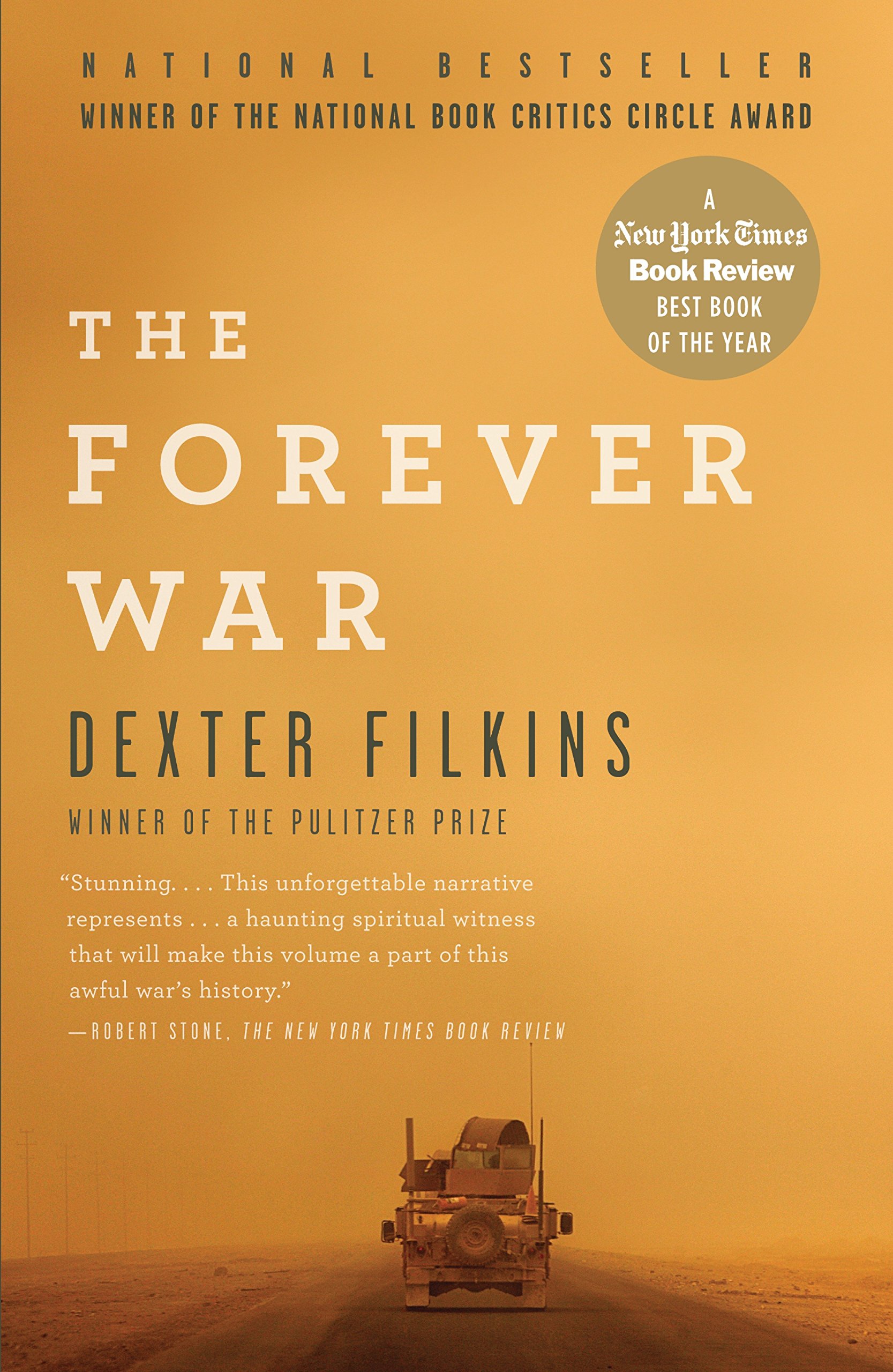
Image result for the forever wars bacevichThe Forever War is how Dexter Filkins described Iraq, the worst of our mideast wars. Retired Colonel and Boston University historian Andrew Bacevich turns again to our wars that never end.  He lost a son in one of them.  In this moving post he describes a visit to Marseilles (mar-saylz) a downstate Illinois town that once featured a cardboard box factory - and now is the only place that thought enough to erect a memorial to those lost in the wars we would rather forget but have failed to leave.  The whole essay is worth reading.  Below is a lengthy excerpt of the part that most resonated with me. - gwc
Tomgram: Andrew Bacevich, What Illinois Bikers Know That Washington Doesn't | TomDispatch

Today, Marseilles [Illinois] retains one modest claim to fame. It’s the site of the Middle East Conflicts Wall Memorial, dedicated in June 2004 and situated on an open plot of ground between the river and the old Nabisco plant. The memorial, created and supported by a conglomeration of civic-minded Illinois bikers, many of them Vietnam veterans, is the only one in the nation that commemorates those who have died during the course of the various campaigns, skirmishes, protracted wars, and nasty mishaps that have involved U.S. forces in various quarters of the Greater Middle East over the past several decades. 


 Think about it: Any American wanting to pay personal tribute to those who fought and died for our country in World War II or Korea or Vietnam knows where to go -- to the Mall in Washington D.C., that long stretch of lawn and reflecting pools connecting the Washington Monument and the Lincoln Memorial. Any American wanting to honor the sacrifice of those who fought and died in a series of more recent conflicts that have lasted longer than World War II, Korea, and Vietnam combined must travel to a place where the nearest public transportation is a Greyhound bus station down the road in Ottawa and the top restaurant is Bobaluk’s Beef and Pizza. 

Nowhere else in this vast nation of ours has anyone invested the money and the effort to remember more than a generation’s worth of less-than-triumphant American war making. Marseilles has a lock on the franchise. Critics might quibble with the aesthetics of the memorial, dismissing it as an unpretentious knock-off of the far more famous Vietnam Wall. Yet if the design doesn’t qualify as cutting edge, it is palpably honest and heartfelt. It consists chiefly of a series of polished granite panels listing the names of those killed during the various phases of this country’s “forever wars” going all the way back to the sailors gunned down in the June 1967 Israeli attack on the USS Liberty. 

 Those panels now contain more than 8,000 names. Each June, in conjunction with the annual “Illinois Motorcycle Freedom Run,” which ends at the memorial, more are added. Along with flags and plaques, there is also text affirming that all those commemorated there are heroes who died for freedom and will never be forgotten. On that point, allow me to register my own quibble. Although my son’s name is halfway down near the left margin of Panel 5B, I find myself uneasy with any reference to American soldiers having died for freedom in the Greater Middle East. 
Our pronounced penchant for using that term in connection with virtually any American military action strikes me as a dodge. It serves as an excuse for not thinking too deeply about the commitments, policies, and decisions that led to all those names being etched in stone, with more to come next month and probably for many years thereafter. In Ernest Hemingway’s famed novel about World War I, A Farewell to Arms, his protagonist is “embarrassed by the words sacred, glorious, and sacrifice and the expression in vain.” I feel something similar when it comes to the use of freedom in this context. Well, not embarrassed exactly, but deeply uncomfortable. Freedom, used in this fashion, conceals truth behind a veil of patriotic sentiment. 


 Those whose names are engraved on the wall in Marseilles died in service to their country. Of that there is no doubt. Whether they died to advance the cause of freedom or even the wellbeing of the United States is another matter entirely. Terms that might more accurately convey why these wars began and why they have persisted for so long include oil, dominion, hubris, a continuing and stubborn refusal among policymakers to own up to their own stupendous folly, and the collective negligence of citizens who have become oblivious to where American troops happen to be fighting at any given moment and why. Some might add to the above list an inability to distinguish between our own interests and those of putative allies like Saudi Arabia and Israel.

Andrew Bacevich, What Illinois Bikers Know That Washington Doesn't | TomDispatch

Image result for the forever wars bacevichThe Forever War is how Dexter Filkins described Iraq, the worst of our mideast wars. Retired Colonel and Boston University historian Andrew Bacevich turns again to our wars that never end.  He lost a son in one of them.  In this moving post he describes a visit to Marseilles (mar-saylz) a downstate Illinois town that once featured a cardboard box factory - and now is the only place that thought enough to erect a memorial to those lost in the wars we would rather forget but have failed to leave.  The whole essay is worth reading.  Below is a lengthy excerpt of the part that most resonated with me. - gwc
Tomgram: Andrew Bacevich, What Illinois Bikers Know That Washington Doesn't | TomDispatch

Today, Marseilles [Illinois] retains one modest claim to fame. It’s the site of the Middle East Conflicts Wall Memorial, dedicated in June 2004 and situated on an open plot of ground between the river and the old Nabisco plant. The memorial, created and supported by a conglomeration of civic-minded Illinois bikers, many of them Vietnam veterans, is the only one in the nation that commemorates those who have died during the course of the various campaigns, skirmishes, protracted wars, and nasty mishaps that have involved U.S. forces in various quarters of the Greater Middle East over the past several decades. 


 Think about it: Any American wanting to pay personal tribute to those who fought and died for our country in World War II or Korea or Vietnam knows where to go -- to the Mall in Washington D.C., that long stretch of lawn and reflecting pools connecting the Washington Monument and the Lincoln Memorial. Any American wanting to honor the sacrifice of those who fought and died in a series of more recent conflicts that have lasted longer than World War II, Korea, and Vietnam combined must travel to a place where the nearest public transportation is a Greyhound bus station down the road in Ottawa and the top restaurant is Bobaluk’s Beef and Pizza. 

Nowhere else in this vast nation of ours has anyone invested the money and the effort to remember more than a generation’s worth of less-than-triumphant American war making. Marseilles has a lock on the franchise. Critics might quibble with the aesthetics of the memorial, dismissing it as an unpretentious knock-off of the far more famous Vietnam Wall. Yet if the design doesn’t qualify as cutting edge, it is palpably honest and heartfelt. It consists chiefly of a series of polished granite panels listing the names of those killed during the various phases of this country’s “forever wars” going all the way back to the sailors gunned down in the June 1967 Israeli attack on the USS Liberty. 

 Those panels now contain more than 8,000 names. Each June, in conjunction with the annual “Illinois Motorcycle Freedom Run,” which ends at the memorial, more are added. Along with flags and plaques, there is also text affirming that all those commemorated there are heroes who died for freedom and will never be forgotten. On that point, allow me to register my own quibble. Although my son’s name is halfway down near the left margin of Panel 5B, I find myself uneasy with any reference to American soldiers having died for freedom in the Greater Middle East. 
Our pronounced penchant for using that term in connection with virtually any American military action strikes me as a dodge. It serves as an excuse for not thinking too deeply about the commitments, policies, and decisions that led to all those names being etched in stone, with more to come next month and probably for many years thereafter. In Ernest Hemingway’s famed novel about World War I, A Farewell to Arms, his protagonist is “embarrassed by the words sacred, glorious, and sacrifice and the expression in vain.” I feel something similar when it comes to the use of freedom in this context. Well, not embarrassed exactly, but deeply uncomfortable. Freedom, used in this fashion, conceals truth behind a veil of patriotic sentiment. 


 Those whose names are engraved on the wall in Marseilles died in service to their country. Of that there is no doubt. Whether they died to advance the cause of freedom or even the wellbeing of the United States is another matter entirely. Terms that might more accurately convey why these wars began and why they have persisted for so long include oil, dominion, hubris, a continuing and stubborn refusal among policymakers to own up to their own stupendous folly, and the collective negligence of citizens who have become oblivious to where American troops happen to be fighting at any given moment and why. Some might add to the above list an inability to distinguish between our own interests and those of putative allies like Saudi Arabia and Israel.

Thursday, May 30, 2019

Full transcript: Robert Mueller’s statement on the Russia investigation - POLITICO

Full transcript: Robert Mueller’s statement on the Russia investigation - POLITICO: Read Robert Mueller's full remarks.

Mueller’s Message: The Obstruction That Nearly Halted Criminal Case Against Russians - Just Security

by Ryan Goodman (NYU, former Special Counsel to the General Counsel, Dept. of Defense)
Mueller’s Message: The Obstruction That Nearly Halted Criminal Case Against Russians - Just Security: "Special Counsel Robert Mueller’s statement on Wednesday may reset the conversation about his investigation’s findings, and how Congress and the American public move forward from here. In deciding what points of the over 400-page document to highlight in under 10 minutes, Mueller gave Congress and the American public advice: Focus on the significance of two interlocking pieces...."
Special Counsel Robert Mueller’s statement on Wednesday may reset the conversation about his investigation’s findings, and how Congress and the American public move forward from here. In deciding what points in the over 400-page document to highlight in under 10 minutes, Mueller gave Congress and the American public advice: Focus on two interlocking pieces.
1. The gravity of Russia’s actions
The Russian government, including through its military, engaged in a “concerted” and “systematic” attack on our political system.
2. The gravity of the obstruction
The President of the United States engaged in obstruction that “strikes at the core of the government’s effort to find the truth and hold wrongdoers accountable.”

Wednesday, May 29, 2019

HowCongress crippled Andrew Johnson ~ David Priess

For the first time in the history of our country,” wrote the New York Independent, “the people have been witness to the mortifying spectacle of the president going from town to town, accompanied by the prominent members of the Cabinet, on an electioneering raid, denouncing his opponents, bandying epithets with men in the crowd, and praising himself and his policies. Such a humiliating exhibition has never before been seen, nor anything even approaching to it."
https://www.politico.com/magazine/story/2018/11/13/andrew-johnson-undermined-congress-cabinet-david-priess-book-222413

Tuesday, May 28, 2019

How Impeachment Proceedings Would Strengthen Congress’s Investigatory Powers - Just Security

Michael Stern
Michael Stern -  a former counsel
to the U.S. House of Representatives
Nancy Pelosi and the House Democratic leadership should heed this well stated - and quite conventional - analysis by a former Senior Counsel to the House! Stern lays out a basic proposition: there is no font of power deeper than the House's exclusive power to define and charge an officer of the United States with a "high crime and misdemeanor".  The United States Supreme Court, like the Senate as both are currently constituted, is presumptively strongly inclined to protect the President.  The oversight and law-making power cannot, in this array, be counted on as sufficient to support the subpoenae and other investigatory steps the House has begun. - gwc
How Impeachment Proceedings Would Strengthen Congress’s Investigatory Powers - Just Security: By Michael Stern [former Senior Counsel to the U.S. House of Representatives (1996-2004)]

***Finally, initiating an impeachment inquiry provides the House with several “self-help” options to better secure the production of information. First, to the extent the House wishes to employ the remedy of inherent contempt (in which the House through its own agents would detain or fine a contumacious witness), this strategy would be most defensible in an impeachment proceeding where the House is exercising a judicial function. 
Second, if President Trump continues to defy or direct others to defy congressional subpoenas especially for appearance before an impeachment hearing, this in itself could support an article of impeachment. Third, the House could draw an adverse inference from the unjustifiable failure to produce evidence, finding that the president’s refusal to provide information reflects the fact that it would not be helpful to his case.
In short, initiating a formal impeachment proceeding, though not a silver bullet, would significantly enhance the House’s ability to gather relevant information in a timely fashion. Claims that oversight hearings are equally powerful are just wishful thinking.

Tomgram: James Carroll, The 12 Days of Christmas Bombing That Never End (for Me) | TomDispatch

Tomgram: James Carroll, The 12 Days of Bombing That Never End (for Me) | TomDispatch: null

Where does Trump get his odd ideas? Jonanthan Bernstein ~ Bloomberg

https://www.bloomberg.com/opinion/articles/2019-05-28/where-does-donald-trump-get-his-odd-ideas