Tuesday, April 11, 2017

Amnesty urges China to end secrecy of capital punishment data

China has made impressive progress in public transparency.  All court judgments are available to all online (though the ruling CPC's deliberations are not).  But on big set of data remains a state secret: death penalty data.

Without that data it is not possible to debate intelligently whether or not the infliction of the penalty is administered fairly.

Press accounts yield little that is reliable.  Reported death sentences mean little without hard data: most death sentences include a two year probationary period at the end of which the sentence may be (and usually is) commuted to a life sentence, typically fifteen years. - gwc
Amnesty urges China to come clean on capital punishment

 
China, the world’s biggest executioner, must come clean about its “grotesque” level of capital punishment, the rights group Amnesty International has said in its 2016 global review of the death penalty.
China keeps its official tally of those executed as a state secret but last year it put to death more people than all other countries in the world combined, Amnesty’s investigation showed.
Excluding China, states around the world executed 1,032 people in 2016, down 37 per cent from the previous year.
The world’s top five executioners were China, Iran, Saudi Arabia, Iraq and Pakistan.
The fall in executions worldwide was largely driven by a reduction in Iran, where they were down 42 per cent last year from at least 977 to at least 567, and Pakistan, down 73 per cent from 326 to 87.

Monday, April 10, 2017

Former DIA Colonel: “US strikes on Syria based on a lie” | Intel Today

Former DIA Colonel: “US strikes on Syria based on a lie” | Intel Today
by Patrick Lang
Donald Trump’s decision to launch cruise missile strikes on a Syrian Air Force Base was based on a lie.  In the coming days the American people will learn that the Intelligence Community knew that Syria did not drop a military chemical weapon on innocent civilians in Idlib. Here is what happened.
  1. The Russians briefed the United States on the proposed target. This is a process that started more than two months ago. There is a dedicated phone line that is being used to coordinate and deconflict (i.e., prevent US and Russian air assets from shooting at each other) the upcoming operation.
  2. The United States was fully briefed on the fact that there was a target in Idlib that the Russians believes was a weapons/explosives depot for Islamic rebels.
  3. The Syrian Air Force hit the target with conventional weapons. All involved expected to see a massive secondary explosion. That did not happen. Instead, smoke, chemical smoke, began billowing from the site. It turns out that the Islamic rebels used that site to store chemicals, not sarin, that were deadly. The chemicals included organic phosphates and chlorine and they followed the wind and killed civilians.
  4. There was a strong wind blowing that day and the cloud was driven to a nearby village and caused casualties.
  5. We know it was not sarin. How? Very simple. The so-called “first responders” handled the victims without gloves. If this had been sarin they would have died. Sarin on the skin will kill you. How do I know? I went through “Live Agent” training at Fort McClellan in Alabama.
There are members of the U.S. military who were aware this strike would occur and it was recorded. There is a film record. At least the Defense Intelligence Agency knows that this was not a chemical weapon attack. In fact, Syrian military chemical weapons were destroyed with the help of Russia.
This is Gulf of Tonkin 2. How ironic. Donald Trump correctly castigated George W. Bush for launching an unprovoked, unjustified attack on Iraq in 2003. Now we have President Donald Trump doing the same damn thing. Worse in fact. Because the intelligence community had information showing that there was no chemical weapon launched by the Syrian Air Force.
Here’s the good news. The Russians and Syrians were informed, or at least were aware, that the attack was coming. They were able to remove a large number of their assets. The base the United States hit was something of a backwater. Donald Trump gets to pretend that he is a tough guy. He is not. He is a fool.

Saturday, April 8, 2017

Media fawns over Trump Missile Strikes

Brian Williams "beautiful pictures of fearsome armaments"
No President of the United States passes up the chance to be Commander in Chief.  An authoritarian like Trump must have relished the opportunities that the Syrian gas attack presented:

= to reverse his excoriation of Obama for considering attacks on Assad 
= to get tough with the Russians who helped elect him
= to show the Chinese that they will get no great power respect- telling Xi Jinping during dinner that the missiles had been launched at sea

Fareed Zakaria lay  prostrate on camera for CNN, lauding DJT for acting on “broader moral and political purpose” and for using  “the kind of rhetoric that we’ve come to expect from American presidents.”

This represents the danger - there is little that can stir American popular enthusiasm and mainstream media compliance more than showing we are the cops of the world.  Little more exciting than unilaterally launching missiles aimed at Arab targets.  No need to go to Congress, or supplicate before the UN where we would face the inevitable Russian and Chinese vetoes in the Security Council.  

 Making America Great Again means decisive action to induce amnesia: that we don't win ill-considered and unnecessary wars.  Vietnam, Afghanistan,and Iraq come to mind.  - gwc

Friday, April 7, 2017

Office-Sharing Lawyers Found to Be in Same Firm | Legal Ethics in Motion

Office-Sharing Lawyers Found to Be in Same Firm | Legal Ethics in Motion
The Missouri Court of Appeals recently ruled that two attorneys who share office space may be members of the same firm and therefore not bound by the ethics rules on fee-sharing among unaffiliated lawyers.
In the underlying dispute, an attorney who rented office space from another lawyer agreed to split fees into cases they referred to each other. After moving out of the office, the attorney claimed that the fee-sharing agreement was invalid because it did not meet the requirements of Missouri Rule of Professional Conduct 4-1.5.
Rule 4-1.5(e) imposes requirements for fee division among lawyers who are not members of the same firm. As noted by the trial court, agreements that do not comply with the rule are unenforceable in Missouri. But the requirements of the rule do not apply when attorneys are in the same firm. Significantly, the comment to Rule 1.0(c) defines that two or more lawyers who present themselves to the public in any way suggesting they are a firm or conduct themselves as if they were a firm should be regarded as a firm under the Rules.
The court raised the following factors as evidence to support the finding that the attorneys held themselves out as being part of the same firm:
  • The attorneys shared space in a building with a single sign out front that read “Starke Law Offices”;
  • Clients entered through a door marked “Law Offices” that listed the attorneys with no indication they were unaffiliated;
  • The same phone number appeared on the sign and door;
  • Visitors calling the phone number were greeted the same way;
  • All visitors used the same reception area and were greeted by the same staff;
  • The attorney’s used the same forms;
  • One of the attorneys and his paralegal told referred clients he remained available if they had an issue with the lawyer he shared space with.
To read the full opinion, click here.

On Judicial Plagiarism – SEMPER VIRIDIS

On Judicial Plagiarism – SEMPER VIRIDIS
by Prof. Les Green (Oxford University)
It is an open secret that judges sometimes plagiarize from submissions by the lawyers before them, and even from articles and books by academics.   With respect to the latter, they are often aided and abetted by their clerks—law students working with them as research assistants.
Unlike scholarly or literary cheaters, the worry about judicial plagiarists is not that they undermine the research process, violate authors’ ‘moral rights’, or steal someone’s intellectual property. Judicial plagiarism is worse than any of these. It undermines the rule of law and the independence of the judiciary. A judge who knowingly or recklessly reproduces words or arguments of others as if they were his own may not be making his own decisions. If discovered, this undermines public confidence that the judiciary can be relied on to think for itself.

Thursday, April 6, 2017

What Was the Legal Basis for the U.S. Air Strikes Against Syria? - Lawfare

As Phil Ochs sang: We are the cops of the world. - gwc
What Was the Legal Basis for the U.S. Air Strikes Against Syria? - Lawfare 

 by John Bellinger
***As a matter of international law, President Trump does not have clear authority to use force in response to Syria’s use of chemical weapons, and he may not care whether U.S. actions are lawful under international law. Under the U.N. Charter, the U.S. is prohibited from using force in Syria unless authorized by the Security Council or exercising its right to individual or collective self-defense. The U.S. Government—like most other governments (with the exception of the United Kingdom and Denmark)—has never recognized a right of humanitarian intervention under international law. China and Russia have continued to block Security Council resolutions that would authorize the use of force to respond to the Assad regime’s atrocities. Yesterday, U.S. Ambassador to the U.N. Nikki Haley suggested that the U.S. might use force without U.N. approval: “When the United Nations consistently fails in its duty to act collectively, there are times in the life of states that we are compelled to take our own action.” Having proceeded without U.N. authorization, it would be better if the Administration attempts to explain its actions as lawful, or at least justified, under international law. Although a U.S. military strike cannot be easily justified as self-defense of the United States, it is possible that the United States could argue that the use of force was permissible as an action in collective self-defense of Syria’s neighbors. Alternatively, it might be better for the Trump Administration to argue that its limited use of force was justified, even if not strictly lawful, under international law based on the specific facts in Syria and that other avenues had been exhausted. This is the approach the Clinton Administration took when it participated in the NATO bombing campaign in Kosovo in the 1990s, and that the Obama Administration was apparently prepared to take if it had decided to use force against Syria in 2013.

Attacks on Rice. Absurd

Wednesday, April 5, 2017

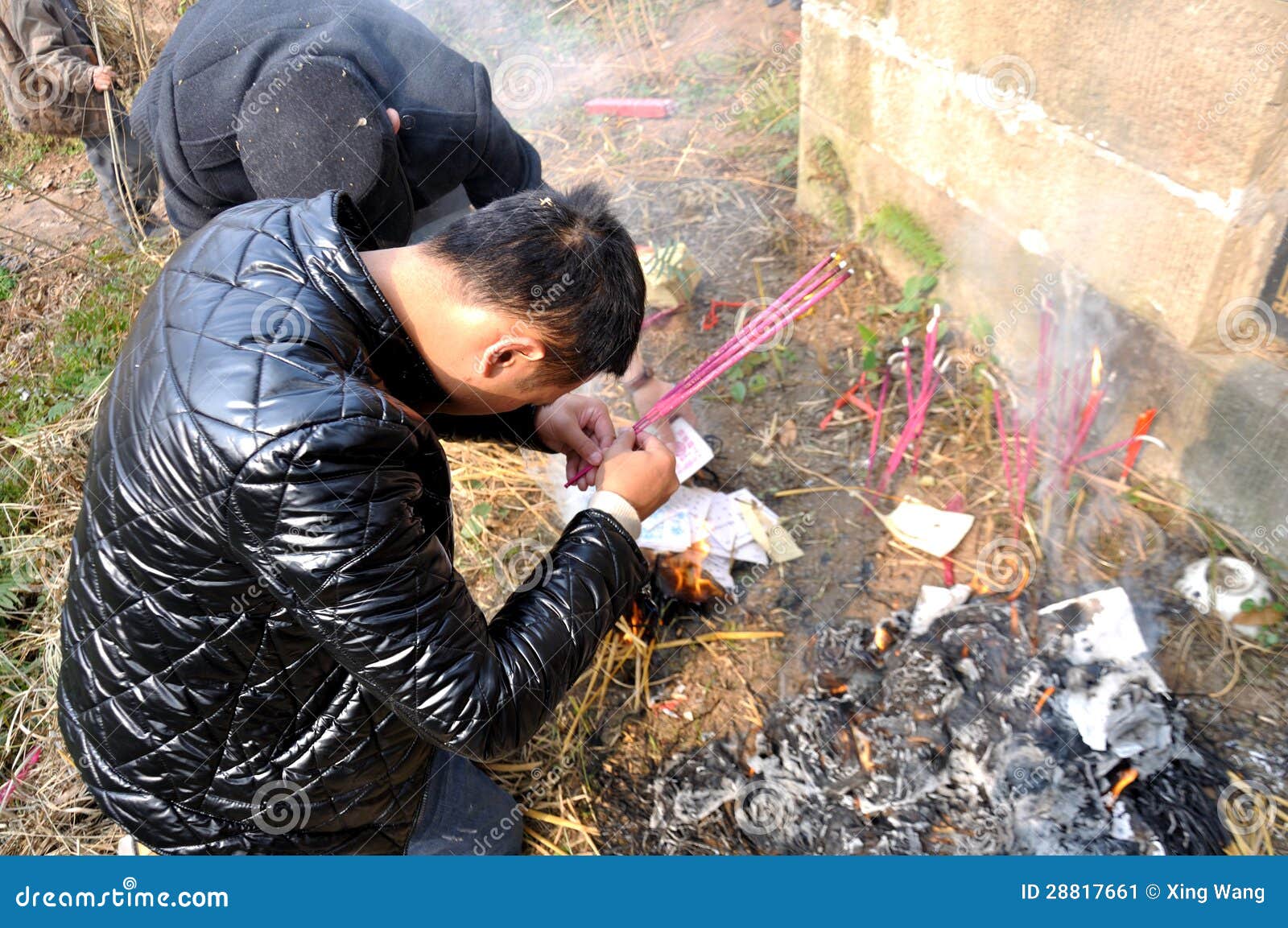
Veneration rights litigation in China | Supreme People's Court Monitor

Image result for china veneration of ancestors
Remedies for violations of "veneration rights" are part of the discussions regarding China' new draft civil code Susan Finder reports.  Some courts have already recognized such claims - proceeding in a way not unfamiliar to those in the common law tradition.   But the main thrust of Chinese civil law is that the aspirational language of the preamble of the constitution, and the generalities of the General Principles of Civil Law (1986)  need an enabling statute to be implemented.

A look at the remedies afforded in statutes demonstrates that non-economic harms are recognized and that available remedies go beyond the usual money judgment. But as in our tort law, recovery for emotional distress  has been controversial in China.  But it has strong support in statutes and its scope has expanded.  We have generally linked it with personal injury suffered or markers of seriousness.  So recovery has often required proof of significant "impact" , outrageous conduct, or presence in a "zone of danger".  China is similar - but the specified remedies show a greater sensitivity than we display.  The statutory  remedies of rehabilitation of reputation and apology show a great sensitivity than we usually exhibit.

For example seven years ago China's legislature amended its civil rights act - the State Compensation Law - to allow recovery for emotional distress 精神.  Like the Tort Law (2009) the SCL provides an array of remedies for the "serious consequences" of administrative or police and prosecutorial misconduct.  The SCL provides, in part:

第三十五条 有本法第三条或者第十七条规定情形之一,致人精神损害的,应当在侵权行为影响的范围内,为受害人消除影响,恢复名誉,赔礼道歉;造成严重后果的,应当支付相应的精神损害抚慰金。
Article 35  If according to the provisions  of Articles 3 or 37 of this law a person causes another to suffer emotional harm then   within the scope of the harm done, the actor should take measures to eliminate the consequences to the victim,  rehabilitate the victim's reputation, make an apology, and pay consolation damages in cases where the consequences of the violation of rights are serious. 
- GWC


Veneration rights litigation in China | Supreme People's Court Monitor
by Susan Finder

The drafting of China’s Civil Code is underway and unbeknownst to the world outside of China, whether the Civil Code should recognize veneration rights is part of the discussion. The fact that these cases are on the increase is significant for what is means for changes in Chinese society, how ordinary Chinese people are using the courts, and the place of traditional customs and morality. These cases are one of many in which Chinese judges find themselves having to deal with claims to individual rights in the absence of clear law.

Although statistics on the number of cases are not available, a quick search of one of the judgment databases revealed about 100, arising primarily in Beijing, Shanghai, and Zhejiang. According to a recent press report, a Beijing court recognized veneration rights of a bereaved father. The father had sued his son in law for damages in the amount of 100,000 RMB for removing his daughter’s ashes without informing him and seeking the right to determine where the ashes should be stored. The court ordered the son in law to pay 20,000 RMB damages to his father in law for inflicting mental distress, compensate him for the cost of a portrait of his daughter, but said the widower had the right to determine where the ashes should be stored.

Health Care & the Gospel | Commonweal Magazine

Timothy Jost - a prominent expert on the Affordable Care Act - pens this peace on theharmful effectsof the Republican "replacement" bill still in the hopper. - gwc
Health Care & the Gospel | Commonweal Magazine
by Professor Timothy Jost  (Washington & Lee Law School)

One cannot read the gospels without being struck at how much of Jesus’ earthly ministry was devoted to healing. The Gospel of Matthew, for example, reports that “Jesus went throughout Galilee…preaching the good news of the Kingdom and healing every disease and sickness” (4:21). In sending out his disciples he charged them also to “heal the sick” (10:7). Jesus’ concern for the poor is also inescapable. He repeatedly instructs us to attend to their needs. In the parable of the sheep and the goats (Matthew 25), Jesus proclaims that those who wish to enter the Kingdom of Heaven must care for the hungry, naked, and sick—the “least of these.”
Pope Francis has embraced this message. In May 2016 speech to the Doctors with Africa mission group, he stated, “Health is not a consumer good but a universal right, so access to health care cannot be a privilege.” He emphasized in particular the responsibility of Christians to care for the most vulnerable, a theme he again took up in February of this year, warning that the growing lack of health care “among the poorest segments of the population, due to lack of access to care, must leave no one indifferent.”
The American Health Care Act (AHCA), which was pulled from consideration before the House of Representatives on March 24, 2017, does not pass the test proclaimed in the Gospel and endorsed by the pope. It fails to help the “least of these” and reflects just the kind of indifference Francis has denounced. According to a nonpartisan Congressional Budget Office analysis, it would have removed $880 million in federal funding over a decade from the Medicaid program, which pays for health care for the elderly, disabled, children, pregnant women, and the low-income adults. Not coincidentally, it would have cut taxes by almost exactly the same amount for wealthy people, insurers, and providers. The legislation would have cut taxes for each of the four hundred highest income taxpayers in the United States by an average of $7 million annually—enough to cover premium subsidies for over eight hundred thousand lower-income Americans.
The legislation also wou

Opposing a Corrupt Transaction - NO to Neil Gorsuch Nomination

Image result for merrick garland
Opposing a Corrupt Transaction
by Josh Marshall // Talking Points Memo

***If Gorsuch will be confirmed one way or another, why go through the nuclear option motions? I would say it's important for this reason. I've heard a number of pundits arguing that the real issue here, or much of the issue, is that Democrats still haven't gotten over the treatment of Judge Garland. That argument is both deeply flawed and entirely correct. This really is mainly about Judge Garland.

As Rep. Adam Schiff put it yesterday on Twitter, Mitch McConnell's historically unprecedented and constitutionally illegitimate decision to block President Obama from nominating anyone a year before he left office was the real nuclear option. The rest is simply fallout. Senate Republicans had the power to do this. But that doesn't make it legitimate. The seat was stolen. Therefore Gorsuch's nomination is itself illegitimate since it is the fruit of the poisoned tree.

Democrats likely have no power to finally prevent this corrupt transaction. It is nonetheless important that they not partake in the corruption. Treating this as a normal nomination would do just that. There are now various good arguments to vote against Gorsuch's nomination on the merits. But to me that's not even the point. Democrats should filibuster the nomination because it is not a legitimate nomination. Filibustering the nomination is the right course of action. If Republicans react by abolishing the Supreme Court filibuster, so be it. It didn't really exist anyway. Again, they should filibuster this nomination because it is the right thing to do.

Sunday, April 2, 2017

A tale of two countries

Trump Couple, Now White House Employees, Can’t Escape Conflict Laws - The New York Times

Trump Couple, Now White House Employees, Can’t Escape Conflict Laws - The New York Times
by Eric Lipton and Jesse Drucker
WASHINGTON — The husband-and-wife team of Jared Kushner and Ivanka Trump, now both senior federal government officials, has been alongside President Trump as the White House has hosted dozens of chief executives and a handful of world leaders in recent weeks.
It is a rarefied crowd, one that has included the top executives of some of the world’s largest automobile, airline, chemical, pharmaceutical and tech companies. Mr. Kushner will continue to keep such select company now that he has helped create a new office that Mr. Trump is calling the White House Office of American Innovation.
But the financial disclosure report released late Friday for Mr. Kushner, which shows that he and his wife still benefit financially from a real estate and investment empire worth as much as $740 million, makes clear that this most powerful Washington couple is walking on perilous legal and ethical ground, according to several prominent experts on the subject.
Unlike Mr. Trump, who is exempt from conflict of interest laws, both Mr. Kushner and Ms. Trump — who took a formal White House position this past week — are forbidden under federal criminal and civil law to take any action that might benefit their particular financial holdings.

The Government Gorsuch Wants to Undo NY Times

The Government that Gorsuch Wants to Undo
by Emily Bazelon (Yale) and Eric Posner (U. Chicago)

At recent Senate hearings to fill the Supreme Court’s open seat, Judge Neil Gorsuch came across as a thoroughly bland and nonthreatening nominee. The idea was to give as little ammunition as possible to opponents when his nomination comes up this week for a vote, one that Senate Democrats may try to upend with a filibuster.
But the reality is that Judge Gorsuch embraces a judicial philosophy that would do nothing less than undermine the structure of modern government — including the rules that keep our water clean, regulate the financial markets and protect workers and consumers. In strongly opposing the administrative state, Judge Gorsuch is in the company of incendiary figures like the White House adviser Steve Bannon, who has called for its “deconstruction.” The Republican-dominated House, too, has passed a bill designed to severely curtail the power of federal agencies.
KEEP READING

Saturday, April 1, 2017

China: Circuit Court’s case guidance on administrative cases | Supreme People's Court Monitor

China's legal system continues to develop in a way counter-intuitive to us - Western liberal democrats.  Repression of dissident lawyers persists, and the censors, armed with electronic search tools, effect censorship pervasively.  Yet the legal system continues to advance in the transparency of the courts, the competence of the courts, and the degree of guidance offered to judges to make justice more consistent.

Susan Finder reports that the Supreme People's Court's 2d Circuit unit has issued a guidance document.  It selects and summarizes illustrative cases, presumably a step toward a more comprehensive document to follow.  Although the system does not embrace "precedent" in the way we understand it, the selection of cases as illustrative puts the SPC stamp of approval on them.  Judges will doubtless be guided as intended in their deliberations and decision-making.  And lawyers will key their arguments in the same way. - gwc


#2 Circuit Court’s case guidance on administrative cases | Supreme People's Court Monitor
by Susan Finder

On August, 2016, the Supreme People’s Court (SPC) #2 Circuit Court issued a set of 30 case summaries (literally important points, 案例要旨)on administrative cases, selected from the many administrative cases heard in the first year and a half of operation. The #2 Circuit Court hailed it as a new type of case guidance (审判新指南) in March, 2017. This type of case guidance is mentioned in my forthcoming article in the Tsinghua China Law Review. Although this document does not have any formal status (at least yet) in the universe of SPC case guidance, it has been approved at a conference of administrative judges in Liaoning, Heilongjiang, and Jilin, and the rules it sets out should be considered highly persuasive to courts in those three provinces.

It is likely that these cases will provide background material for a more comprehensive judicial interpretation of the Administrative Procedure (Litigation) Law than the one issued shortly after the amended law was promulgated. Some of these cases have also been incorporated into the SPC’s 10 model #2 Circuit Court cross-administrative region commercial and administrative cases. The document does not include a summary of the underlying facts, but some of the full case reports are found elsewhere. Each case (most relate to land disputes) provides a glimpse into the behavior of local government vis a vis ordinary Chinese citizens and companies, the (limited) scope for review of administrative action under Chinese law, and the unusual legal issues in the review of administrative action. Brief commentary follows each case summary restatement. on 1 April, Wang Cailiang, the deputy chair of the All China Lawyers Association, published Wechat commentary on administrative litigation and judicial reform. Highlights of some of his comments follows the case summaries.

Friday, March 31, 2017

Trump Is Right: Give Michael Flynn Immunity - The New York Times


Trump Is Right: Give Michael Flynn Immunity - The New York Times
by Richard Painter and Norman Eisen (the writers were White House Ethics Counsel for George W. Bush and Barack H. Obama, respectively)
***Immunity should be granted as soon as Congress and prosecutors are persuaded that Mr. Flynn has information that will lead to a criminal case against one or more people at least as important to the alleged wrongdoing as Mr. Flynn may be. The overriding objective must be learning who if anyone in the United States collaborated with the Russians as well as who knew about it, what they knew and when they knew it.***

Donald Trump’s Parrot - The New York Times

Donald Trump’s Parrot - The New York Times
By Roger Cohen
"At night in the ghostly White House, when Ivanka and Jared have gone home, and his consiglieri have retired to their Russian salads, the gold-robed president — crazed as Lear on the cliffs “fantastically dressed with wildflowers” — wanders from room to room staring at TV screens, cursing in frustration when he cannot find the remote, hurling abuse at the “enemies of the people” who fail to genuflect daily before his genius, adjusting his hair, making random calls to aides to ensure they have scheduled his next play dates with truckers and coal miners.
It might almost be funny. Almost. But the day will come when the Dow plunges and what the former British Prime Minister Harold Macmillan is said to have feared most in politics — “events, dear Boy, events” — occurs, perhaps in ghastly terrorist form, and an incoherent administration will be confronted by its first crisis. All that can be said for now is that, in such a moment, illiberalism and xenophobia in the hands of a would-be autocrat will make for a dangerous brew.

Thursday, March 30, 2017

"Medicaid expansion is the jewel of the ACA" | xpostfactoid

"Medicaid expansion is the jewel of the ACA" | xpostfactoid
by Andrew Sprung
From the opposite end of the political spectrum, Trump buddy Christopher Ruddy has urged further Medicaid expansion on Trump.  As I pointed out within days of Trump's election, that is the only way to fulfill Trump's promises to delivery affordable, low deductible health insurance to everyone.

Too bad Trump's promises aren't worth a bottle of Trump Network vitamins. But Democrats' day will come, if our political system survives Trump. And when it does, various forms of public insurance for those who currently must rely on the individual market will be in play.

The Empty Supreme Court Confirmation Hearing - The New York Times

The Empty Supreme Court Confirmation Hearing - The New York Times
by Linda Greenhouse
The Senate Judiciary Committee’s confirmation hearing for Judge Neil M. Gorsuch was just plain embarrassing, and not only for the nominee. But let’s begin with him, skipping over his Republican enablers, who had nothing to do but lob softball questions and praise his answers. If Judge Gorsuch wasn’t the least forthcoming Supreme Court nominee ever to appear at a confirmation hearing, it’s hard to imagine one who could be less forthcoming while still breathing. More interesting and less predictable answers could have come from Siri on an iPhone.
The previous contender for the title of least forthcoming was Justice Antonin Scalia, who died in February 2016 and whom Judge Gorsuch would replace. Nominated by President Ronald Reagan in 1986 and confirmed unanimously, then-Judge Scalia wouldn’t even tell the Judiciary Committee whether he supported Marbury v. Madison, the landmark 1803 decision in which the court under Chief Justice John Marshall established the principle that federal courts can invalidate unconstitutional statutes.

Wednesday, March 29, 2017

Napolitano likes fake judges, not real judges

https://bol.bna.com/trump-loves-fake-judges-cant-stand-real-judges-perspective/

Henry Siegman · The Ultimate Deal: The Two-State Solution · LRB 30 March 2017

Henry Siegman,  a former head of the American Jewish Congress, argues that the Palestinians should transform their struggle into an anti-apartheid struggle for equal rights.  Such a fight against the fifty year old occupation can have only two effects: either restore the two state solution to the agenda, or change Israel into a truly bi-national state. - gwc
Henry Siegman · The Ultimate Deal: The Two-State Solution · LRB 30 March 2017
It will only be when Palestinians close down the Palestinian Authority and turn it into a vehicle of non-violent struggle for rights that the two-state option will re-emerge. If it doesn’t re-emerge, in time Greater Israel’s de facto apartheid will evolve into a binational state, because no apartheid can be hidden under the cover of a ‘temporary occupation’ that has already lasted half a century. An anti-apartheid struggle will undoubtedly be long and painful, as it was in South Africa, but no longer and no more painful than would be the case were Netanyahu’s status quo to prevail. ***

Reactions by the international commentariat to Trump and Netanyahu’s joint press conference on 15 February focused largely on Trump’s pronouncements, specifically on what seemed to be his abandonment of America’s long-standing bipartisan support for a two-state solution to the Israel-Palestine conflict. ‘I’m looking at two-state and one-state and I like the one that both parties like,’ he said. ‘I can live with either one.’ Given his ignorance of international affairs in general and the Middle East in particular, he probably had no idea of the implications of what he was saying. He declared that Palestinians will ‘have to acknowledge Israel, they’re going to have to do that,’ entirely unaware that that is exactly what they have already done, not once, but on three separate occasions: at the request of Reagan and his secretary of state, George Shultz, in 1988; in 1993, in the context of the Oslo Accords; and again in Gaza in 1998, with Bill Clinton in attendance. Trump is probably also unaware that Netanyahu’s government has never recognised the Palestinian right to national self-determination and statehood in any part of Palestine, even though this right has been affirmed repeatedly by the UN Security Council (e.g. Resolution 242 in 1967 and Resolution 1515 in 2003) and by the International Court of Justice (in 2004).


The Palestinians never withdrew their recognition of Israel, but they have refused to endorse Israel’s decision to define its national identity in religious and ethnic terms, a demand that no country has the right to impose on other countries. Israel would never agree to such a demand by Palestinians or for that matter by any Christian country.

Even before his meeting with Trump, Netanyahu announced his intention of treating 60 per cent of the West Bank – territory that the Oslo agreement designated as Area C, from which Israel was supposed to have withdrawn by 1998 – as a permanent part of Israel. So Palestinians would be left just 10 per cent of pre-partition Palestine. But with Trump in the White House, and his settlement-supporting son-in-law by his side, even this shrinkage seemed to Netanyahu too generous an accommodation to the Palestinians. He therefore announced at the White House that his second condition for a peace agreement with the Palestinians is that they agree to Israel’s retention of its military control over the entire West Bank.