Monday, May 18, 2015

Horizons: Obama and Warren: A Contrast in Analysis

Although I rarely disagree with either Senator -Elizabeth Warren or Bernie Sanders - I am more comfortable with Barack Obama's long sentences, complex analyses, and - often - tentativeness.
Though it is destroying journalism in some respects the world of new media does permit strong new voices to emerge. Nancy LeTourneau and Andrew Sprung are exemplars of that.  Sprung contrasts the two former law professors. Tourneau adds her own spin. - gwc

Horizons: Obama and Warren: A Contrast in Analysis
by Nancy Le Tourneau

Andrew Sprung has written a fascinating article `Obama and Warren - a study in contrasting rhetorical styles'.  He lays out the different ways President Obama and Senator Warren talk about the roots of income inequality. He does so by contrasting a speech the President gave in December 2013 on the topic and one Senator Warren gave recently (which he taped and transcribed). Sprung sees a difference in rhetorical styles.
She sees the forests; he knows the trees -- and perhaps sees more overlapping, interlocking forests. Whatever your preference, the contrast is striking.
I think his comparison shows that the differences between the two of them go a bit deeper than rhetoric and might help us explain why they disagree on things like TPP.
Where Obama acknowledges multiple causes of our current economic malaise, from global competition and technology to racism as well as Republican tax, regulatory and labor policy, Warren hews to a three-part indictment of Reaganomics: deregulation, tax cuts for the wealthy, and consequent defunding of investments in shared prosperity.
The difference rhetorically is that Warren's analysis is simpler and cleaner. Obama's is more complex. What I would add is that Warren breaks down a scenario where it is easier to identify the villains and the victims. While Obama points to Republican policies as a contributor, he includes factors that don't easily point to who the "bad guys" are (i.e., global competition and technology). 

Behind those differences are differing views of how the world works and how you go about analyzing problems. One view is focused on a linear cause/effect analysis. The other focuses on a feedback loop with systems of interconnectivity.

When it comes to something like trade agreements, this helps us understand why Senator Warren would oppose anything that appears to benefit those she has identified as the cause of the problem...the 1%. They are the villains or the "bad guys" who are responsible for income inequality.....

Read more

Sunday, May 17, 2015

How Fox News Changed American Media and Political Dynamics by Bruce Bartlett :: SSRN

Fox News is to American journalism what Pravda was to the Communist party of the USSR - a house organ and a seat of power.  Bruce Bartlett is a leading economist of the Jude Wanniski/Jack Kemp supply-side school.  He has served as a senior adviser since Ronald Reagan was president.  But  he is fed up and alarmed by the Fox News effect. -gwc
How Fox News Changed American Media and Political Dynamics by Bruce Bartlett :: SSRN
by Bruce Bartlett

The creation of Fox News in 1996 was an event of deep, yet unappreciated, political and historical importance. For the first time, there was a news source available virtually everywhere in the United States, 24 hours a day, 7 days a week, with a conservative tilt. Finally, conservatives did not have to seek out bits of news favorable to their point of view in liberal publications or in small magazines and newsletters. Like someone dying of thirst in the desert, conservatives drank heavily from the Fox waters. 
Soon, it became the dominant – and in many cases, virtually the only – major news source for millions of Americans. This has had profound political implications that are only starting to be appreciated. Indeed, it can almost be called self-brainwashing – many conservatives now refuse to even listen to any news or opinion not vetted through Fox, and to believe whatever appears on it as the gospel truth.

Friday, May 15, 2015

Contraception & Honesty | Commonweal Magazine

The moral certainty of the Catholic Church about abortion demands heroism of women and men who must bear responsibility for every child conceived, not just born.  That is more than should be asked,in my opinion.  But the Church's absolutism on artificial contraception demands foolishness and worse.  there are many reasons for the decline of the immigrant-built Catholic church here - but a major factor is the prohibition on contraception which led millions of Catholics to reject the Church's teaching.  One can't reverse that history - but if the Church wants to reduce the bleeding the Bishops should call a halt to the prohibition on artificial contraception. - gwc
Contraception & Honesty | Commonweal Magazine
by Peter Steinfels

Perhaps the most important moment of last October’s Extraordinary Synod on the Family occurred at its very beginning—when Pope Francis insisted that “speaking honestly” was the bishops’ basic responsibility: No topics or viewpoints should be out of bounds. “It is necessary to say all that, in the Lord, one feels the need to say: without polite deference, without hesitation.” 
I doubt that everyone present was able to live up to that plea. For not a few bishops, self-censorship has become second nature, especially when speaking publicly with other bishops, and infinitely so when in the earshot of the pope. 
Fortunately, that was not true in many cases, or the synod would not have made headlines with the several highly controversial topics served up and batted back and forth: reception of Communion by the divorced-and-remarried, cohabitation, even same-sex relationships. But could engrained inhibition have accounted for the glaring gap in the synod’s work? I refer to the apparent lack of attention to the question of contraception. Why did the synod appear to treat so perfunctorily the issue that was, and is, the starting point for the unraveling of Catholic confidence in the church’s sexual ethics and even its credibility about marriage? To which, of course, one could add further questions about this baffling silence: Does it even matter? And if it does matter, are there grounds for hoping that the bishops who will be gathering in Rome next fall to complete the synod’s work can do better?
A lot rests on the answers to these questions. A synod that grabs headlines about remarried or cohabiting or same-sex Catholic couples but says nothing fresh about the spectacularly obvious rift between official teaching and actual behavior in Catholic married life is an invitation to cynicism. It could prove to be a crucial test of Pope Francis's papacy.
[Video: Peter Steinfels explains what prompted him to write "Contraception & Honesty" and talks more about the issues he raises in it.]
I.
The interim report of last October’s synod was startling in its candor about matters commonly considered beyond discussion, yet that controversial report’s extensive description of “socio-cultural context” and “pastoral challenges” regarding the family made no reference whatsoever to contraception. The subject was belatedly and perfunctorily addressed, almost as an afterthought to all the more controversial issues: “Realistic language” and “listening to people,” the synod fathers had reportedly proposed, are needed for “acknowledging the beauty and truth of an unconditional openness to life” and for “an appropriate teaching regarding the natural methods of human reproduction, which allow a couple to live in a harmonious and conscious manner the communication between husband and wife, in all its aspects, along with their responsibility at procreating life. In this regard, we should return to the message of the encyclical Humanae vitae of Pope Paul VI, which highlights the need to respect the dignity of the person in the moral evaluation of the methods of regulating births.”

What Pakistan Knew About the Bin Laden Raid | Foreign Policy

What Pakistan Knew About the Bin Laden Raid
What Pakistan Knew About the Bin Laden Raid | Foreign Policy
by Husain Haqqani (former Pakistani Ambassador to the U.S.)
With a litany of unproved claims, veteran investigative journalist Seymour Hersh has revived discussion about the circumstances in which al Qaeda leader Osama bin Laden was discovered and killed in May 2011 in the Pakistani garrison city of Abbottabad.
Some of Hersh’s assertions in a 10,000-word London Review of Books article border on fantasy. He claims that bin Laden lived under the protection of Pakistan’s Inter-Services Intelligence (ISI), was given up for reward money by one of the agency’s officers, and was eventually eliminated in a U.S. raid covertly backed by Pakistan’s army commander and ISI chief.
According to Hersh, the Americans “blackmailed” Pakistan’s generals into helping them kill bin Laden but then stabbed them in the back for political reasons by denying them any credit for assisting in the raid by Navy SEALs. Instead of blaming ISI for sheltering bin Laden in Pakistan (which Hersh claims it did), he points the finger at the Obama administration for not acknowledging ISI’s role in the U.S. operation that killed the terrorist mastermind.
With the exception of the possibility of a Pakistani “walk in” selling information about bin Laden’s location, the other details of Hersh’s story simply do not add up. 
Hersh may have his unnamed sources, but he clearly does not know how Pakistan works.
Hersh may have his unnamed sources, but he clearly does not know how Pakistan works. If the ISI had hidden bin Laden for five years, it would not have cooperated in the U.S. operation to kill him without demanding a serious quid pro quo.

Hersh explains the Obama administration’s eagerness to claim sole credit for finding and killing bin Laden in terms of domestic U.S. politics. But he offers no explanation as to why, after covertly helping the Americans, Pakistan’s generals would keep quiet about their role. The veteran reporter alludes to the idea that this might have been because of bin Laden’s popularity among the Pakistani public. But by 2011, bin Laden was no longer that popular — and in any case Pakistan’s military leaders have consistently ignored public opinion to ensure the flow of American aid. Hersh’s suggestion that Pakistan’s generals covertly helped Americans eliminate bin Laden simply to maintain the flow of U.S. dollars to the country — but kept it secret so as not to incur the wrath of the Pakistani street — does not hold water......

Gavel Grab » Louisiana Chief Justice Focuses Attention on Mass Incarceration

Chief Justice Johnson
Gavel Grab » Louisiana Chief Justice Focuses Attention on Mass Incarceration
Louisiana Supreme Court Chief Justice Bernette Johnson is speaking out, and organizing other voices to speak out, about possible reforms to lessen mass incarceration in the state, according to New Orleans Times-Picayune columnist Jarvis DeBerry: “At a summit she convened Monday to discuss Louisiana’s scandalous distinction as the world’s foremost incarcerator of its people, Bernette Johnson, chief justice of the Louisiana Supreme Court, said that she had deliberately chosen the attendees. She wasn’t there to host a debate or to hear from folks who don’t want to move the state in a new direction. ‘We’re not here to convince anybody of the problem,’ she said. She wanted a discussion driven by people who are already convinced.” - 

Thursday, May 14, 2015

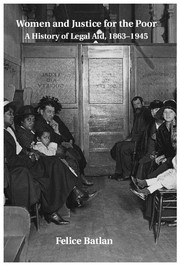
Batlan's History of Legal Aid, 1863-1945//Legal History Blog: New Release:

Legal History Blog: New Release: Batlan's History of Legal Aid, 1863-1945
I've been really looking forward to this new release, from Cambridge University Press: Women and Justice for the Poor: A History of Legal Aid, 1863–1945, by former guest blogger Felice Batlan (Illinois Institute of Technology/Chicago-Kent College of Law). Here's the abstract:
This book re-examines fundamental assumptions about the American legal profession and the boundaries between “professional” lawyers, “lay” lawyers, and social workers. Putting legal history and women's history in dialogue, it demonstrates that nineteenth-century women's organizations first offered legal aid to the poor and that middle-class women functioning as lay lawyers, provided such assistance. Felice Batlan illustrates that by the early twentieth century, male lawyers founded their own legal aid societies. These new legal aid lawyers created an imagined history of legal aid and a blueprint for its future in which women played no role and their accomplishments were intentionally omitted. In response, women social workers offered harsh criticisms of legal aid leaders and developed a more robust social work model of legal aid. These different models produced conflicting understandings of expertise, professionalism, the rule of law, and ultimately, the meaning of justice for the poor.

Monday, May 11, 2015

Seymour M. Hersh · The Killing of Osama bin Laden · LRB 21 May 2015

Seymour M. Hersh · The Killing of Osama bin Laden · LRB 21 May 2015

It’s been four years since a group of US Navy Seals assassinated Osama bin Laden in a night raid on a high-walled compound in Abbottabad, Pakistan. The killing was the high point of Obama’s first term, and a major factor in his re-election. The White House still maintains that the mission was an all-American affair, and that the senior generals of Pakistan’s army and Inter-Services Intelligence agency (ISI) were not told of the raid in advance. This is false, as are many other elements of the Obama administration’s account. The White House’s story might have been written by Lewis Carroll: would bin Laden, target of a massive international manhunt, really decide that a resort town forty miles from Islamabad would be the safest place to live and command al-Qaida’s operations? He was hiding in the open. So America said.
The most blatant lie was that Pakistan’s two most senior military leaders – General Ashfaq Parvez Kayani, chief of the army staff, and General Ahmed Shuja Pasha, director general of the ISI – were never informed of the US mission. This remains the White House position despite an array of reports that have raised questions, including one by Carlotta Gall in the New York Times Magazine of 19 March 2014. Gall, who spent 12 years as the Times correspondent in Afghanistan, wrote that she’d been told by a ‘Pakistani official’ that Pasha had known before the raid that bin Laden was in Abbottabad. The story was denied by US and Pakistani officials, and went no further. In his book Pakistan: Before and after Osama (2012), Imtiaz Gul, executive director of the Centre for Research and Security Studies, a think tank in Islamabad, wrote that he’d spoken to four undercover intelligence officers who – reflecting a widely held local view – asserted that the Pakistani military must have had knowledge of the operation. The issue was raised again in February, when a retired general, Asad Durrani, who was head of the ISI in the early 1990s, told an al-Jazeera interviewer that it was ‘quite possible’ that the senior officers of the ISI did not know where bin Laden had been hiding, ‘but it was more probable that they did [know]. And the idea was that, at the right time, his location would be revealed. And the right time would have been when you can get the necessary quid pro quo – if you have someone like Osama bin Laden, you are not going to simply hand him over to the United States.’

David Simon | Zero tolerance is exactly what it sounds like:

David Simon | Zero tolerance is exactly what it sounds like
Intolerance.
And a broken-windows policy of policing is exactly what it means:
The property matters. The people can stay broken until hell freezes over.
And the ejection of these ill-bought philosophies of class and racial control from our political mainstream — this is now the real prize, not only in Baltimore, but nationally. Overpolicing and a malignant drug prohibition have systemically repressed and isolated the poor, created an American gulag, and transformed law enforcement into a militarized and brutalizing force utterly disconnected from communities in which thousands are arrested but crime itself — real crime — is scarcely addressed. To be sure, there are a great many savage inequalities in our society — no doubt we could widen this discussion at a dozen points — but now, right now, overpolicing of the poor by a militarized police-state is actually on the table for the first time in decades.
And don’t for a second think that stabbing a fork through the heart of zero tolerance isn’t job one. Nothing else changes, nothing else grows in the no-man’s lands of a war zone, and our inner cities have been transformed into free-fire battlegrounds by this drug war and all of the brutalities and dishonesties done in its name.
Yes, the charges came for the Baltimore officers and the city is now relatively quiet.  But step back for a moment from the immediacy of each individual outrage — from Ferguson, from Staten Island, from North Charleston, from West Baltimore — and realize that while this systemic overlay of oppression will offer a moral exemption or two when the facts or the digital video demands it, charging an officer here or implementing a new training course for police there, the game itself grinds on.  Even as they acknowledge an atrocity or two, the same voices of seeming reason continue to suggest that we needn’t abandon all the good that zero-tolerance enforcement has done for us.
Why look at New York, can’t you?  Safest big city in America.  Zero-tolerance works, goddammit.  It makes us all safer, and our cities governable.  Fix the broken windows, write up all the small infractions, punish every minor offender and soon, you’ll see, the city becomes liveable again.  If you have money, quite liveable indeed.
Meanwhile, in Baltimore — as in every other city that doesn’t happen to be the recapitalized, respeculated, rebuilt center of world finance — zero tolerance has been a disaster.  And the levels of police violence and incarceration that spring from this policing philosophy are proving more lethal to the American spirit and experiment than even race fear and race hatred, as ugly and enduring as that pathology is.  No, this is now about class. This is those who have more using the levers of governance to terrorize those who have less, and doing so by using damn near nothing to keep the poor at the margins of American life.
Four men in four separate cities are dead over a shoplifted cigar, a single sold cigarette, a legal pocket knife and a domestic order for child support.  Do any of us feel appreciably safer for the cost?  Do any of us still want to talk about breaking a few eggs to make that omelet?  Do any of us still want to defend the absurd and brutalizing notion that by using our police officers to stalk our ghettoes heaving criminal charge upon criminal charge at every standing human being, we are fixing, or helping, or even intelligently challenging  the other America to find a different future for itself?
Why yes, yes we do.  Incredibly, we do.

Thursday, May 7, 2015

Clare Conk: 1922-2015 // The Independent - Santa Barbara

Clare Conk
Clare Conk: 1922-2015  The Independent - Santa Barbara
self-taught attorney, social justice advocate
Clare Conk was gifted with a brilliant mind, which she applied in her professional and personal life to seek justice for the benefit of the communities in which she lived and particularly for those who were disadvantaged. Education and learning were lifelong pursuits.
Upon graduating magna cum laude with a BA degree from St. Joseph’s College in Brooklyn, New York, Clare enlisted in the navy in 1943 in the midst of World War II. She graduated first in her class from Midshipmen’s School at Smith College and Communications School at Mt. Holyoke. She was assigned as a Communications Officer at Norfolk Naval Base until her honorable discharge in April 1945, three months after marrying George Conk, who would be her husband for 70 years.
As a young mother, she took a great interest in the schools her children would be attending. She took particular pride in the successful campaign for a new school board slate: Auerbach, Kababian, and Thibodeau. It was 1954, the early years of Middle East conflict after the creation of the Israeli state. Clare was proud that they had found a solution in Levittown by electing an Arab, a Christian, and a Jew to the school board.
In 1955, shortly after the birth of her fifth child, Clare received her master’s degree in education. Once all of her children were in school, she began a 15-year career as a high school English teacher. For decades afterward, her former students would tell her she was the best teacher they ever had.
In 1973, Clare and George moved the family from Connecticut to Santa Barbara, where she began volunteering at Santa Barbara’s Legal Defense Center, which provided legal counsel for low-income clients. Clare took to the law — researching legal issues and advocating for people who were being treated unjustly. In 1977, Clare was a law clerk, assisting the center’s director, Willard Hastings. Without benefit of a law degree, she prepared the brief and made the oral argument for a case argued before a state Court of Appeal.
Clare represented Cathy Gunn, who challenged the California unemployment insurance regulation that she disclose her pregnancy and submit medical proof of how long she would remain available to work as a condition of eligibility for unemployment benefits. Gunn refused, citing her privacy rights. Men had to make no such showing. While still an aspiring lawyer, Clare briefed the case all the way up to the 2nd District Court of Appeal. The court unanimously upheld Gunn’s challenge, saying, “Constitutionally the department could require from or through her initially no more than her doctor’s certificate of good health” without compelling her to disclose her pregnancy. The court thus established California women’s rights to unemployment insurance during pregnancy. The court awarded counsel fees to the Legal Defense Center, describing it as a “private attorney general.” Because she was not yet a lawyer, Clare was not named as legal counsel in the court documents, although Supreme Court Chief Justice Rose Bird would later advocate she be recognized as “in counsel.”
Motivated by her legal success and disappointed at not being recognized as legal counsel for her role in the Gunn decision, Clare decided to become an attorney. She went to Ventura Law School for one semester, dropped out, and studied on her own. She maintained contact with the members of her study group but read and studied on her own. In 1981, at the age of 59, she took and passed the California bar exam, on her first attempt, becoming the first person in 15 years to pass the bar without going to law school. It would be almost 20 years before it was accomplished again.
Clare and her law partner Richard Frishman were part of the legal defense team for the Abalone Alliance when protestors blockaded Diablo Canyon nuclear power plant for nearly two weeks in 1981. More than 1,900 were arrested, and 500 pleaded not guilty. Clare made a defense argument on their behalf on grounds of “justification by necessity.”
Once she had her license to practice law, Clare was asked to serve on two boards of directors: Santa Barbara Community Housing Corporation (SBCHC), which develops and owns affordable housing for low-income residents, and California Rural Legal Assistance (CRLA), which represents farmworkers in employment disputes and advocates for fair housing for low-income individuals in California’s rural communities.
In 2010, SBCHC honored Clare’s 25 years of service to the organization by rededicating its senior housing community on Castillo Street as Clare Conk Castillo Homes. Following her death,CRLA’s executive director, José Padilla, recognizing her 25 years of service to that organization, said, “She embodied the heart ofCRLA with her unwavering spirit of social justice service, in her case, as a representative of the Legal Defense Center and the Santa Barbara Community Housing Corporation. Clare had the heart of a teacher and activist and on the Board always acted as a clear voice for ‘the most exploited communities of our society,’ as the CRLA Mission demands.”

Bibi's Nightmare: Unruly Coalition Might Fall — or Worse, Survive - Israel – Forward.com

Benjamin Netanyahu has formed a coalition with a single vote majority.  In Israel's parliamentary proportional representation system that makes every Knesset member a king-maker.  Wingnuts could rule. - gwc
Bibi's Nightmare: Unruly Coalition Might Fall — or Worse, Survive - Israel – Forward.com
by J.J. Goldberg
...a government that manages to survive and function reasonably well could make Netanyahu’s life even more miserable. The concessions he made to the Jewish Home party during the last day of negotiating give the ultranationalist settler-backed party control over some of the most explosive issues in Israeli politics and diplomacy. The truth about Netanyahu, too seldom noted, is that for all his public shows of defiance on the world stage, he’s always been careful not to cross over a certain line and turn Israel into a serious international pariah. The Jewish Home under party leader Naftali Bennett and his lieutenants has no such compunctions. There’s a messianic impulse there that welcomes it.
Bennett himself is slated to become education minister, after trying and failing to wrest defense or foreign affairs. But his No. 2, veteran settler militant Uri Ariel, 62, is slotted into the Agriculture Ministry. That puts him in a key position to aid and expand Jewish settlements deep into the West Bank, beyond the suburban settlement blocs that Israel is generally expected to keep. Ariel has also been given control of the controversial, semi-autonomous Settlement Division of the World Zionist Organization.
Even more controversial is the designation of the party’s No. 3, secular-nationalist firebrand Ayelet Shaked, 39, as justice minister. Internationally she’s best known for her Facebook post during last summer’s Gaza war calling for the mass destruction of “the entire Palestinian people,” including “women and the elderly.” She later deleted the post. At home, though, she’s best known for her legislative campaigns against political dissent, human rights activists, minority rights and the independence of Israel’s vaunted Supreme Court. As justice minister she’ll be the chief policy maker and executive officer on all those issues. She’s also been given control of the committee that appoints judges.
Perhaps even more important, Shaked will head the secretive Ministerial Committee on Legislation, which decides which bills are allowed onto the Knesset floor, and when. The previous justice minister, Tzipi Livni, used the position during the last Knesset to bottle up some of the most inflammatory right-wing bills proposed by Shaked and her allies. Now the fox will be guarding the chicken-coop.
It should be noted that none of the Netanyahu-Bennett agreements have been put in writing yet, and that Ariel is putting up a fight, demanding that he receive the justice ministry. Hard to tell where that will end up.

Virginia Bishops: Focus on End to Death Penalty -Mirror of Justice

Kevin Walsh - the Richmond law professor and Antonin Scalia acolyte - has commended the Viriginia Catholic Bishops call to end the death penalty in the former Confederate capital which executed John Brown for treason against the State.
Contrary to Justice Samuel Alito's recent lament that the challenges to lethal injection are a sort of liberal"guerilla war" not to be taken at face value, Walsh welcomes the debate as one that may bring an end to executions.  An adherent to the free market  limited government gospel, Walsh is also an exemplar of the conservative trend away from mass incarceration and retributive justice. See for example Right on Crime.
But likely more important to Walsh is the Catholic catechism which declares that
2266  Punishment then, in addition to defending public order and protecting people's safety, has a medicinal purpose: as far as possible, it must contribute to the correction of the guilty party.672267 Assuming that the guilty party's identity and responsibility have been fully determined, the traditional teaching of the Church does not exclude recourse to the death penalty, if this is the only possible way of effectively defending human lives against the unjust aggressor.If, however, non-lethal means are sufficient to defend and protect people's safety from the aggressor, authority will limit itself to such means, as these are more in keeping with the concrete conditions of the common good and more in conformity to the dignity of the human person.Today, in fact, as a consequence of the possibilities which the state has for effectively preventing crime, by rendering one who has committed an offense incapable of doing harm - without definitely taking away from him the possibility of redeeming himself - the cases in which the execution of the offender is an absolute necessity "are very rare, if not practically nonexistent."
- gwc

Virginia Bishops Call for End to Death Penalty
by Kevin C. Walsh

Bishop Francis X. DiLorenzo (Richmond) and Bishop Paul S. Loverde (Alexandria) have issued a statement seeking to shift away from discussing methods of execution in Virginia to discussing the end of executions in Virginia. 
" [I]n Virginia and elsewhere," they write, "we are having the wrong debate. We should no longer debate which inmates we execute or how we execute them. Instead, we should debate this: If all human lives are sacred and if a civilized society such as ours can seek redress and protect itself by means other than taking a human life, why are we continuing to execute people?"
I agree that there is something missing from a debate that focuses on means to the exclusion of ends. But rather than abandon the debate on means, I incline more towards a both/and approach that debates both ends and means. Because lethal injection cannot be carried out properly, we should not be using lethal injection on anyone ... which leads to the question why we should be trying so hard to execute anyone at all.
Because the best way to enter the debate the bishops seek to have on capital punishment itself may be first to _win_ the debate on lethal injection as a means, the method-of-execution debate remains one worth having.

Justice Stevens: U.S. Should Compensate Guantanamo Prisoners Unjustly Held

Image result for justice john paul stevens 2014
John Paul Stevens
Speaking to members of the corporate defense bar group Lawyers for Civil Justice retired Justice John Paul Stevens called for compensation for those held at Guantanamo without cause.  Describing Congress's actions to block closure of Guantanamo as "even more irrational than the detention of Japanese citizens" in WW II Stevens calls for a change in legal doctrine.  
While embracing Justice David Souter's dissent in Ashcroft v. Iqbal Stevens called for a change in doctrine.  Government should be liable under respondeat superior for constitutional violations, while affording personal immunity to policy-makers like Attorney General John Ashcroft who were presumably acting from patriotic impulse even if they "encouraged or tolerated improper efforts to obtain information about potential threats". 
Stevens focused on the 57 Guantánamo detainees approved for transfer out of the facility by federal officials who agree they pose no significant security threat to the United States but are detained by Congressional mandates barring transfer to the United States and permitting transfer to other countries only if it is"in the national security interest of the United States". - gwc

REFLECTIONS ABOUT THE SOVEREIGN'S DUTY TO COMPENSATE
VICTIMS HARMED BY CONSTITUTIONAL VIOLATIONS
by Justice John Paul Stevens   May 4, 2015
"Fear plays a more important role in the process of making important decisions at the outset of international hostilities than is often recognized. That emotion sometimes leads to erroneous decisions that do far more harm than good. President Franklin D. Roosevelt's decision to approve the mass relocation and
internment of thousands of American citizens of Japanese ancestry during World War II is a vivid example of such a decision...."
read more

Wednesday, May 6, 2015

16.9 Million Americans Gained Coverage From September 2013 To February 2015 //Health Affairs Web First

 The Affordable Care Act has had an enormous impact increasing the number of people with health insurance.   Despite this advance the U.S. Supreme Court is now considering the Burwell case which could deny coverage to millions now insured.  And 16 % of the population remains uninsured.  Millions  remain without health care because Republican Governors and legislators refuse to accept federal aid to expand Medicaid.  Complicit in that are liberal Justices Elena Kagan and Stephen Breyer who accepted arguments that states should not be "forced"to expand medicaid coverage. Such federalism concerns in my opinion are entirely frivolous because the equal protection of the laws principle should be read to trump state resistance to such measures. - gwc
Health Affairs Web First: 16.9 Million Americans Gained Coverage From September 2013 To February 2015

by Lucy Larner


From September 2013 to February 2015, when the second open enrollment period of the Affordable Care Act (ACA) ended, the number of US uninsured dropped from 42.7 million to 25.8 million, according to a new Health Affairs Web First study that will also appear in the June issue of Health Affairs.  
During the study period, 22.8 million people gained coverage while 5.9 million lost coverage, for a net increase of 16.9 million people gaining insurance. Overall, the number gaining coverage was more than three times as large as the number of people losing coverage. Most who gained coverage did so between September 2013 and May 2014. The study also found that among the 22.8 million who gained insurance, most enrolled in employer-sponsored insurance, which remains the largest source of insurance among Americans younger than 65.
Many also gained coverage through states that expanded eligibility for their Medicaid program; others purchased coverage through the federal and state health insurance Marketplaces. Of the 155.8 million Americans who were insured in September 2013, however, 80 percent experienced no change in insurance status or source of coverage during the study period. Despite substantial coverage gains, approximately 16 percent of the US population remains uninsured.

Tuesday, May 5, 2015

Alito and Scalia: Have You No Sense of Decency Sirs? - ReligiousLeftLaw.com

The Supreme Court refuses to allow telephone cameras.    They claim to fear grandstanding and spectacle.  But it's too late for that.  They release audio now - often same day.  Much of the Justices' banter (especially by Antonin Scalia) is  talk radio talking points.  That's politics.  As usual.
BTW I don't think the polygamy questions are out to lunch.  There's no need to extend marriage thus, but shouldn't "Big Love" be decriminalized?  And while I'm at it, if porn flick sex is legal, why not prostitution?  Regulation but not criminalization seems a reasonable choice.  - gwc
Alito and Scalia: Have You No Sense of Decency Sirs? - ReligiousLeftLaw.com
In the 1940s and 1950s, countless people in the US were being bullied and brutalized by the anti-communist scare tactics and character assassinations ofSenator Joseph McCarthy. The end of the McCarthy red-baiting era began when Joseph Welch stood up to McCarthy after he attacked a young lawyer on his staff. Welch was appalled by McCarthy’s callous disregard and despite McCarthy’s power, challenged him by stating: “Until this moment, Senator, I think I have never really gauged your cruelty or your recklessness.” He concluded by saying “You’ve done enough. Have you no sense of decency, sir? At long last, have you left no sense of decency?”

In the recent marriage equality case, Supreme Court Justices Samuel Alito and Antonin Scalia argued that marriage equality opens the door to polygamy, underage sex, and incest between brothers and sisters. This is the modern equivalent of McCarthy red-baiting and deserves the same response.

The cruel, illogical, heartless and hateful arguments of Alito and Scalia give considerable support and inspiration to right wing groups who literally demonize our sisters and brothers and sons and daughters who seek only to marry their same sex partners just like the rest of us.

This is How We Fought in Gaza Soldiers׳ testimonies and photographs from Operation „Protective Edge˝

This is How We Fought in GazaSoldiers׳ testimonies and photographs fromOperation Protective Edge˝ (2014)  
Breaking the Silence report

Introduction 

This booklet is a collection of testimonies from over 60 soldiers in mandatory and reserve service that took part in Operation “Protective Edge” in the Gaza Strip. About a quarter of the testifiers are officers that go all the way up to the rank of major. The testimonies underwent a meticulous investigative process to ensure their veracity. The testifiers, who served in various units – from ground, to naval, to air forces, and in headquarters and command centers – expose the nature of IDF operations in various combat zones. The testimonies in this collection close the yawning gaps between what the IDF and government spokespersons told the public about the combat scenarios, and the reality described by the soldiers that took part in the operation. While the testimonies include pointed descriptions of inappropriate behavior by soldiers in the field, the more disturbing picture that arises from these testimonies reflects systematic policies that were dictated to IDF forces of all ranks and in all zones. 

The guiding military principle of “minimum risk to our forces, even at the cost of harming innocent civilians,” alongside efforts to deter and intimidate the Palestinians, led to massive and unprecedented harm to the population and the civilian infrastructure in the Gaza Strip. Policymakers could have predicted these results prior to the operation and were surely aware of them throughout. 

Monday, May 4, 2015

Christie set to argue his pension law is unconstitutional

Christie set to argue his pension law is unconstitutional

When Gov. Chris Christie (R-NJ) takes his case to the state Supreme Court this week in a dispute over pension funding, his administration will make a highly unusual argument: that a law the governor signed in 2011 is unconstitutional.

Legal experts say it's a rare approach, perhaps unprecedented in New Jersey.

Lawmakers are closely watching how the Supreme Court will rule; its decision could have significant ramifications for the state budget, for the fiscal year that ends June 30 and for the next.

The law required public workers to contribute more toward their pensions and health plans, raised the retirement age, and suspended cost-of-living adjustments. In return for those concessions, workers were granted a "contractual right" to greater pension funding, which the state was to phase in over seven years.

Unions sued in June after Christie cut the state's pension contribution for the current fiscal year by $1.57 billion amid a revenue shortfall.

"Here's the governor signing a law binding himself and the government to a contract and quite soon thereafter arguing that it's unconstitutional," said Robert F. Williams, a state constitutional law expert at Rutgers-Camden. "I don't think we have much precedent for this, particularly in this context - maybe no precedent."

Read more at http://www.philly.com/philly/news/new_jersey/20150503_Christie_set_to_argue_his_pension_law_is_unconstitutional.html#XC7dM0P6FdO5eFEy.99

Mass Incarceration: The Silence of the Judges by Jed S. Rakoff | The New York Review of Books

rakoff_1-052115.jpgMass Incarceration: The Silence of the Judges by Jed S. Rakoff | The New York Review of Books
by Jed Rakoff  [Senior Judge, U.S. District Court, Southern District of New York]
For too long, too many judges have been too quiet about an evil of which we are a part: the mass incarceration of people in the United States today. It is time that more of us spoke out.
The basic facts are not in dispute. More than 2.2 million people are currently incarcerated in US jails and prisons, a 500 percent increase over the past forty years. Although the United States accounts for about 5 percent of the world’s population, it houses nearly 25 percent of the world’s prison population. The per capita incarceration rate in the US is about one and a half times that of second-place Rwanda and third-place Russia, and more than six times the rate of neighboring Canada. Another 4.75 million Americans are subject to the state supervision imposed by probation or parole.
Most of the increase in imprisonment has been for nonviolent offenses, such as drug possession. And even though crime rates in the United States have declined consistently for twenty-four years, the number of incarcerated persons has continued to rise over most of that period, both because more people are being sent to prison for offenses that once were punished with other measures and because the sentences are longer. For example, even though the number of violent crimes has steadily decreased over the past two decades, the number of prisoners serving life sentences has steadily increased, so that one in nine persons in prison is now serving a life sentence.

Sunday, May 3, 2015

From Ferguson to Baltimore: The Fruits of Government-Sponsored Segregation | Economic Policy Institute

Image result for baltimore ghetto
From Ferguson to Baltimore: The Fruits of Government-Sponsored Segregation | Economic Policy Institute
by Richard Rothstein
In Baltimore in 1910, a black Yale law school graduate purchased a home in a previously all-white neighborhood. The Baltimore city government reacted byadopting a residential segregation ordinance, restricting African Americans to designated blocks. Explaining the policy, Baltimore’s mayor proclaimed, “Blacks should be quarantined in isolated slums in order to reduce the incidence of civil disturbance, to prevent the spread of communicable disease into the nearby White neighborhoods, and to protect property values among the White majority.”
Thus began a century of federal, state, and local policies to quarantine Baltimore’s black population in isolated slums—policies that continue to the present day, as federal housing subsidy policies still disproportionately directlow-income black families to segregated neighborhoods and away from middle class suburbs.
Whenever young black men riot in response to police brutality or murder, as they have done in Baltimore this week, we’re tempted to think we can address the problem by improving police quality—training officers not to use excessive force, implementing community policing, encouraging police to be more sensitive, prohibiting racial profiling, and so on. These are all good, necessary, and important things to do. But such proposals ignore the obvious reality that the protests are not really (or primarily) about policing.
In 1968, following hundreds of similar riots nationwide, a commission appointed by President Lyndon Johnson concluded that “[o]ur nation is moving toward two societies, one black, one white—separate and unequal” and that “[s]egregation and poverty have created in the racial ghetto a destructive environment totally unknown to most white Americans.” The Kerner Commission (headed by Illinois Governor Otto Kerner) added that “[w]hat white Americans have never fully understood—but what the Negro can never forget—is that white society is deeply implicated in the ghetto. White institutions created it, white institutions maintain it, and white society condones it.”
In the last 50 years, the two societies have become even more unequal. Although a relatively small black middle class has been permitted to integrate itself into mainstream America, those left behind are more segregated now than they were in 1968.
When the Kerner Commission blamed “white society” and “white institutions,” it employed euphemisms to avoid naming the culprits everyone knew at the time. It was not a vague white society that created ghettos but government—federal, state, and local—that employed explicitly racial laws, policies, and regulations to ensure that black Americans would live impoverished, and separately from whites. Baltimore’s ghetto was not created by private discrimination, income differences, personal preferences, or demographic trends, but by purposeful action of government in violation of the Fifth, Thirteenth, and Fourteenth Amendments. These constitutional violations have never been remedied, and we are paying the price in the violence we saw this week.
Following the police killing of Michael Brown in Ferguson, Missouri, last August, I wrote The Making of Ferguson, a history of the state-sponsored segregation in St. Louis County that set the stage for police-community hostility there. Virtually every one of the racially explicit federal, state, and local policies of segregation pursued in St. Louis has a parallel in policies pursued by government in Baltimore.

Saturday, May 2, 2015

How to destroy Texas’ public schools | GOPLifer

How to destroy Texas’ public schools | GOPLifer
by Chris Ladd
Texas’ legislature is poised to approve the boldest school privatization program in the country. This is what happens when you place a mildly deranged radio host in a state’s most powerful elected office.
Sending public school students to private religious schools may not seem like a ticket to a well-educated citizenry prepared for 21st century demands. That’s ok. Those are not the goals of this program. Legislators are looking for ways to save money and rescue Texas children from the godless influence of science, history, and empirical knowledge.
There’s nothing particularly revolutionary about school vouchers. Thirteen states plus DC already have programs that let students attend private institutions with public funding under some limited circumstances. What makes Texas’ proposal special is its ambitious scope and its potential to remove the last major edifice of public capital in Texas.
Texas’ privatization proposal is based on two separate bills. One bill creates a right to attend private schools funded by vouchers. The second bill creates the funding structure.
Tea Party Senator Donna Campbell is the sponsor of SB 276. That bill establishes a right for students to opt out of public schools and take with them a voucher that funds their private education. Then it starts getting weird.
Campbell’s plan will only pay 60% of what the state was spending for that student’s public education. Common sense finally triumphs here over the demands of pointy-headed accountants. Want cheaper schools? Give them less money.
Campbell’s bill also works another little bit of magic. No government money will be spent on the program. Kinda…
Her bill stipulates that “Money from the available school fund and federal funds may not be used for reimbursement under this section.” So how are these vouchers going to be funded? Students aren’t the only people who would be opting out of the public school system under this program.
Campbell’s SB 276 has a twin. Funding for this program is delivered by SB 642, sponsored by Houston’s own Senator Paul Bettencourt. His bill creates an unusual new private entity called an “Educational Assistance Organization” (EAO).
An EAO would be a private charity with a twist. Any “taxable entity” making a donation to the EAO could get a full credit for their donation against their franchise tax liability, up to 50% of their total tax liability. All funding for private school vouchers would have to come from an EAO.
Bettencourt’s bill is what makes this approach truly radical. These two bills would not merely privatize schools. They would privatize the school funding system as well, creating an entire parallel world free from the liberal horrors of a real education infrastructure. Taxpayers could simply exit the existing public school funding system in favor of their own private school funding entities which they control entirely.

Friday, May 1, 2015

Wildstein Pleads Guilty Under Ku Klux Klan Act in Bridgegate Case

18 U.S. Code 241
If two or more persons conspire to injure, oppress, threaten, or intimidate any person in any State, Territory, Commonwealth, Possession, or District in the free exercise or enjoyment of any right or privilege secured to him by the Constitution or laws of the United States, or because of his having so exercised the same; or
If two or more persons go in disguise on the highway, or on the premises of another, with intent to prevent or hinder his free exercise or enjoyment of any right or privilege so secured—
They shall be fined under this title or imprisoned not more than ten years, or both...
David Wildstein, a journalist and politico, has pled guilty to violation of the post civil war law known as the Ku Klux Klan Act.  Named to direct capital projects at the Port Authority Mark Sokolich by New Jersey Governor Chris Christie, Wildstein admitted today that he conspired with others to create a massive traffic jam to take revenge on the Ft. Lee Boro mayor who had refused to enforce Christie for reelection in 2013.

Chrisite appointee Bill Baroni, the former Deputy Executive Director of the Port Authority, and Bridget Kelly, the Governor's Deputy Chief of Staff  have now been indicted in the scheme described by Wildstein.